

While eager to invest in the power sector, many investors are deeply concerned about the challenges they face in implementing large-scale power projects recently.
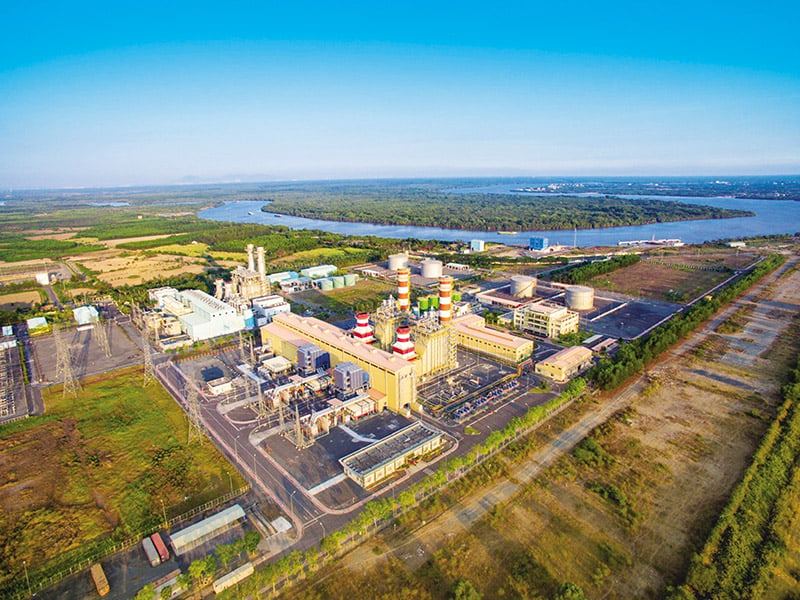 |
| Nhon Trach 1 gas-fired power plant. Photo : Duc Thanh |
Choosing an investor through a bidding process is not easy.
The Nghi Son LNG power plant project recently decided to cancel the tender notice and halt the investor selection process. The reason given by the Management Board of Nghi Son Economic Zone and industrial parks in Thanh Hoa province is to comply with Article 73 of Decree No. 115/2024/ND-CP, which details certain provisions and measures for implementing the Law on Bidding regarding the selection of investors for investment projects using land.
Previously, the Project conducted a limited international tender in July 2024 and announced the closing time for bids as 2 PM on September 30, 2024, and the opening time as 3 PM on September 30, 2024. As of August 1, 2024 – the deadline stipulated in Decree 115/2024/ND-CP – no investors had submitted bids or proposals, therefore, in accordance with Article 73, the investor selection process had to be halted.
Electricity industry experts believe that LNG power projects that have yet to select investors, such as the Nghi Son LNG power plant, also face challenges in the bidding process due to regulations set out in Decree 115/2024/ND-CP. Accordingly, the bidding documents, prepared in accordance with the law, mention a draft power purchase agreement (PPA) agreed upon with the power buyer – in this case, Vietnam Electricity Group (EVN).
An investor operating under the BOT (Build-Operate-Transfer) model in Vietnam questioned who would negotiate the draft Project Purchase Agreement (PPA) in the tender documents. If the PPA is vague, the investor will still waste a lot of time on specific negotiations later. On the other hand, if the PPA includes specific clauses for the project, the investor must be the one to draft it precisely.
According to the source, disregarding investors with other objectives and submitting a valid bid with uncertain feasibility, for investors who genuinely want to proceed, calculating and fulfilling the conditions of the bidding party—that is, the draft PPA agreed upon with EVN—requires considerable time and money.
"Investors have to conduct a feasibility study to get specific data for negotiating the PPA, in order to determine the project's cash flow and profitability. Therefore, the amount invested is at least $1.5 million USD, and can reach several million USD. For the winning bidder, this amount is included in the project development costs, but if they lose, it's a significant sum. Not to mention, if several companies bid together, this would be wasteful," this person commented.
Following the story of the canceled bid at the Nghi Son LNG Power Plant Project, experts believe that in order to produce a feasibility study (FS), the contractor must have a policy in place to bring in personnel and equipment for the survey; otherwise, it will be difficult. "So, does the province agree to the policy of multiple investors surveying the project on the same piece of land, because this is not easy?" one contractor questioned.
The regulations are not consistent.
Stating that the selection of investors for power projects needs to quickly address challenges, Mr. Nguyen Duy Giang, Deputy General Director of PetroVietnam Power Corporation (PV Power), commented that provinces with planned power projects are actively working to select investors. However, since the issuance of Power Plan VIII and its implementation plan, no province has completed the selection process due to a lack of specific guidelines and regulations.
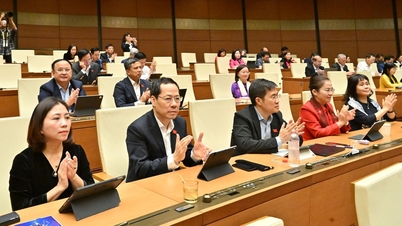
The draft Law on Electricity (amended) – currently being discussed by the National Assembly at its eighth session – provides more specific regulations on the selection of investors for power projects (Articles 26 to 28) based on the principle that the electricity price ceiling is within the price range issued by the Ministry of Industry and Trade in the year of bidding, and the principle of determining the electricity price carries a significant weight (point d, clause 1, Article 26).
However, at this time, the investor has not yet prepared a feasibility study (FS) and does not know what the annual electricity output commitment (Qc) will be, so there is not enough basis to commit to a price. "Based on PV Power's experience in negotiating power purchase agreements, even though the draft contract and the principles for calculating electricity prices are specifically stipulated by law (in Circular 07/2024/TT-BCT), the negotiation time for a power purchase agreement will not be less than 2 years, and even 5 years may still not result in an agreement on the official price," Mr. Giang shared.
Setting timeframes that are too short compared to reality will make implementation difficult, investors will be unable to commit to the schedule, and will be concerned about participating in bidding for power plant projects when they see the risk of project withdrawal due to failure to meet the schedule (Article 17 of the Draft).
On the other hand, it can be seen that there are discrepancies between Decree 115/2024/ND-CP and the Draft Law on Electricity (amended) in the regulations related to investor selection, and if not harmonized, this will create challenges in the process of electricity deployment.
A number of LNG power plant projects in other localities such as Quang Ninh, Long An , Bac Lieu, Binh Thuan… have selected investors, but have not yet dared to start construction because the Purchase Agreements (PPAs) have not been finalized.
During the National Assembly's discussion on the draft amended Electricity Law on November 7th, Minister of Industry and Trade Nguyen Hong Dien mentioned that "although the Power Development Plan VIII was announced nearly 1.5 years ago, no new investors have proposed any projects." The reason given was the lack of specific and clear regulations on mechanisms and policies.
Meanwhile, the requirement is that Vietnam's power system, currently at 80,000 MW, must increase to 150,524 MW by 2030. "If we don't promptly amend, supplement, and enact appropriate and feasible mechanisms and policies, investors will certainly not come in, and thus we will not be able to meet the country's energy needs," Minister Dien said.
Source: https://baodautu.vn/dau-tu-du-an-dien-sau-hao-huc-la-thach-thuc-d229644.html








































































Comment (0)