

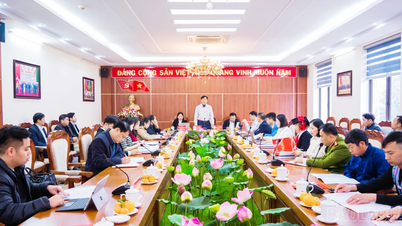
This morning, April 4th, Ms. Ho Thi Thu Hang, Chairwoman of the Provincial Party Committee's Inspection Committee and Head of the Culture and Social Affairs Committee of the Provincial People's Council, chaired a working session between the Culture and Social Affairs Committee of the Provincial People's Council and the Culture and Information Department of Dakrong District regarding the results of implementing Resolution No. 167/NQ-HĐND dated December 9, 2021, of the Provincial People's Council on investment in the preservation, restoration, and promotion of the system of historical and cultural relics in Quang Tri province during the 2022-2025 period in Dakrong District.

Ms. Ho Thi Thu Hang, Head of the Provincial Party Committee's Inspection Commission and Head of the Culture and Social Affairs Committee of the Provincial People's Council, surveys the provincial-level historical site of the Dakrong scenic area - Photo: HN
Dakrong District currently has 33 classified historical sites. Of these, 1 site is classified as a special national-level historical site (Dakrong Suspension Bridge); 2 sites are classified at the national level (locations crossing Highway 9 of the Thong Nhat power line and Highway 559; and 6 sites belonging to the Ba Long war zone); and 30 sites are classified at the provincial level. 25 provincial-level sites have been marked with commemorative plaques; 15 out of 17 sites have completed scientific documentation; and 15 out of 17 sites have completed legal documentation.
Most of the historical relics classified at the national and provincial levels in Dakrong district date back to the periods of resistance against the French and Americans. Located far from the district and commune centers, in rugged terrain, these relics are gradually disappearing over time, making it very difficult to determine their spatial boundaries and scope for demarcation and protection, as well as to invest in their preservation, restoration, and promotion.
Historical witnesses and those knowledgeable about historical and cultural relics in the district are now scarce. Some remaining witnesses are elderly and frail, significantly impacting the process of gathering information to complete the scientific and legal documentation for these relics. Most historical and cultural relics in the district are located within residential areas, on agricultural land, forest land, or gardens belonging to households, making the process of land acquisition to complete land allocation for these relics very difficult.

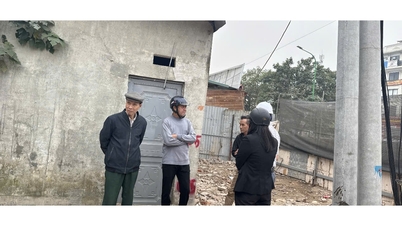
Ms. Ho Thi Thu Hang, Head of the Provincial Party Committee's Inspection Commission and Head of the Culture and Social Affairs Committee of the Provincial People's Council, surveys the provincial-level historical site of Cau Rao Quan - Photo: HN
Speaking at the working session, Ms. Ho Thi Thu Hang, Head of the Culture and Social Affairs Committee of the Provincial People's Council, emphasized: The work of preserving, restoring, and promoting the system of historical and cultural relics plays a particularly important role and has special significance. Therefore, it is necessary to promote a high sense of responsibility in focusing on effectively carrying out the work of preserving, restoring, and promoting the value of the system of historical and cultural relics to contribute to improving the cultural and spiritual life, promoting tourism development, and educating future generations.
The Department of Culture and Information of Dakrong District is requested to incorporate the contributions of the members of the Culture and Social Affairs Committee of the Provincial People's Council, and to continue striving to overcome difficulties and shortcomings, while building upon the achievements already made, in order to further improve the work of preserving, restoring, and promoting the system of historical and cultural relics in Dakrong District in the future.
It should be noted that in the work of preserving, restoring, and promoting the system of historical and cultural relics, it is necessary to focus on doing a good job of land surveying to obtain land use right certificates; the nameplates of the relics must ensure the use of good materials, high aesthetic value, and record complete and accurate information about the relics; attention should be paid to supporting people living near historical and cultural relics to invest in community tourism development, thereby creating unique tourism products with local identity, attracting domestic and international tourists to Dakrong district.
Hoai Nhung
Source


































































Comment (0)