

Specifically, rice exports in August reached 921,000 tons, with a value of $546.4 million, a sharp increase of 39.5% in volume and 50.7% in value compared to the previous month.
Overall, in the first eight months of the year, rice exports reached over 5.8 million tons, with a value of 3.16 billion USD, an increase of 21.4% in volume and 35.7% in value compared to the same period last year.
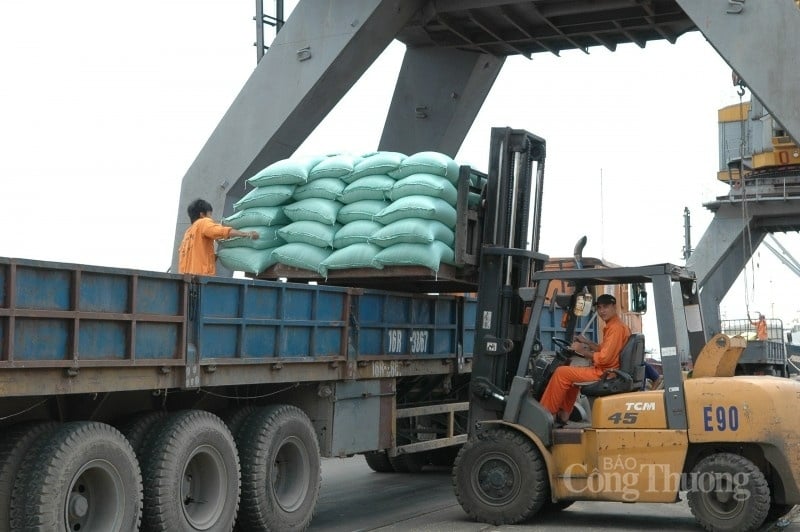 |
| The price of Vietnamese rice for export is currently very high. |
According to the General Department of Customs, August was the third highest month for rice exports ever, while the average export value (reaching 593 USD/ton) was the highest since January 2022.
In the first eight months of the year, ASEAN and China were the two main export markets for Vietnamese rice.
Of that total, exports to ASEAN reached 3.49 million tons, an increase of 27.6%; and exports to the Chinese market reached 786,000 tons, an increase of 51% compared to the same period last year.
Specifically, rice exports to the two aforementioned markets reached 4.28 million tons, accounting for 74% of the country's total rice exports.
According to the Vietnam Food Association (VFA), the export price of 5% broken rice is currently at 613-617 USD/ton, and 25% broken rice fluctuates around 598-602 USD/ton. Compared to the end of August 2023, these export prices have decreased by approximately 22 to 30 USD/ton.
Notably, not only Vietnamese rice but also rice exports from Thailand and Pakistan have decreased to $611/ton for 5% broken rice and $608/ton for 25% broken rice.
According to the Vietnam Commodity Exchange (MXV), the main factor driving down rice prices in the past two weeks is the gradual stabilization of supply.
The Indian government recently stated that the export ban has helped the country secure sufficient supplies of essential food items such as rice and wheat. Meanwhile, according to sources from the Bangladeshi Ministry of Food, the country has sufficient rice reserves, currently around 1.7 million tons, to supply its population amidst rising global and domestic rice prices.
Major consuming countries have also been actively purchasing in the preceding period to replenish much-needed reserves of this essential food item. In Indonesia, the government increased rice imports in the first eight months of this year, as it aimed to boost reserves of this vital commodity.
According to statistics from Indonesia, the country imported 1.59 million tons of rice in the first eight months of this year, a sharp increase from 237,146 tons in the same period last year. More than half of this came from Thailand. Vietnam was the second largest supplier of rice to Indonesia during this period with 674,000 tons.
The Indonesian government has also tasked the state-run food procurement agency Bulog with importing 2.3 million tons of rice in 2023 to cope with the effects of El Niño, which has caused droughts and damaged crops in Asia. As of the end of August, imports had nearly reached 80% of the plan.
With less than a month to go, many rice-producing countries will also enter the peak of their harvest season, which is expected to supply a large amount of rice to the market.
However, in the short and medium term, many consuming countries will still need to increase rice imports to replenish their reserves. This will be a factor in curbing the decline in rice prices.
Source link






















































































Comment (0)