

In the process of building new rural areas, agricultural extension plays a crucial role in transferring scientific and technological advancements, promoting agricultural production, and developing the rural economy . Acting as a bridge to implement the policies of the Party, the State, and the province; transferring scientific research results to farmers and providing market information, the Quang Tri Agricultural Extension Center has supported many localities in building production models, transforming crop and livestock structures, and developing organic farming... bringing positive results and generating good income for farmers.
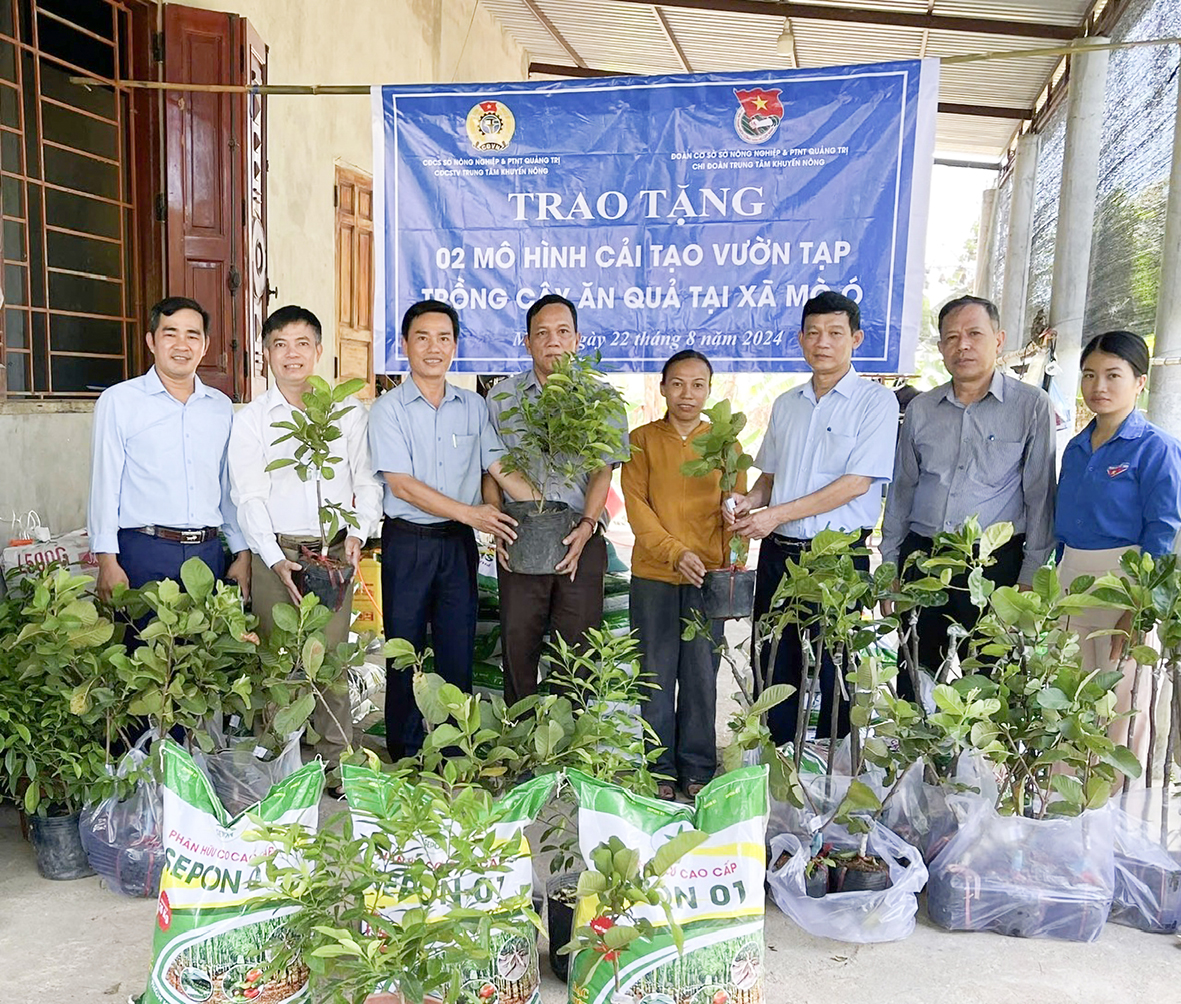
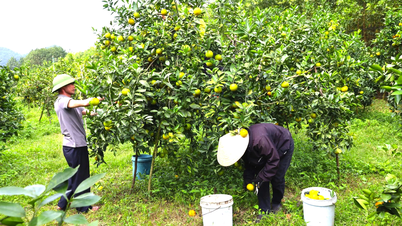
The Provincial Agricultural Extension Center provided plant seedlings to establish a livelihood orchard in Mo O commune, Dakrong district - Photo: TCL
Mo O commune in Dakrong district is a mountainous area where agricultural production faces many difficulties. To support local people in developing new production models, as the sponsoring unit for Mo O commune in the process of building new rural areas, in 2024, the Provincial Agricultural Extension Center implemented agricultural production models in the commune based on local strengths such as: a bio-secure native broiler chicken farming model on a biological bedding system; an agroforestry model; fruit orchards; and training to improve the capacity of community agricultural extension groups.
The center has provided support in terms of plant and animal breeds, fertilizers, and feed to farmers to implement models such as: supporting two livelihood orchards with Thai green-skinned jackfruit, Rubi red-fleshed guava, and four-season lemon; and implementing an agroforestry model on a scale of 2.1 hectares. For the native broiler chicken farming model, the center supported 900 native Ri chicken chicks for 10 households. Currently, after 5 months of raising, the average weight of the flock is 1.7 kg/chicken, with a selling price of 100,000 VND/kg. After deducting all costs, each household earns a profit of 5 million VND.
The implementation of production models and the transfer of scientific and technological advancements in Mo O commune have contributed to changing people's perceptions of intensive farming using indigenous breeds for high economic efficiency. The use of indigenous livestock breeds has the advantage of maximizing the use of local feed sources and existing land to develop and increase the proportion of livestock farming in agricultural production, promoting sustainable agricultural and rural economic development.
Through the implementation of the model, households in the commune learn from and replicate it, thereby creating jobs, increasing people's income, and contributing to the achievement of targets for building new rural areas in the locality. In Dakrong district, in addition to Mo O commune, the Provincial Agricultural Extension Center also supports Trieu Nguyen and Ba Long communes with agricultural production models, training and transferring technology to members of community agricultural extension groups and key farmers. Currently, technical staff from the center continue to guide people on techniques so that the models supported by the center achieve high efficiency and have good replication potential.
The Agricultural Extension Center's support for communes in building new rural areas through production models aims to effectively fulfill economic and production organization criteria. To successfully accomplish this task, the center has closely followed key agricultural production development programs and objectives, leveraged central government programs and projects, and successfully transferred many new technical advancements, contributing to a rapid increase in productivity and product quality, promoting sustainable agricultural development, and ensuring effectiveness in economic, social, and environmental aspects.
Notable programs and models include: bio-secure organic pig farming linked to product consumption; intensive cattle farming and herd improvement programs; organic rice production linked to product consumption; intensive fruit tree cultivation according to VietGAP standards, cultivation of native dwarf bananas; conversion of water-scarce rice land to other crops; cage farming of climbing perch, two-stage intensive shrimp farming, and kingfish farming in ponds; intensive large-timber forest planting; establishment of forestry nurseries applying improved technology; and coastal livelihood models... all of which have yielded high efficiency, increased income, improved living standards, and protected the environment.
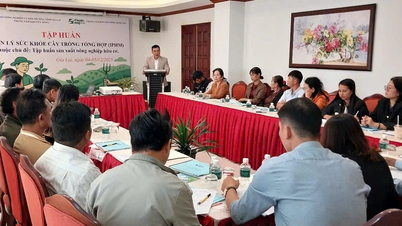
Along with developing models for transferring advanced technologies, the center has intensified the organization of training courses for grassroots agricultural extension officers and key farmers; and organized information and communication activities to help people understand and follow the guidelines. As a result, the production skills of the people have been raised to a higher level, and production efficiency has become more effective and sustainable.
According to Tran Can, Director of the Quang Tri Agricultural Extension Center: Agricultural extension activities have contributed to the economic development of households, improving the lives of farmers and fishermen in coastal, lowland, midland, and mountainous areas, especially ethnic minorities in remote areas. With the attention and guidance of Party committees and authorities at all levels, the agricultural extension system from the provincial to the grassroots level operates stably, bringing many benefits and effectiveness, contributing to changing the economic lives of the people. This has helped localities achieve targets for income and production organization in building new rural areas.
In the coming period, the Provincial Agricultural Extension Center will continue to innovate the content and methods of agricultural extension activities, meeting the requirements of shifting the mindset from agricultural production to agricultural economics; closely coordinate with departments, agencies, and localities to effectively implement national target programs, focusing on the New Rural Development program.
This includes focusing on promoting the transfer of technological advancements, disseminating information, and providing vocational training for rural workers; implementing advanced and modern agricultural extension programs and projects; strengthening linkages along the value chain and connecting agricultural product markets; promoting the application of science and technology in production; actively transforming the structure of crops and livestock; implementing intensive cultivation and improvement programs for fruit trees in mountainous and midland areas, linked to product consumption; promoting the development of bio-secure and disease-free livestock farming models; continuing to implement programs for planting large timber forests; promoting new aquaculture models, raising awareness among people, and farming according to VietGAP standards. It also involves continuing to disseminate technological advancements, raise awareness among the people, and help change their mindset in production.
Tran Cat Linh
Source: https://baoquangtri.vn/ho-tro-nong-dan-xay-dung-nong-thon-moi-188576.htm




























































Comment (0)