

The Ministry of Health proposes adjusting the rights and obligations of each couple and individual in deciding the number of children, the timing of childbirth, and the spacing between births.
With declining birth rates and a low population, the Ministry of Health proposes that couples be allowed to decide the number of children they have.
The Ministry of Health proposes adjusting the rights and obligations of each couple and individual in deciding the number of children, the timing of childbirth, and the spacing between births.
From 2006 to 2021, Vietnam achieved and maintained replacement fertility levels, sustained a reasonable population growth rate, and achieved its population size targets.
As of 2023, our country's population has surpassed the set target, reaching over 104 million people, with the goal of reaching 104 million by 2030. This demonstrates the stability and development of the country's population policy.
 |
The Ministry of Health proposes adjusting the rights and obligations of each couple and individual in deciding the number of children, the timing of childbirth, and the spacing between births. |
Vietnam is currently in a demographic dividend, creating significant advantages for socio -economic development. Along with the improvement in population quality, the Human Development Index (HDI) is continuously rising, and the average life expectancy of Vietnamese people is also increasing. In particular, the population distribution has improved significantly, becoming more balanced.
The achievements in maintaining replacement fertility levels and improving population quality are important prerequisites for Vietnam to shift from a family planning policy to a population and development policy, in order to meet the requirements of the current situation.
However, after reviewing legal documents related to population work, the Ministry of Health found that many regulations are not consistent with the current legal system and do not meet the requirements of practice.
Specifically, some provisions in the Population Ordinance are no longer consistent with the Constitution, especially the regulations restricting couples' right to decide the number of children they have.
The regulations in the Population Ordinance are no longer consistent with current legal documents or have been amended by other laws, such as the regulation on restricting population concentration in certain large cities.
Population regulations are no longer appropriate to the current situation, especially as birth rates have been steadily declining in recent years, yet current laws still impose limits on the number of children each couple can have.
Although our country has maintained the replacement fertility rate for many years, the current situation shows that the fertility rate is trending downwards, falling below the replacement level.
According to the Ministry of Health, the national fertility rate has decreased from 2.11 children per woman (2021) to 2.01 children per woman (2022), 1.96 children per woman (2023), and is projected to continue decreasing to 1.91 children per woman (2024), the lowest level in history.
According to forecasts, if the birth rate continues to decline, Vietnam will end its demographic dividend period in 2039, the working-age population will peak in 2042, and after 2054, the population will begin to decline.
The consequences of persistently low birth rates can lead to labor shortages, population decline, increased population aging, and negative impacts on socio-economic development.
Over the past two decades, urban fertility rates have fallen below replacement level, fluctuating between 1.7 and 1.8 children per woman. Rural fertility rates remain higher, maintaining at 2.2 to 2.3 children per woman.
However, by 2023, the fertility rate in rural areas had fallen to 2.07 children, below replacement level and the lowest ever recorded.
This reflects an ongoing declining birth rate in both regions, signaling significant challenges for future population policy.
Faced with low birth rates, many countries have implemented policies to maintain and improve fertility rates, such as flexible working arrangements, improved maternity leave, unpaid leave, shorter working hours, or part-time work at workplaces to support parents in raising their children.
Financial incentives: Childbirth bonuses, tax breaks, monthly cash allowances for children, housing rental and home purchase assistance.
Childcare: Increase the availability of childcare services and support childcare costs.
Assisted Reproductive Technology: Improve in-vitro fertilization (IVF) support services, regulate insurance coverage for infertility treatment, and enhance access to these services.
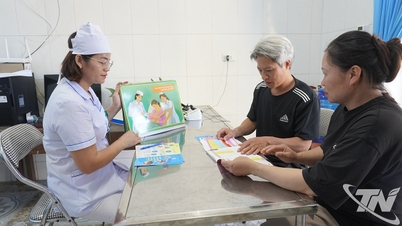
To address the issue of low birth rates, the Ministry of Health is drafting amendments to the Population Ordinance, aiming to create a flexible population policy that adapts to the new situation.
Specifically, the Ministry of Health proposes adjusting the rights and obligations of each couple and individual in deciding the number of children, the timing of childbirth, and the spacing between births.
At the same time, protecting reproductive health and preventing sexually transmitted diseases and HIV/AIDS will also receive greater attention in policies related to population and family planning.
Vietnam is facing serious challenges related to low birth rates and an aging population.
Population policies need to be adjusted promptly to suit practical realities, ensure sustainable development, and respond to changes in population structure.
Improving the system of population policy and human development is one of the key elements in the country's socio-economic development strategy for the coming decades.
Source: https://baodautu.vn/muc-sinh-giam-dan-so-thap-bo-y-te-de-xuat-cap-vo-chong-duoc-quyet-dinh-so-con-d249795.html


![[Photo] Prime Minister Pham Minh Chinh holds a phone call with the CEO of Russia's Rosatom Corporation.](/_next/image?url=https%3A%2F%2Fvphoto.vietnam.vn%2Fthumb%2F1200x675%2Fvietnam%2Fresource%2FIMAGE%2F2025%2F12%2F11%2F1765464552365_dsc-5295-jpg.webp&w=3840&q=75)

![[Photo] Closing Ceremony of the 10th Session of the 15th National Assembly](/_next/image?url=https%3A%2F%2Fvphoto.vietnam.vn%2Fthumb%2F1200x675%2Fvietnam%2Fresource%2FIMAGE%2F2025%2F12%2F11%2F1765448959967_image-1437-jpg.webp&w=3840&q=75)
















































![[OFFICIAL] MISA GROUP ANNOUNCES ITS PIONEERING BRAND POSITIONING IN BUILDING AGENTIC AI FOR BUSINESSES, HOUSEHOLDS, AND THE GOVERNMENT](https://vphoto.vietnam.vn/thumb/402x226/vietnam/resource/IMAGE/2025/12/11/1765444754256_agentic-ai_postfb-scaled.png)












































Comment (0)