

Chip design allows device manufacturers to improve network efficiency and differentiate their wireless connectivity technology from competitors, although such efforts are not inexpensive.
Ericsson, the world's second-largest telecommunications equipment supplier after Huawei Technologies, said that over the past six to seven years, it has invested more in chip development. Speaking to Nikkei on the sidelines of MWC 2024, Freddie Sodergren, Ericsson's head of technology and strategy for business networks, acknowledged that with 5G, in-house chip development is far more important than before.
Sodergren said the company still buys FPGA chips for some products. But with 5G connectivity, the demand for higher computing power and lower power consumption has become more important, forcing Ericsson to expand its chip development team.
FPGAs are readily available chips that allow users to program them for specific purposes. They consume a lot of power and are not cheap: An FPGA base station can cost more than $1,000, according to industry sources.
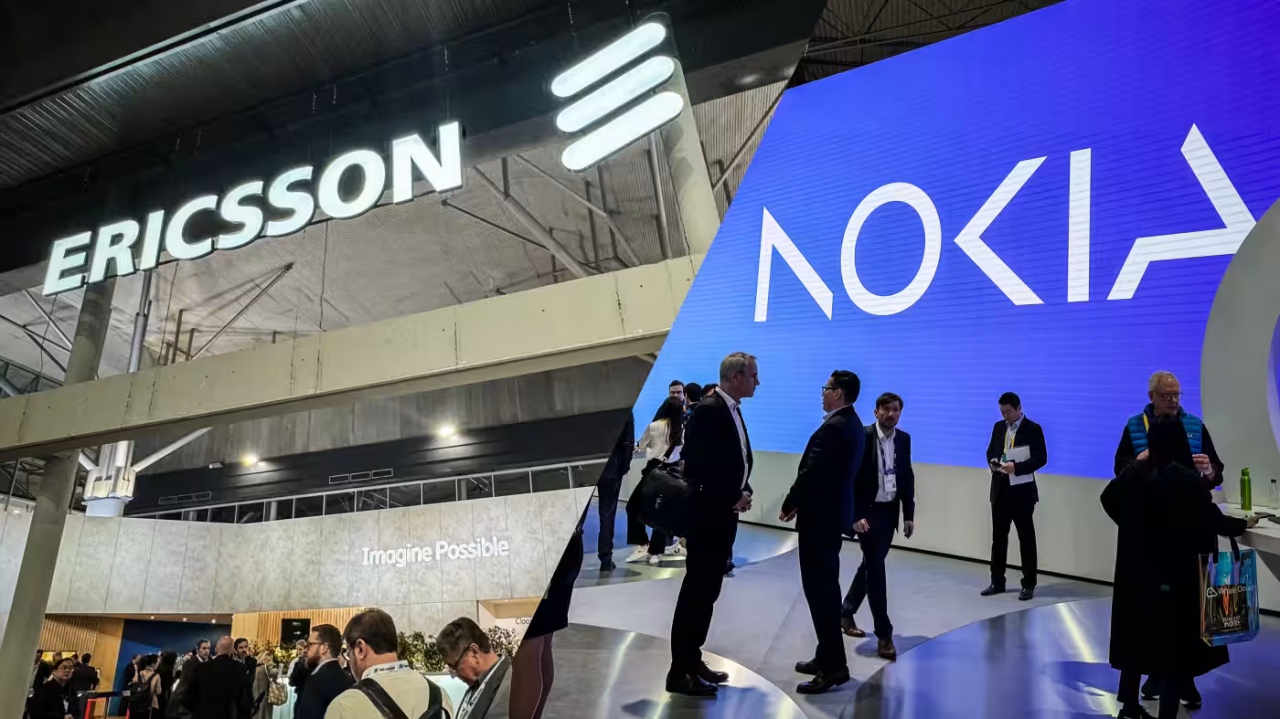
Ericsson Silicon, the division responsible for specialized integrated circuits (ASICs), has established a facility in Austin, Texas (USA) and expanded its team in Sweden. They employ several hundred engineers, according to Sodergren. With some of its in-house chips, Ericsson consistently utilizes the latest chip manufacturing technology and introduces a new generation of chips each year.
"Now, we're playing a bigger role than before," he said. "I think this is one of the reasons Ericsson is really leading the industry... We've done this ourselves."
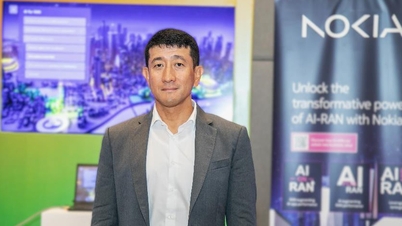
Ericsson's Finnish rival, Nokia, has also taken a similar approach, launching its ReefShark SoC product line in 2018. Jane Rygaard, head of global enterprise partnerships at Nokia, said that as they transitioned from 4G to 5G and now to 6G, capabilities and understanding of the requirements are closely tied to delivering greater performance and lower power consumption.
“Of course, we could continue to go out and buy chips, but if we want performance and stability, it requires the design to be done in-house,” Rygaard commented. For example, Nokia’s latest MIMO antenna weighs half as much as its predecessor thanks to the new ReefShark chipset, which improves energy efficiency and radio performance.
Stephane Teral, founder and principal analyst at research firm Teral Research, argues that customization is increasingly important because "5G and AI demand more powerful computing power" from network infrastructure. However, developing chips for telecommunications networks requires significant resources and access to advanced manufacturing technology. Therefore, companies like Nokia and Samsung are partnering with established developers such as Marvell, a market leader in providing chips for telecommunications and network infrastructure.
Marvell and Nokia partnered in 2020 to jointly develop multiple generations of ReefShark chipsets for 5G applications. In 2022, they focused on producing data processors with lower latency, higher performance, and better energy efficiency.
Will Chu, senior vice president and head of Marvell's Computing and Storage division, told Nikkei that the desire to compete is the "number one" factor driving the rise of custom chips. "From 2G, 3G, 4G, 5G to 6G, each time they move up a notch, they require better semiconductors," he said.
According to Mr. Chu, another crucial factor is the convergence of 5G and AI, forcing cloud service providers to upgrade their infrastructure. They need new infrastructure to support all applications. However, based on his observations, only leading companies – including telecommunications and cloud – have the capability and resources to develop or co-develop custom chips.
(According to Nikkei)
Source

![[Photo] Prime Minister Pham Minh Chinh holds a phone call with the CEO of Russia's Rosatom Corporation.](/_next/image?url=https%3A%2F%2Fvphoto.vietnam.vn%2Fthumb%2F1200x675%2Fvietnam%2Fresource%2FIMAGE%2F2025%2F12%2F11%2F1765464552365_dsc-5295-jpg.webp&w=3840&q=75)


![[Photo] Closing Ceremony of the 10th Session of the 15th National Assembly](/_next/image?url=https%3A%2F%2Fvphoto.vietnam.vn%2Fthumb%2F1200x675%2Fvietnam%2Fresource%2FIMAGE%2F2025%2F12%2F11%2F1765448959967_image-1437-jpg.webp&w=3840&q=75)












































![[OFFICIAL] MISA GROUP ANNOUNCES ITS PIONEERING BRAND POSITIONING IN BUILDING AGENTIC AI FOR BUSINESSES, HOUSEHOLDS, AND THE GOVERNMENT](https://vphoto.vietnam.vn/thumb/402x226/vietnam/resource/IMAGE/2025/12/11/1765444754256_agentic-ai_postfb-scaled.png)











































Comment (0)