

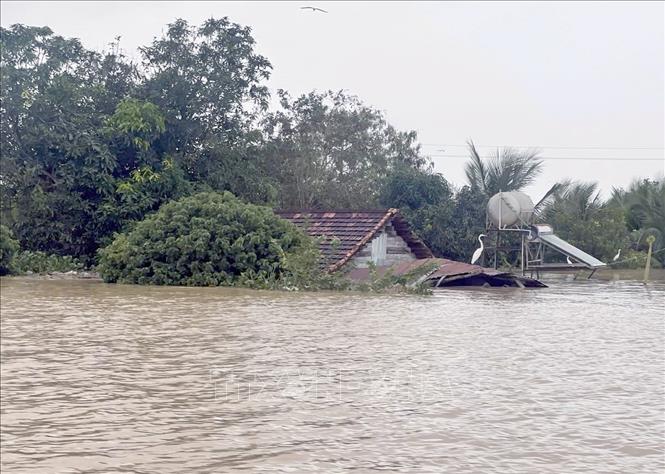
In that context, the Government and the Prime Minister have thoroughly directed closely and taken urgent actions to respond to increasingly unpredictable climate change. These actions not only show the fierce nature of the natural disaster "storm on storm, flood on flood" but also affirm the Government's strong determination to protect people's lives and property as well as respond long-term to harsh natural conditions.
Vietnam News Agency introduces a series of articles "Adapting to "beyond the law" natural disasters" that deeply analyzes the severe impacts of "beyond the law" natural disasters in 2025, acknowledging the Government's close direction efforts, along with urgent and long-term solutions to improve resilience, restructure response thinking and protect people's safety. At the same time, the series also raises the urgent issue of solving increasingly serious flooding in Da Nang and other large cities as well as the pressure to improve forecasting and warning capacity in the face of increasingly extreme weather challenges.
Lesson 1: Taking Action in the Face of Extreme Challenges
According to the Department of Dyke Management and Natural Disaster Prevention ( Ministry of Agriculture and Environment ), from the beginning of 2025 to November 24, natural disasters occurred consecutively across the country, causing particularly serious consequences with total estimated damage of more than 85,000 billion VND.
Up to this point, 2025 has recorded 21 storms and tropical depressions in the East Sea, in succession with many unusual and irregular developments. Three very strong storms, No. 5, 10, and 13, forced the Prime Minister to set up a Forward Command Committee to respond.
Storms and floods are frequent and out of control.
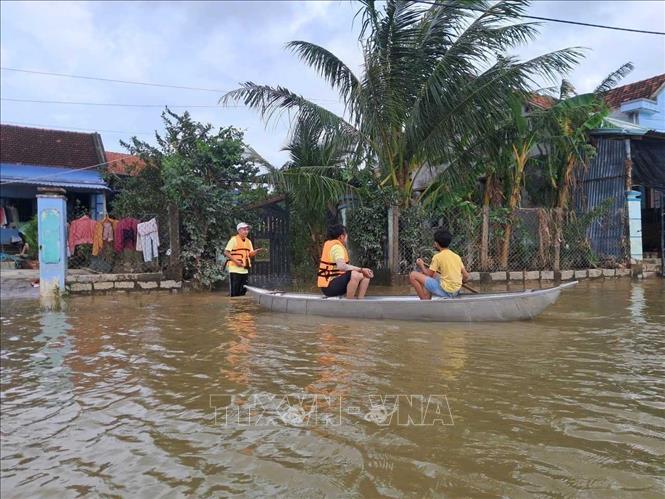
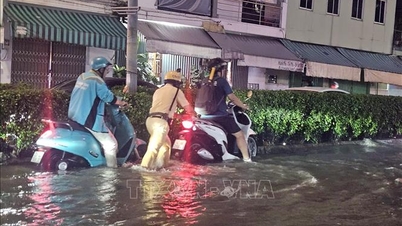
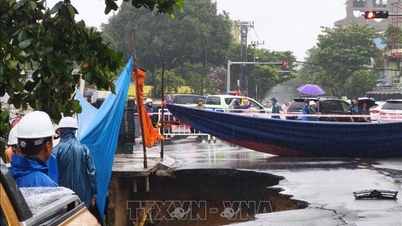
Extreme heavy rain, floods exceeding history on 13 rivers in the Northern and Central regions; very serious flooding in urban areas, low-lying areas, especially in Ha Giang city, Thai Nguyen, Bac Ninh, Hanoi, Thanh Hoa, Nghe An, Quang Tri, Hue, Da Nang, Quang Ngai, Gia Lai, Dak Lak, Khanh Hoa...
Many areas in a short period of time have to suffer all of the above natural disasters, leading to the phenomenon of double natural disasters: storms on storms, floods on floods, flash floods, landslides, especially in the mountainous provinces, midlands of the North and Central regions, seriously threatening the safety of natural disaster prevention and control works, infrastructure, especially the transportation, telecommunications, electricity, dikes, dams, etc.
The recent flood in the South Central region from November 16-22 was assessed as an extreme phenomenon, surpassing historical records when the rainfall at many stations exceeded the previously recorded levels. Some other stations such as Son Thanh Tay, Son Thanh Dong, Hoa My Tay, Song Hinh (Dak Lak) recorded rainfall of up to 1,000 - 1,200 mm in just a few days. According to the classification of the World Meteorological Organization (WMO), these are rare events, almost impossible to accurately forecast quantitatively.
According to the National Center for Hydro-Meteorological Forecasting, from November 16 to 22, large, extremely large and historic floods occurred on many rivers from Quang Tri to Khanh Hoa and Lam Dong. Many large rivers exceeded historic floods. The phenomenon of record-breaking floods in 3-5 basins is extremely rare, almost never occurring in more than 50 years of observation and far exceeding normal annual flood levels.
In the last months of 2025, storm No. 15 and its circulation are forecast to continue to affect the South Central region, which has just suffered heavy damage due to floods.
This unusual storm and flood situation is a clear demonstration that traditional weather patterns are changing, becoming more extreme and unpredictable due to the impact of climate change leading to changes in circulation, storms and tropical depressions.
Vietnam has achieved important results in proactively preventing natural disasters and climate change, but there are still problems arising from increasingly extreme and unusual weather developments.
The Ministry of Agriculture and Environment's report on tasks and solutions to overcome the consequences of floods after storm No. 11 also pointed out that the work of forecasting extreme heavy rains, exceptionally large floods, exceeding history is still limited, and historical values during floods cannot be predicted early. The resilience capacity of infrastructure works to natural disasters is still limited, especially in exceptionally large, historical situations.
The capacity to monitor natural disasters, search and rescue is still limited... Means and equipment for disaster response and search and rescue are still lacking and do not meet requirements, especially in remote areas.
Response plans to historic floods are still passive and have many shortcomings; small hydroelectric reservoirs have not been managed and closely monitored from the construction, records management, and operation stages...
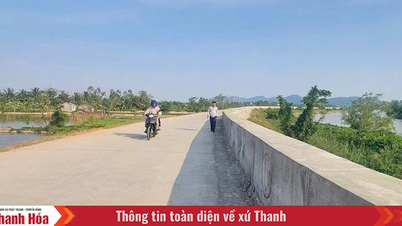
Meanwhile, the level of investment in disaster prevention infrastructure (dyke systems, dams, forecasting, warning, etc.), public infrastructure and housing is not strong enough to withstand the devastation of natural disasters and floods.
In the report “Vietnam 2045 – Greener Growth”, the World Bank (WB) emphasized that Vietnam needs to shift from a “resilience” model to a “proactive adaptation” model to climate change. WB recommends that the Government create a favorable policy environment to encourage businesses and the community to invest in technology to reduce natural disaster risks.
Experts also said that Vietnam needs to continue expanding investment in sustainable infrastructure, improve early warning capacity, promote green finance and strengthen cooperation with the private sector. At the same time, hydrometeorological standards need to be updated to suit current extreme climate conditions.
Urgent task
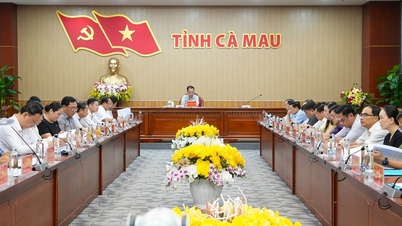
Responding to natural disasters and climate change has become an urgent task. The entire political system, the Government, ministries, and localities have taken urgent and active action. From urgent online meetings during overseas business trips to statements at international forums, the head of the Government has consistently sent the message of focusing on people.
Concluding the urgent online meeting on overcoming the consequences of floods in the Central region at 2 a.m. on November 23 from South Africa, Prime Minister Pham Minh Chinh emphasized that "the people need us the most in difficult times", relevant subjects must put themselves in the position of the people to overcome the consequences of natural disasters as quickly and effectively as possible, with the highest spirit of focus on people.
Previously, speaking at the online summit on climate action co-chaired by United Nations Secretary-General Antonio Guterres and Brazilian President Luiz Inácio Lula da Silva in April this year, Prime Minister Pham Minh Chinh affirmed that Vietnam considers responding to climate change as the mandate of the times. Prime Minister Pham Minh Chinh said that green transformation is an inevitable trend, a strategic choice, a breakthrough driving force and a top priority, with people at the center, to promote rapid and sustainable development in the coming period, determined "not to sacrifice environmental protection in exchange for mere economic growth".
Sharing about Vietnam's urgent implementation of climate actions in a synchronous, comprehensive, and planned manner, the Prime Minister said that Vietnam is constantly making efforts to perfect the institutions, mechanisms, policies, and legal framework necessary for green transformation, including national planning, energy master planning, strategies and plans for developing key industries, documents to remove difficulties with many new and breakthrough mechanisms in the energy sector, as well as support projects for vulnerable areas and people in areas damaged by climate change.
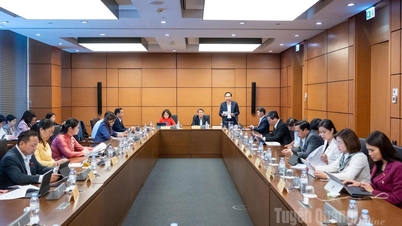
At the meeting to respond to storm No. 15 on the morning of November 26, Deputy Prime Minister Tran Hong Ha - Deputy Head of the National Steering Committee for Civil Defense highly appreciated the proactiveness of localities but at the same time emphasized: Natural disasters are objective, but what can be prevented but cannot be done, responsibility must be clearly defined.
The Deputy Prime Minister also requested an assessment of the causes of recent flash floods and landslides, distinguishing between natural and human factors, and drawing lessons to protect people's lives. Localities must rely on historical flood maps to identify low-lying areas, accept living with natural disasters and prepare appropriate response plans.
Regarding the hydropower reservoir operation process, the Deputy Prime Minister pointed out the need to review the responsibility of the reservoir owner and the inter-reservoir process, ensuring timely information to the downstream. "If there are no control and regulation measures, sudden flood discharge can cause flash floods, endangering people's safety," the Deputy Prime Minister emphasized.
The Deputy Prime Minister also requested the Office of the National Civil Defense Steering Committee to coordinate with the Ministry of Agriculture and Environment to develop a response plan framework for each level of natural disaster and organize annual drills, especially in areas prone to flash floods, landslides, and landslides.
At the same time, ministries and branches must coordinate with research institutes and scientific agencies on irrigation, meteorology and water resources management to grasp the situation, accurately assess water-related risks, thereby controlling well and minimizing damage to the people.
The Deputy Prime Minister especially emphasized the need to re-evaluate flood, flash flood, landslide and geological disaster maps of 34 provinces and cities. "Forecast maps are the main tool for developing scenarios and response plans. Without them, forecasting will also be difficult," the Deputy Prime Minister emphasized.
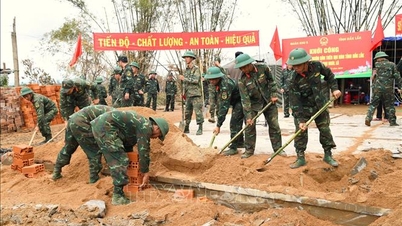
Implementing solutions to overcome the consequences of natural disasters and restore production in localities in the Central region, the Government has just issued Resolution No. 380/NQ-CP dated November 25, 2025. To strive for economic growth of over 8% in 2025 and 10% or more in 2026, the Government and the Prime Minister require synchronous and effective implementation of support solutions and policies, closely combining support to overcome consequences with restructuring production, reorganizing residents in dangerous areas, proactively restoring infrastructure, improving resilience, and sustainably adapting to natural disasters...
Regarding long-term response, Deputy Minister of Agriculture and Environment Nguyen Hoang Hiep proposed specific solutions, ministries, branches and localities organize implementation and strengthen inspection of serious implementation of plans related to dykes, natural disaster prevention, socio-economic development planning...; in which special focus is on reviewing flood prevention and control planning, dyke planning; strengthening management of exploitation and use of river beds, banks and beaches to prevent encroachment of flood escape corridors.
At the same time, research and adjust the authority to direct and manage flood control in river basins during the rainy season, floods or when there are unusual natural disasters in the direction of assigning a single agency to direct and manage throughout to ensure consistency. Deputy Minister Nguyen Hoang Hiep also emphasized the investment and upgrading of the system of dikes, dams, and other infrastructure works with focus and key points; especially prioritizing resources to completely handle key dikes, dams, and reservoirs in a sustainable manner, to withstand historic storms and floods.
Vietnam cannot stand outside the vortex of extreme climate. And, these are the immediate solutions as well as the necessary long-term adaptation strategies for a country at the epicenter of climate change.
Article 2: Da Nang urgently fights flooding and landslides
Source: https://baotintuc.vn/xa-hoi/thich-ung-thien-tai-vuot-quy-luatbai-1hanh-dong-truoc-thach-thuc-cuc-doan-20251203103117320.htm



















![[Photo] Parade to celebrate the 50th anniversary of Laos' National Day](/_next/image?url=https%3A%2F%2Fvphoto.vietnam.vn%2Fthumb%2F1200x675%2Fvietnam%2Fresource%2FIMAGE%2F2025%2F12%2F02%2F1764691918289_ndo_br_0-jpg.webp&w=3840&q=75)
![[Photo] Worshiping the Tuyet Son statue - a nearly 400-year-old treasure at Keo Pagoda](/_next/image?url=https%3A%2F%2Fvphoto.vietnam.vn%2Fthumb%2F1200x675%2Fvietnam%2Fresource%2FIMAGE%2F2025%2F12%2F02%2F1764679323086_ndo_br_tempimageomw0hi-4884-jpg.webp&w=3840&q=75)
























































Comment (0)