

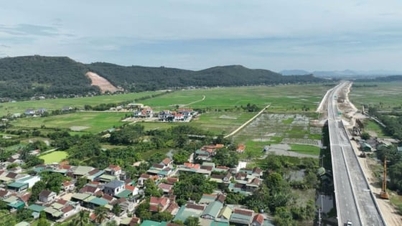
With a total investment of about 67.34 billion USD using state budget capital, the North-South high-speed railway project is the largest-scale project ever.
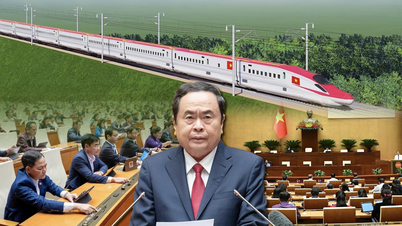
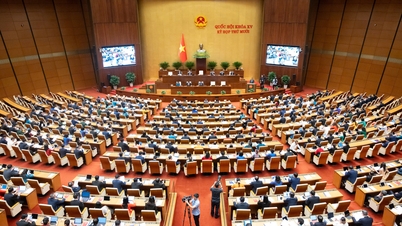
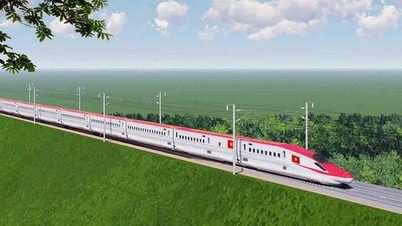
After nearly 20 years of research, at the 8th session of the 15th term, the high-speed railway project on the North-South axis continued to be submitted to the National Assembly for investment policy. Previously, the 13th Party Central Committee, the Politburo , and the Government agreed on the investment policy for the North-South high-speed railway and requested to mobilize all resources for implementation. With the increasing demand for transportation, the economic scale in 2030 reaching 430 billion USD, nearly 3 times higher than in 2010, public debt at a low level of about 37% of GDP, this is considered the ripe time to proceed with construction. The project is expected to start construction in 2027 and be completed in 2035 with a length of 1,541km. According to design, the train speed is 350 km/h, helping the travel time from Hanoi to Ho Chi Minh City to be 5.5 hours, saving 6 times more time than regular trains.
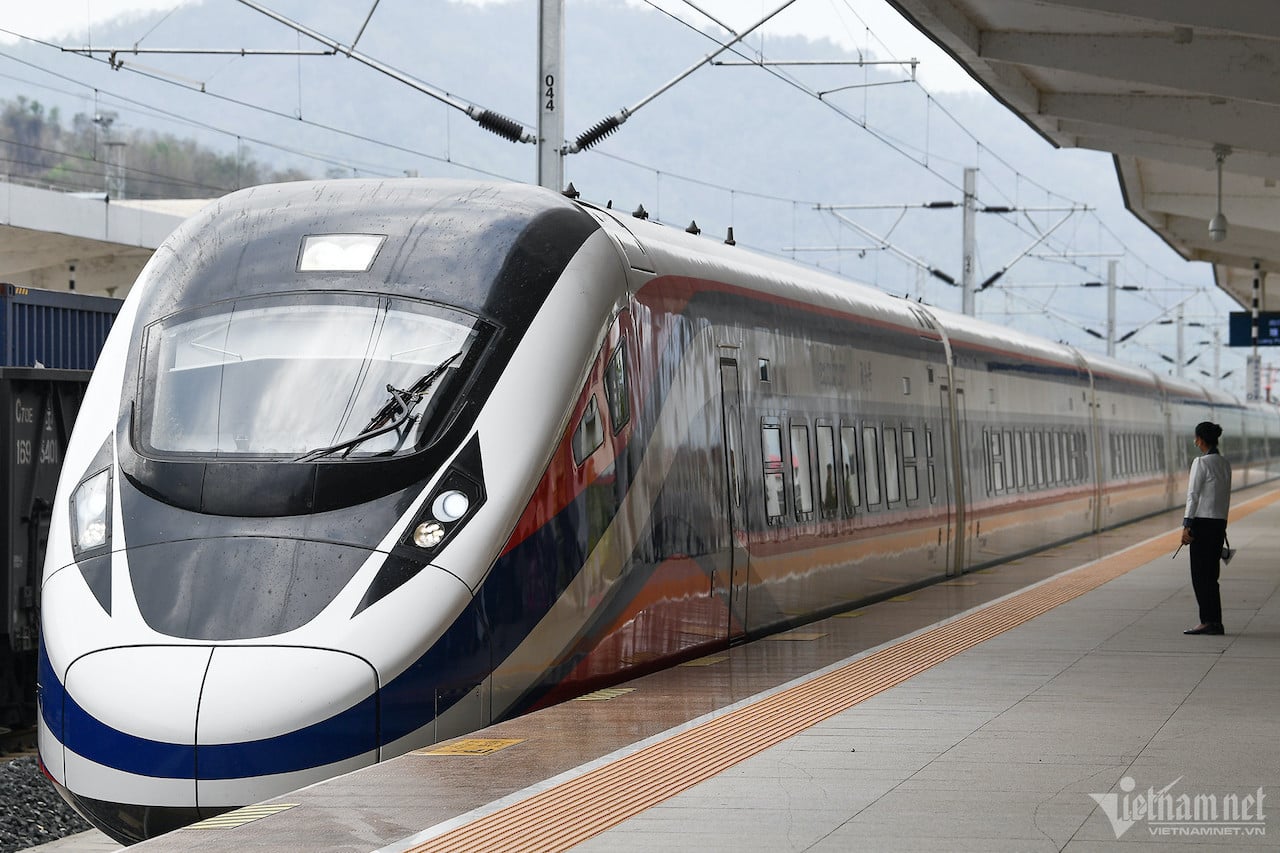
Laos high-speed railway. Photo: Hoang Ha
According to Minister Nguyen Van Thang, the railway line starts in Hanoi (Ngoc Hoi station) and ends in Ho Chi Minh City (Thu Thiem station), passing through 20 provinces and cities with a length of about 1,541km. The railway line is designed with a speed of 350km/h with a total investment of more than 67 billion USD, using state budget capital allocated in the medium-term public investment plan periods. The project is expected to be completed in 2035, with a capital allocation period of about 12 years, an average of about 5.6 billion USD per year. Speaking at the group discussion, Deputy Head of the Finance and Budget Committee Pham Thuy Chinh said that when studying documents and discussing with many delegates of the 12th National Assembly, many delegates regretted not pressing the button to approve the high-speed railway project with a total investment of 56 billion USD at that time. "Now, the project has increased to 67 billion USD and has missed the opportunity to develop the railway industry. Therefore, investing in the North-South high-speed railway cannot be any later," said Deputy Head of the Finance and Budget Committee Pham Thuy Chinh. Deputy Minister of Transport Nguyen Danh Huy added that any investment project must come from practical needs. For the North-South high-speed railway, the Ministry has conducted research for 18 years. Currently, in the process of researching and establishing 5 specialized plans, the Ministry has forecasted based on practical needs, showing that on the North-South corridor, the demand for freight and passenger transport is the largest. "The results show that this is the right time, necessary to build the North-South high-speed railway to restructure the transport market share appropriately. This is also really the premise and motivation for us to enter the era of development, as General Secretary To Lam said," Deputy Minister Nguyen Danh Huy informed. Which plan mobilizes "huge" capital? According to Deputy Minister Nguyen Danh Huy, at this time, the scale of our country's economy has reached 430 billion USD, public debt is also at a very reasonable level of about 37% (in 2023). Therefore, the basic resource conditions are not a big challenge. The Ministry of Transport assesses that this is an average level compared to some high-speed railway lines in the world with the same operating speed range when converted to 2024. However, in the history of public investment in our country, this is the largest-scale project ever. Therefore, Deputy Minister of Finance Bui Van Khang said that the plan to mobilize resources must proactively develop a plan to prioritize spending on development investment, including the high-speed railway project, with the spirit of combining both central and local budgets, with the central budget playing the leading role. At the same time, it is necessary to attract resources, mobilize government bonds with appropriate interest rates, market conditions and project implementation progress. At the same time, it is necessary to attract domestic investment resources, including public-private partnerships. Finally, it is necessary to mobilize foreign resources with high incentives, reasonable negotiation conditions and few constraints.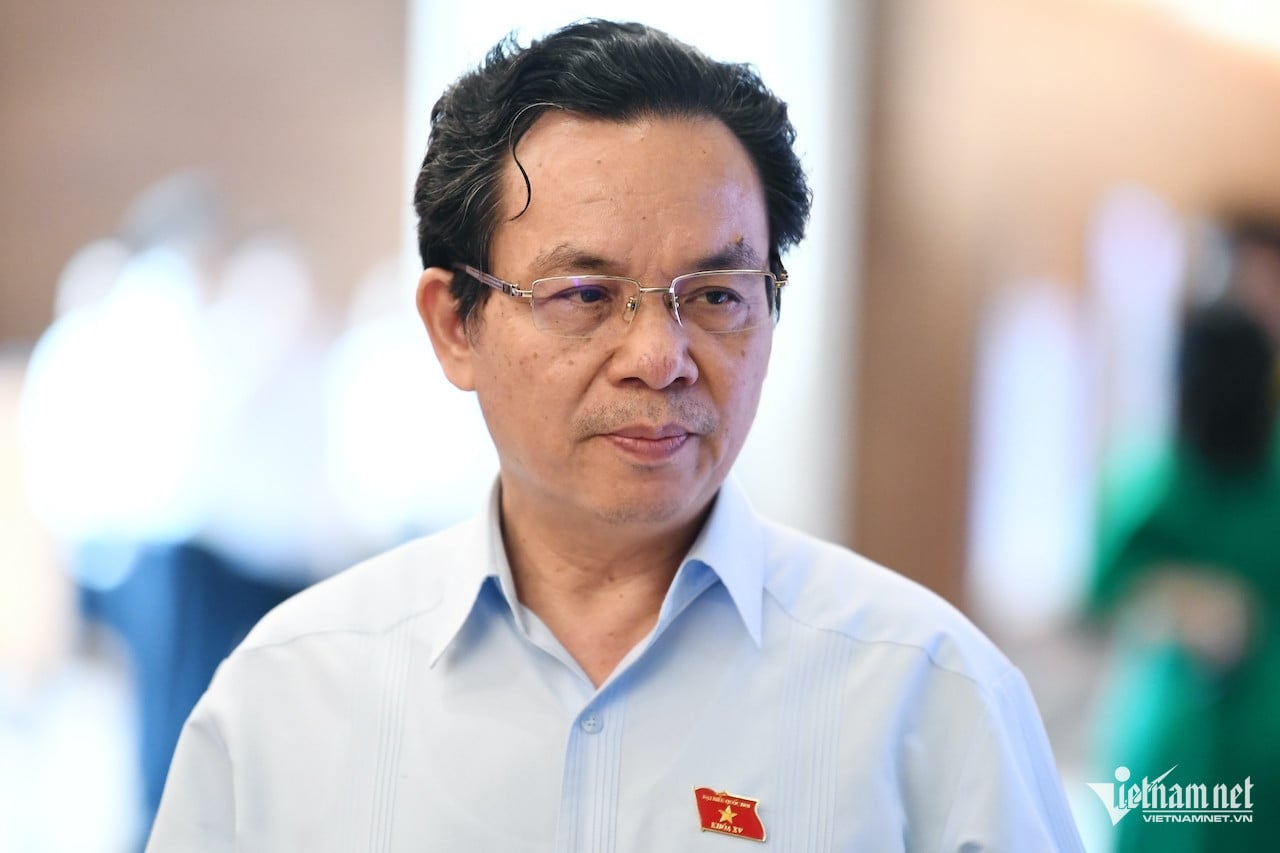
Prof. Dr. Hoang Van Cuong, Member of the National Assembly's Finance and Budget Committee. Photo: Hoang Ha
Meanwhile, Prof. Dr. Hoang Van Cuong, member of the National Assembly's Finance and Budget Committee, emphasized that although the project has a large capital source, it must be prioritized and not be allowed to lack capital during the implementation process. According to Mr. Cuong, we must consider capital mobilization solutions such as: Increasing public debt, issuing government bonds to mobilize domestic resources, and even issuing international bonds to mobilize international resources. Emphasizing more on capital sources, Minister of Transport Nguyen Van Thang affirmed that the project will mainly use domestic capital. If foreign capital is borrowed, it must be cheaper than domestic capital and the mechanism must be unconstrained, so that construction is not dependent on and constrained by technology.Vietnamnet.vn
Source: https://vietnamnet.vn/lam-duong-sat-toc-do-cao-bac-nam-dong-luc-buoc-vao-ky-nguyen-vuon-minh-2342088.html






















































































Comment (0)