

According to Ms. Nguyen Thi Viet Nga, a member of the National Assembly's Committee on Culture and Society, the Politburo 's issuance of Resolution No. 71-NQ/TW on breakthroughs in education and training (Resolution 71) is a strategic milestone. It contributes to creating new turning points in thinking, awareness, and action in bringing education and training to a new level of development.
One of the points mentioned in this resolution that has attracted public attention is the Politburo's policy of ensuring the provision of a unified set of textbooks nationwide, striving to provide free textbooks for all students by 2030.
According to Ms. Nguyen Thi Viet Nga, this is a correct, insightful, and appropriate policy in line with the current reality. First of all, it must be affirmed that after 5 years of implementing the 2018 general education program with 3 sets of textbooks (Creative Horizons, Connecting Knowledge with Life, and Kite) approved and rigorously evaluated by the Ministry of Education and Training, these textbooks basically meet the requirements of a modern education program.
Initially, the textbooks have proven effective, contributing to improving the quality of content and creativity in compilation, expanding choices for schools, teachers, and students, helping them access more diverse and rich knowledge, and developing critical thinking skills.
However, the use of multiple sets of textbooks has also revealed some difficulties and shortcomings that need to be addressed. Through monitoring by the National Assembly's functional agencies and the opinions of voters, Ms. Nguyen Thi Viet Nga observed that, although the three current sets of textbooks mobilized many reputable experts, scientists, and educators to compile them, the overall amount of knowledge in these sets is still quite heavy, easily causing overload for students.
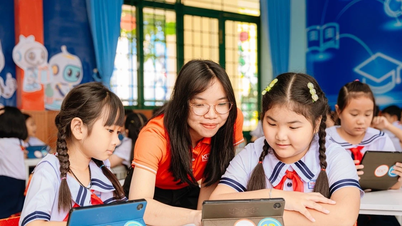
Furthermore, the existence of multiple sets of textbooks creates difficulties for many schools, teachers, and students in choosing; especially for students who are using one set of textbooks and then transfer to another school or area, having to use a different set of textbooks puts them at a disadvantage in accessing knowledge.
Therefore, the Politburo's policy of "ensuring the provision of a unified national set of textbooks" also aims to overcome the aforementioned obstacles and shortcomings.
The Ministry of Education and Training is responsible for compiling a unified set of high-quality textbooks to serve and meet the teaching and learning needs of teachers and students in the future.
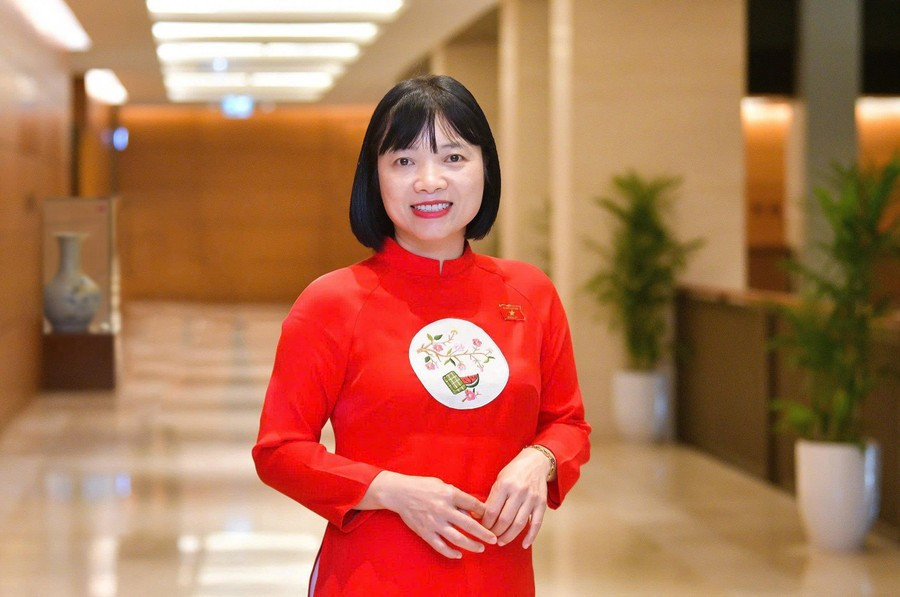
To ensure the effective compilation and implementation of the common textbook series, Ms. Nguyen Thi Viet Nga noted several key issues. First, the Ministry of Education and Training needs to review all knowledge standards in the curriculum to ensure appropriate content and avoid overloading the students.
Secondly, the editorial team must have a harmonious combination of reputable and highly qualified experts and scientists with experienced teachers, in order to create textbooks that are relatable, suitable for the psychology and learning abilities of students.
Thirdly, the handling of existing textbooks is also an issue that needs to be addressed appropriately. In my opinion, we support the policy of ensuring a unified national set of textbooks, but we should not immediately abolish the three current sets of general education textbooks, as these sets have been meticulously compiled, rigorously reviewed, and are scientifically sound. Abolishing them would be wasteful.
Therefore, along with a standardized set of textbooks for common use, schools, teachers, and students should consider these textbooks as valuable reference materials to contribute to diversifying knowledge and improving the quality of teaching and learning.
However, close and appropriate management measures are needed to avoid the overuse of reference books, which can easily create unnecessary pressure on students, as has happened in the past.
It is also important to emphasize that using a single set of textbooks does not mean we are returning to a rigid, standardized approach to education. To ensure flexibility and creativity, we need to continue innovating teaching and assessment methods, focusing on the learner. Teachers can still flexibly expand and supplement knowledge from other sources to suit each class.
This is a core element in maximizing the creativity and critical thinking of students, regardless of their region, and avoiding one-sided knowledge delivery. Along with textbook development, it is necessary to simultaneously reform the training programs at teacher training colleges to prepare a new generation of teachers with the necessary qualities, qualifications, abilities, and skills to meet the demands and tasks of educational reform.
Source: https://giaoducthoidai.vn/bao-dam-cung-cap-mot-bo-sach-giao-khoa-thong-nhat-toan-quoc-post748400.html
































































Comment (0)