

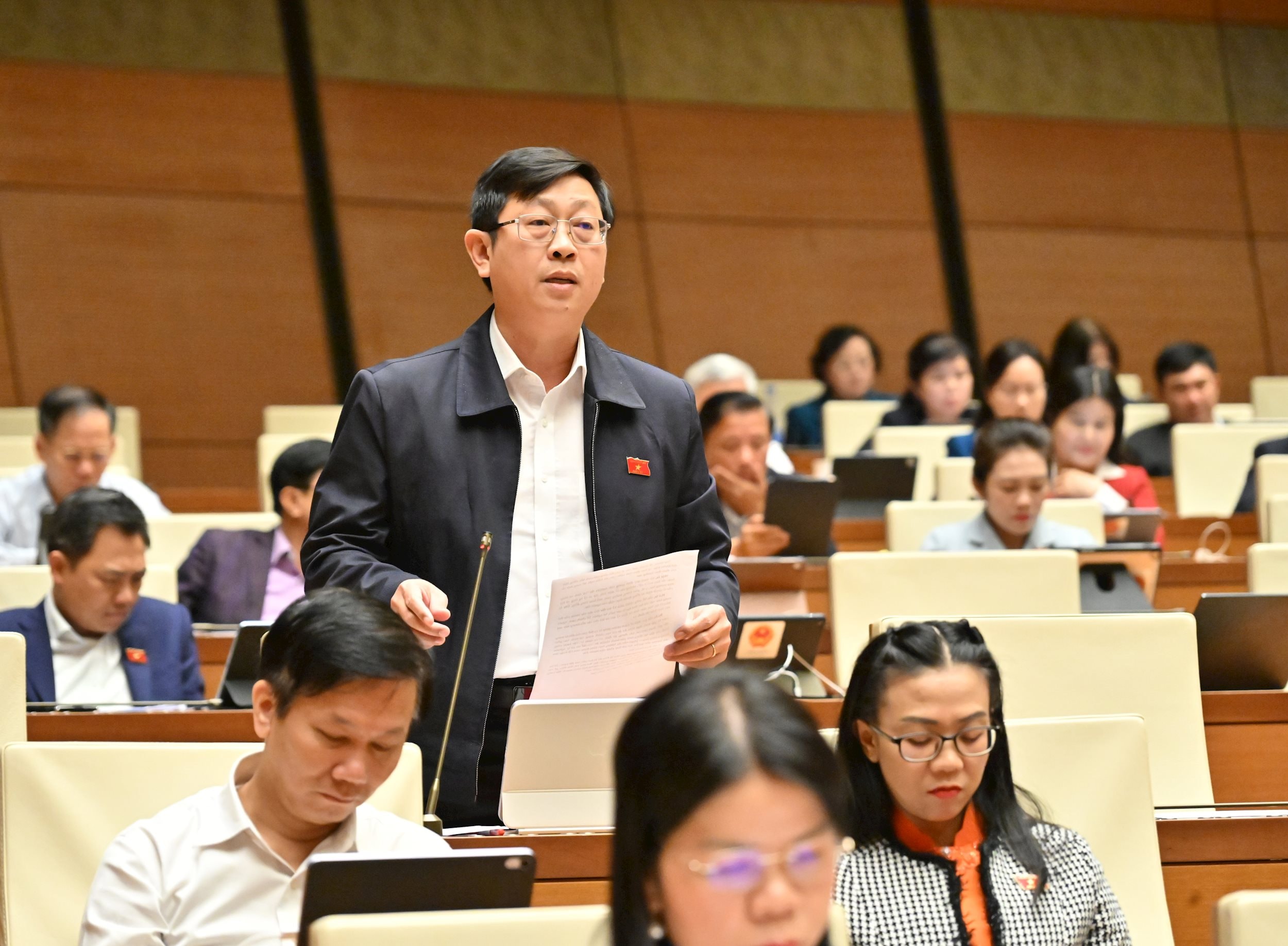
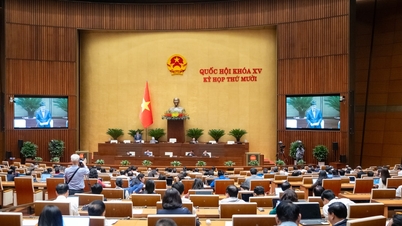
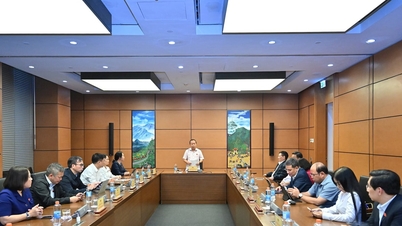
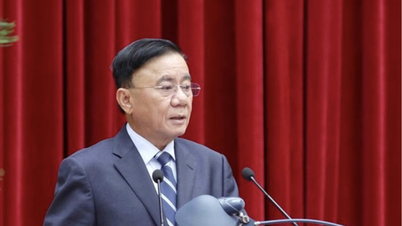
According to delegate Nguyen Huu Thong, Hanoi is simultaneously implementing many infrastructure projects, urban renovation and reconstruction projects as well as large-scale dynamic projects. However, the implementation process has encountered many obstacles due to overlaps in current regulations, especially regarding the authority to decide on investment policies, land recovery, site clearance, investor selection and capital mobilization.
"In that context, the Resolution on piloting a special mechanism is necessary to remove institutional "bottlenecks" and create a more flexible legal corridor for Hanoi in organizing the implementation of large and important projects," National Assembly Deputy Nguyen Huu Thong emphasized.
Proposal to expand private mobilization for urgent projects
Commenting on Article 9 of the draft Resolution, delegate Nguyen Huu Thong said that allowing the implementation of projects to handle traffic congestion, flooding, environmental pollution and urban order under the emergency public investment mechanism or emergency construction order is in line with practical requirements.
Without streamlined procedures, social costs will continue to increase, directly affecting the lives of millions of people and reducing Hanoi's urban competitiveness in the long term.
To make this mechanism effective, delegates suggested adding regulations to expand the mobilization of the private sector for urgent projects. Allowing the application of a shortened public-private partnership (PPP) model for projects to deal with traffic congestion, flooding or environmental pollution will make good use of Hanoi's great socialization potential and reduce pressure on the budget.
Support the breakthrough urban renovation mechanism, but need to ensure people's rights
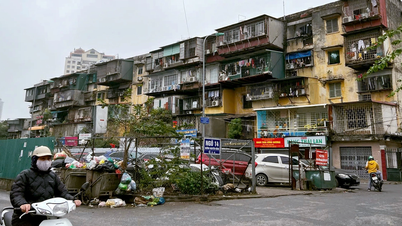
Regarding Article 10 on urban renovation, beautification and reconstruction, delegate Nguyen Huu Thong assessed this as a "strategic breakthrough" regulation, directly removing the biggest bottleneck in renovating old apartment buildings and beautifying historic inner cities, which has been a problem that Hanoi has been "stuck" with for many years.
The decision to assign the City People's Committee to decide on renovation measures according to the planning demonstrates strong decentralization, in line with the spirit of a special urban government. In particular, the regulation allowing enforcement when more than 75% of owners agree is an important step forward, helping to overcome the situation of minorities obstructing the common interest and ensuring the principle of prioritizing community interests in modern urban management.
However, in order for the policy to be implemented in a sustainable and humane way, delegate Nguyen Huu Thong suggested adding a provision on the principle of "resettlement equal to or better than the old place of residence", not only in terms of area but also in terms of social infrastructure, living space and living conditions. "This is the decisive factor in the real consensus of the people", the delegate emphasized.
Delegates also said that there must be specific support policies for vulnerable groups such as the elderly, poor households, policy households, and people with disabilities, to ensure stable housing after resettlement.
At the same time, it is necessary to clearly define the legal responsibilities of investors throughout the entire process, from temporary residence, construction to resettlement and project operation management; attaching that responsibility to strict sanctions if there is a delay in progress, a breach of commitment or an impact on the legitimate rights of the people.
"Hanoi is the capital, the heart of the country." Emphasizing this, delegate Nguyen Huu Thong expressed his hope that the special Resolution will help Hanoi resolve problems in basic construction, "so that the heart of the country is healthy, beating in sync with the general development as it enters a new era."
National Assembly Deputy Nguyen Huu Thong said that it is necessary for the National Assembly to consider amending Resolution 98/2023/QH15 and Resolution 136/2024/QH15 to promptly remove difficulties and create development momentum for Ho Chi Minh City and Da Nang in the current period.
According to the delegate, Vietnam is simultaneously implementing the arrangement of administrative units, streamlining the apparatus, innovating the urban government model and restructuring the national development space. This context requires strong and flexible mechanisms for large cities, which play a leading role in growth.
“Ho Chi Minh City and Da Nang are two important growth poles in the South and the Central Highlands, with great influence on the economic and social development of the whole country,” National Assembly Deputy Nguyen Huu Thong emphasized. Completing the special mechanism will help the two localities promote their role as regional centers, especially for Ho Chi Minh City to continue to maintain its position as the economic locomotive of the whole country.
Source: https://daibieunhandan.vn/can-co-che-dac-thu-de-ha-noi-thao-go-diem-nghen-thuc-day-cac-du-an-lon-10399606.html


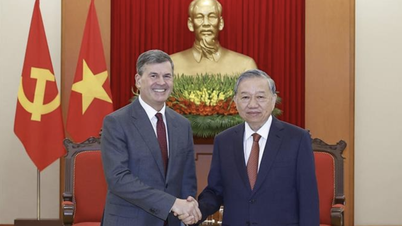
![[Photo] General Secretary To Lam receives the Director of the Academy of Public Administration and National Economy under the President of the Russian Federation](/_next/image?url=https%3A%2F%2Fvphoto.vietnam.vn%2Fthumb%2F1200x675%2Fvietnam%2Fresource%2FIMAGE%2F2025%2F12%2F08%2F1765200203892_a1-bnd-0933-4198-jpg.webp&w=3840&q=75)










































































Comment (0)