

Recently, many areas in the Central Highlands have experienced drought, causing damage to agricultural production. According to hydrometeorologists, the 2023-2024 dry season in the Central Highlands will see widespread and potentially severe drought. Therefore, local authorities and irrigation project owners must proactively plan for irrigation water sources for crops right from the beginning of the season.
According to the Central Highlands Regional Hydrometeorological Station, this year's dry season in the Central Highlands is predicted to face severe drought. In February and April 2024, there is a possibility of showers and thunderstorms, but the rainfall will not be substantial. Simultaneously, hot weather will occur in many areas. The total flow in rivers and streams throughout the dry season will be deficient by approximately 10-50% compared to the multi-year average, potentially causing water shortages for domestic use and irrigation across the entire region.
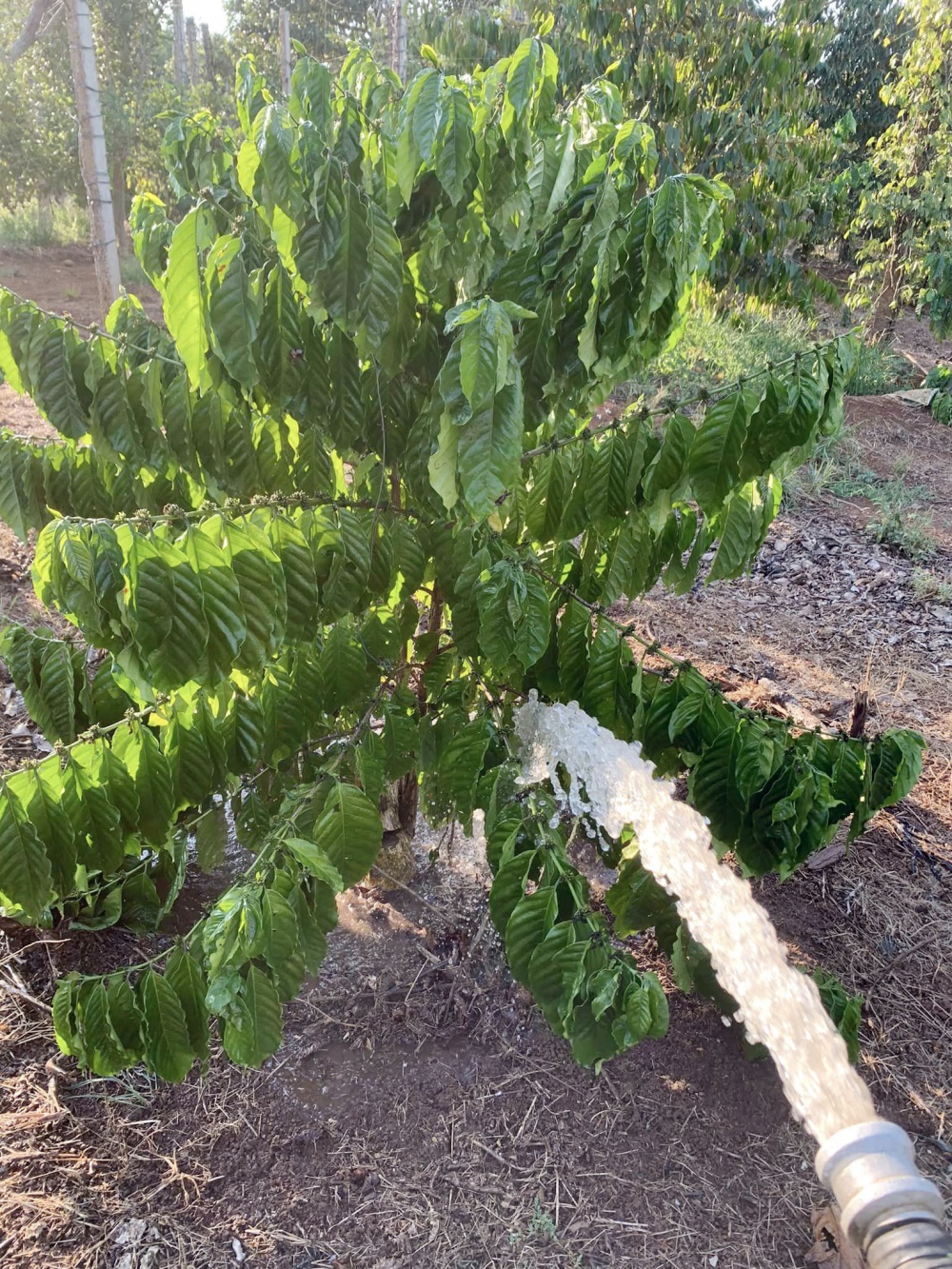 |
| On average, coffee farmers have to irrigate their plants for 10-20 hours per cycle to ensure sufficient water supply and prevent drought damage. |
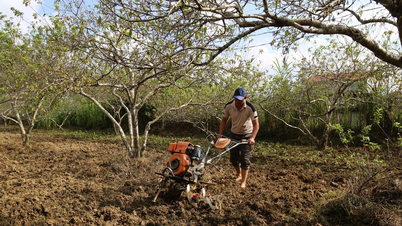
Dak Lak is currently in the midst of the dry season, and the lack of irrigation water is affecting many areas of crops grown by local farmers. To cope with the drought, farmers in many localities in Dak Lak province are proactively implementing various solutions to protect their crops and maintain production. Mr. Tran Van Hung, from Krong Nang district (Dak Lak), who grows about 2 hectares of coffee, said that the need for irrigation water for his crops is quite high, especially during the dry season. If not enough water is provided, the plants will drop flowers and fail to bear fruit. If water is insufficient during the growth and fruiting stages, the plants will drop fruit, reducing yield.
According to Mr. Hung, during this dry season, on average, the coffee plants need watering once every two weeks to almost a month; each time, the family has to water for 10-20 hours to ensure sufficient water supply and prevent drought damage. Because they have to rent a generator and water source, each watering session costs the family nearly a million dong. "If we don't water in time, the yield of the coffee plants will be affected. Therefore, to limit rapid water evaporation and thus reduce the number of watering sessions, while cleaning the garden, the family will leave a layer of grass about 3-4 cm thick to retain soil moisture during this season," Mr. Hung shared.
Meanwhile, Mr. Le Dung from Ea Ktur commune, Cu Kuin district (Dak Lak province) said that his family has about 8,000 square meters of land where they intercrop coffee and pepper. Mr. Dung's family has been involved with coffee cultivation for nearly 20 years. Mr. Dung believes that the most important aspect of coffee plant care is the timing of watering. If watering is not done in time, the plants will shed leaves and dry out; while watering too early, before the flower buds have differentiated, will cause uneven flowering, making harvesting difficult and affecting yield. Therefore, the principle for watering coffee plants is to do it correctly and sufficiently.
Mr. Dung said that in recent years, water shortages for irrigation during the dry season have been a frequent occurrence. Therefore, farmers have prepared for this by using drip irrigation and storing irrigation water from the end of the rainy season… However, this year's dry season is very harsh, and the possibility of water shortages in the upcoming irrigation periods is very high.
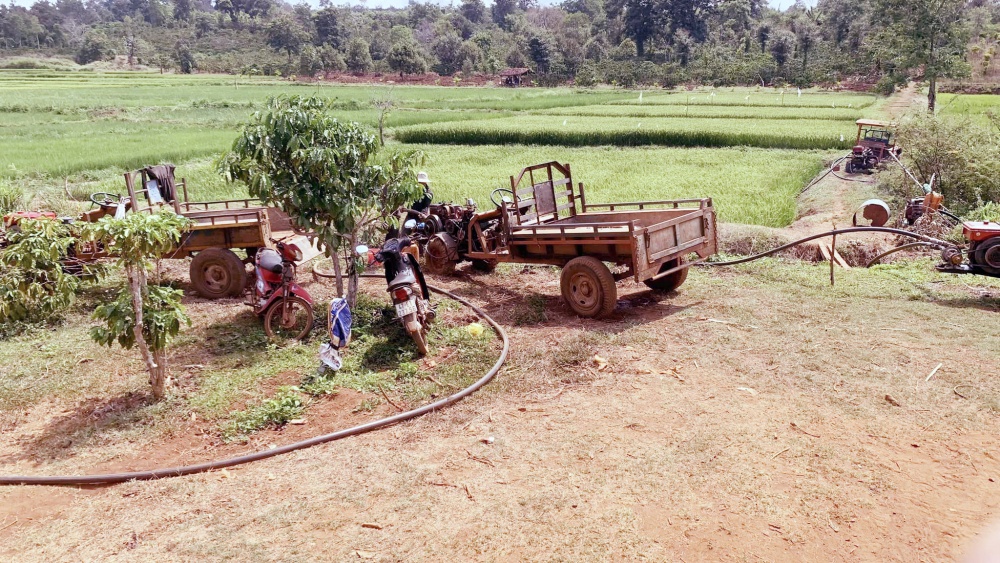 |
| Farmers are making use of every available water source to irrigate their crops. |
According to the Department of Agriculture and Rural Development of Cu Kuin district, there are 39 lakes, dams, and several dry streams and boreholes in the area, serving to irrigate 12,072 hectares of coffee plantations. The water supply is generally sufficient to meet the irrigation needs of crops during the dry season. However, if the hot weather persists and there is no rain, the risk of water shortage for irrigation is very high.
However, given the unpredictable climate in 2024, the unit proactively advised the District People's Committee on drought prevention and control plans to ensure effective production and minimize damage caused by drought.
Similarly, the family of Ms. Nguyen Thi Hieu in Cu M'gar district (Dak Lak province) owns more than 7 sao (approximately 0.7 hectares) of coffee. In recent days, due to unusual weather patterns and prolonged heatwaves, many types of pests have emerged in their plantations. Of particular concern is the mealybug infestation, which is severely threatening coffee yields this season. This is one of the most worrying insect pests on coffee plants due to its rapid spread and difficulty in control. When heavily infested with mealybugs, coffee fruit development slows down; if not eradicated promptly, the fruit clusters will dry out and spoil, affecting next season's yield. In severe cases, prolonged heatwaves can cause the plants to wither and die.
“These past few days, besides implementing control measures, while watering the coffee plants, I also used water to spray and wash away the flower clusters infested with mealybugs to limit their spread throughout the garden. However, if the dry weather continues without rain, it will be very difficult to completely eradicate the problem,” Ms. Hieu worried.
To proactively respond to drought conditions and ensure the livelihoods of the people and water resources for agriculture, the People's Committee of Dak Lak province has directed all levels, sectors, and localities to proactively review, assess, and balance the actual water resources in lakes, dams, rivers, streams, and groundwater sources in each region to regulate and exploit them rationally.
Source link









































![[OFFICIAL] MISA GROUP ANNOUNCES ITS PIONEERING BRAND POSITIONING IN BUILDING AGENTIC AI FOR BUSINESSES, HOUSEHOLDS, AND THE GOVERNMENT](https://vphoto.vietnam.vn/thumb/402x226/vietnam/resource/IMAGE/2025/12/11/1765444754256_agentic-ai_postfb-scaled.png)



















































Comment (0)