

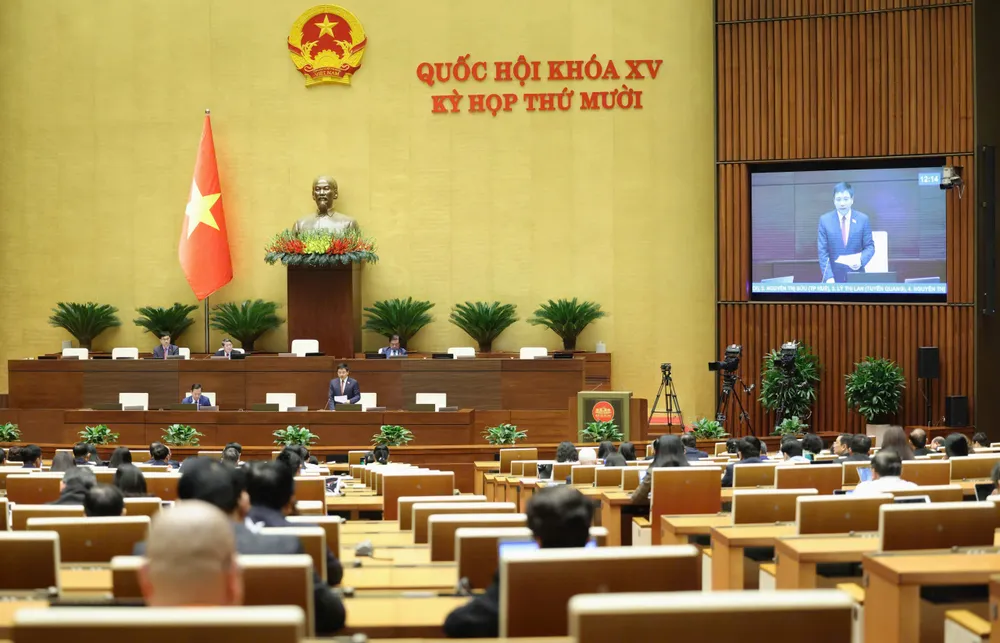
Where the most modern management models are tested
Most Venerable Thich Thanh Quyet ( Hanoi ) and other delegates all highly agreed with the National Assembly considering and deciding on resolutions on specific mechanisms and policies for Ho Chi Minh City, Hanoi and Da Nang.
The establishment of a specific mechanism is not only to remove existing difficulties and obstacles, but also has strategic significance in modeling a new, more effective and sustainable approach to urban development, suitable for the requirements of the next development stage. In particular, increasing the autonomy of Da Nang and Ho Chi Minh City in choosing investment methods, choosing strategic investors and taking advantage of flexible public-private partnership (PPP) models is an important condition for Ho Chi Minh City to maintain its leading position, so that Da Nang becomes a new growth pole of the Central region, spreading to neighboring localities.
Delegate Trinh Thi Tu Anh ( Lam Dong ) is interested in the mechanism for building free trade zones in Ho Chi Minh City, agrees with these regulations and believes that free trade zones are a step to challenge our institutional thinking in the context of the country seeking new growth drivers, based on innovation, modern services and international competitiveness.
The delegate suggested that the free trade zone should be seen as an institutional sandbox – that is, a controlled experimental framework for the process of innovating national governance methods. International experience shows that successful free trade zones have become places to shape new management standards before spreading to the general system.

On that basis, the delegate recommended to firmly maintain strong decentralization, ensuring that the Ho Chi Minh City People's Committee has real initiative in deciding and organizing the model, in accordance with the requirements of speed and flexibility of modern commerce.
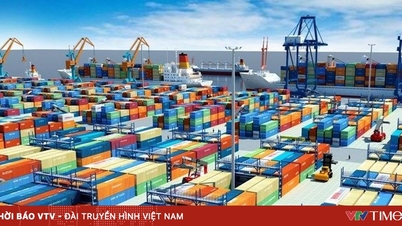
At the same time, it is necessary to position the free trade zone in Ho Chi Minh City as a “regional linkage nucleus”. A free trade zone is successful when it is anchored in a large production and service area behind it. Therefore, a specific mechanism needs to be linked to the task of connecting infrastructure, standardizing inter-regional logistics processes and opening the flow of goods from satellite provinces in the key economic zones of the South and the Central Highlands.
The success of this model must bring about a ripple effect across the entire region, while creating a practical premise for the Government to consider and replicate free trade zone models in potential localities across the country.
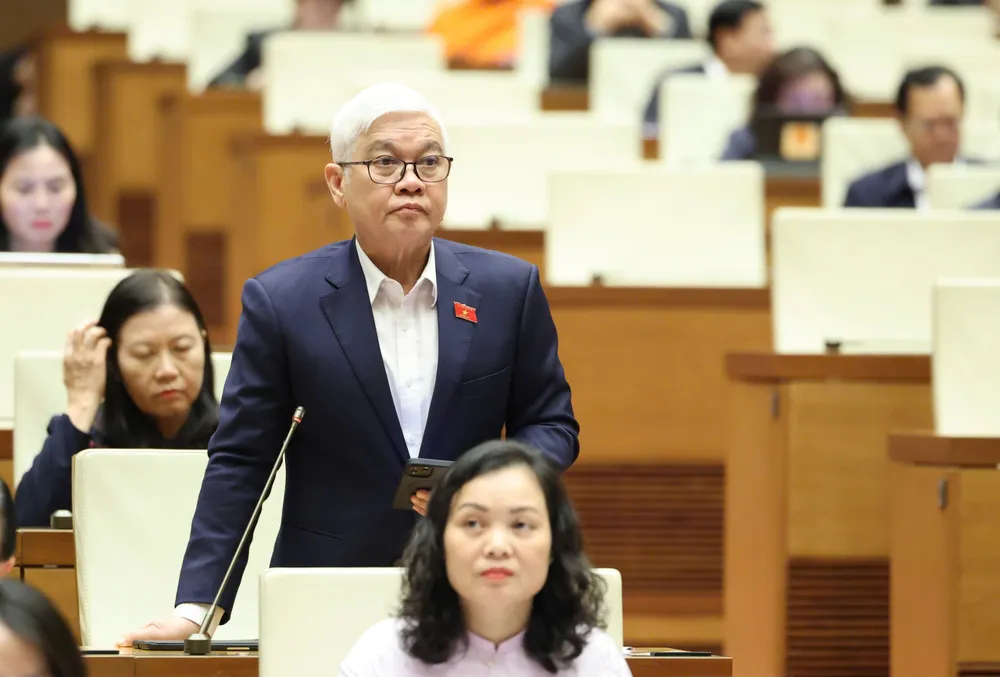
Decentralization, stronger decentralization to localities
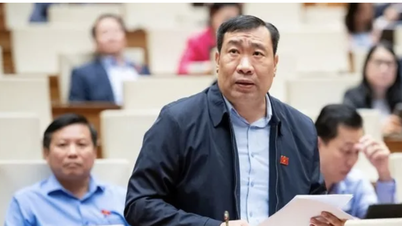
Deputy Nguyen Van Loi, Head of the National Assembly Delegation of Ho Chi Minh City, agreed with the majority of the deputies' opinions that it is necessary to decentralize and delegate more power to localities, especially localities that are qualified to organize and implement large projects.
Delegate Nguyen Van Loi proposed to innovate institutional building, should review and limit to the maximum extent possible the contents that are too specific, such as listing the list, name of each construction, project, compensation level for clearance... or the contents that the previous resolution is no longer suitable, need to be revised. For example, Resolution 188 of the National Assembly on urban railways previously only mentioned and allowed for the list in Ho Chi Minh City before, now it has added Binh Duong, Ba Ria - Vung Tau also need to be connected; or the railway transporting goods is located within the Ho Chi Minh City area... According to the Delegate, there are many specific contents that take time to get permission, so the Government should have a decree and the ministries and branches should guide the implementation.
Regarding planning and revised planning, Deputy Nguyen Van Loi proposed to leave it to the localities to decide, as long as previous projects already had planning.
Regarding investment decentralization and investment attraction, Deputy Nguyen Van Loi proposed to delegate all intra-regional projects, especially strategic infrastructure investment, to the local authorities, and to request the central government for connecting infrastructure. Similarly, free trade zones should also be delegated to localities to decide on the establishment, appraisal, and organization of projects, as long as they are included in the planning and regulations on investment decentralization and anti-corruption should be strictly implemented.
Regarding financial decentralization, with the view of not affecting the national balance, localities with special mechanisms should only request mechanisms. Deputy Nguyen Van Loi said that the mechanism must be strong enough to mobilize social resources for investment and development. At the same time, to encourage localities, the central government should leave 100% of excess revenue and land revenue for localities to invest in, develop strategic infrastructure, develop socio-economic and national defense and security...
According to Deputy Nguyen Van Loi, it is necessary to realize the Party's viewpoint on decentralization, delegation of power, local decision, local action, local responsibility, decentralization combined with inspection, supervision and anti-corruption. After the merger, Ho Chi Minh City as well as other localities have a larger area, larger space, larger population, better potential advantages, and higher development needs, but the institutional coat is the current challenge. Nearly 10 provinces and cities after the merger hold up to 50% of the country's GDP, if we build a mechanism for local development, it will be very meaningful.
Source: https://www.sggp.org.vn/co-che-dac-thu-phai-du-manh-de-huy-dong-cac-nguon-luc-xa-hoi-dau-tu-va-phat-trien-post827496.html
![[Photo] General Secretary To Lam receives the Director of the Academy of Public Administration and National Economy under the President of the Russian Federation](/_next/image?url=https%3A%2F%2Fvphoto.vietnam.vn%2Fthumb%2F1200x675%2Fvietnam%2Fresource%2FIMAGE%2F2025%2F12%2F08%2F1765200203892_a1-bnd-0933-4198-jpg.webp&w=3840&q=75)









































































Comment (0)