

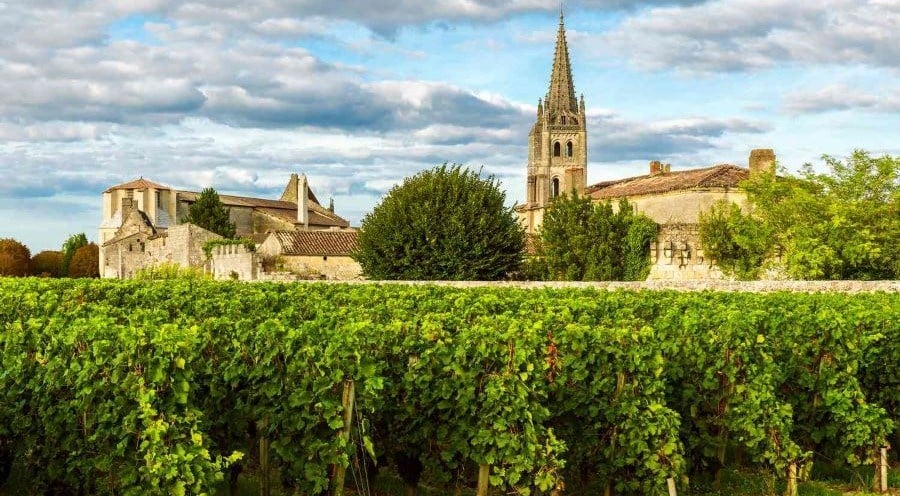
Living heritage is transforming rural economies
On the surface, wine tourism evokes the idea of wine tasting. But the Global Wine Tourism 2025 Report (which compiles data from more than 1,300 establishments in 47 countries) shows that the essence of this type of tourism lies beyond the glass: tourists don’t travel to drink, they travel to understand.
Wine tours help visitors realize that the soil, climate, farming methods, production philosophy, and the centuries-old history of the wine-growing regions all form a living heritage that each locality is striving to preserve. From there, winemaking becomes a material for communities to tell about their own lives, about patience, about how people adapt to nature, and about traditions that continue uninterrupted.
According to the survey, 58% of small-scale establishments and 36% of medium-scale establishments participate in wine tourism. This shows that wine is opening up a tourism livelihood for rural communities that do not have the conditions to invest in large infrastructure. A family vineyard, a traditional wine cellar or a small production workshop can also become a destination, as long as they have a story to tell to visitors.
Today’s tourists are more in need of cultural depth than ever before. They want to meet the artisans, to hear about the changing climate of each grape season, to know why some wines come from the same plot of land and why the taste changes from year to year… They come to observe the process, to learn about sustainable production methods, and to experience the landscape – elements that cannot be found in urban spaces.
It is no coincidence that middle-aged tourists account for a large proportion of this type of tourism. These are people who tend to want to live slowly, seek knowledge and prioritize quality experiences over quantity. More notably, the majority are domestic tourists, showing that the model does not depend on the external market but develops based on the need to explore the heritage of local people.
This is in line with the general trend that many countries around the world have been pursuing for decades: developing tourism from the people's own needs and the growing interest in indigenous cultural heritage.
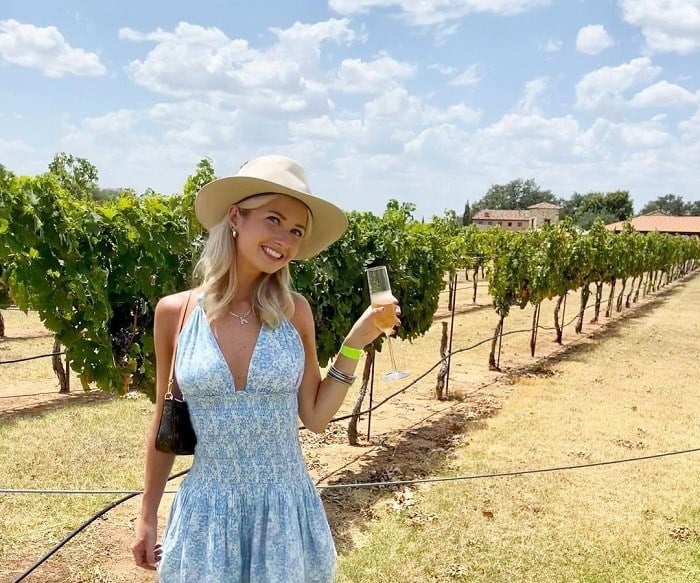
In France, a country considered the cradle of wine culture, the Champagne or Bourgogne regions not only produce wine but also turn the entire vineyard landscape into a “living gallery”. UNESCO recognized these regions as world cultural heritage since 2015, opening up the direction of tourism development based on agricultural landscapes, a model in which local authorities and small communities both benefit.
The owner of an organic vineyard in Alsace said that about 40% of his products are sold directly to tourists without intermediaries. This confirms that the appeal of wine tourism comes from the journey that tourists experience in the working space, not just from the products they bring home.
It can be seen that wine tourism not only revives ancient agricultural regions but also opens up economic development paths for communities that have previously benefited little from the wave of globalization.
When tourists choose sustainable values
In a time of complex climate change, the world’s wine regions are becoming the places where the impact of nature is most felt. This is forcing the wine industry to change to survive and become a model for sustainable agriculture.
The Global Wine Tourism 2025 report shows that 34% of establishments have switched to organic farming, and 32% have developed according to a sustainable model. These are significant numbers in a context where the conversion costs and economic risks are still high. But the reason lies not only in environmental ethics, but also in the expectations of tourists.
According to the survey, 43% of travelers said that sustainability criteria directly influenced their choice of destination. They were interested in how vineyards treated water, managed soil, preserved ecosystems, limited chemicals or reduced emissions...
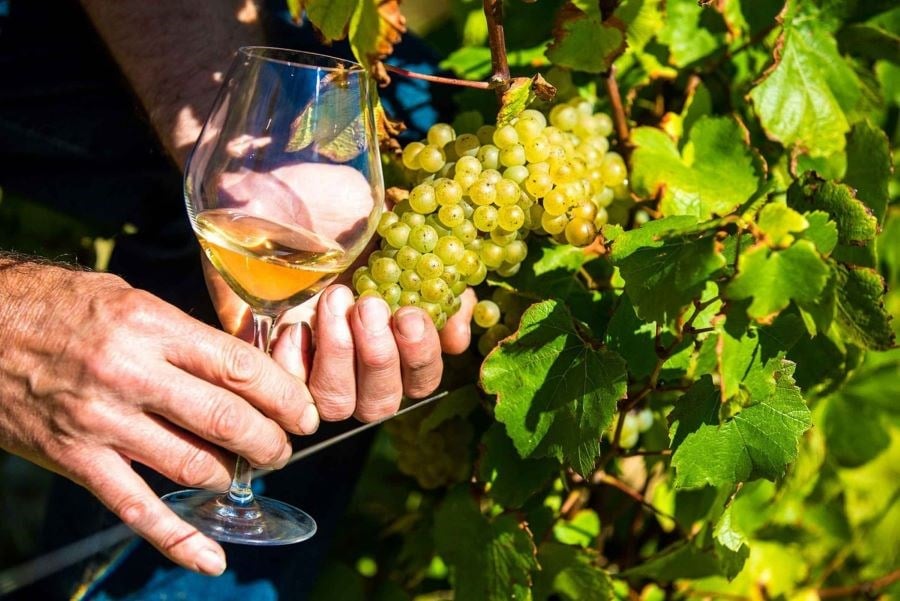
Understanding the needs of tourists, some countries have identified sustainability as a core criterion in building tourism products. In the Tuscany region of Italy, many tours are built to combine sightseeing with staying in ancient castles located in the middle of vineyards, where tourists can walk through ancient farming areas, learn about traditional grape growing methods and taste wines such as Merah, Terre Di Vico or Castello Di Vicarello. The geological and agricultural space is kept almost intact, turning the scene into an open classroom about sustainable farming and the history of Mediterranean agriculture.
Meanwhile, Moldova - a country rarely mentioned on the European tourism map - proves that small size is not a barrier. Milestii Mici winery owns a 200km long underground network of cellars, up to 80m deep, recorded in the Guinness Book of Records with more than two million bottles of wine. Tours here take visitors to visit large factories, family establishments and even the winery in the capital Chisinau. This model shows the potential of emerging countries in linking local agriculture with in-depth tourism products.
However, the report also pointed out challenges in wine tourism operations such as lack of staff, economic fluctuations, changing tastes and limitations in operating hours, making it difficult for many establishments to expand their scale of welcoming guests.
Technology, which is expected to be a supporting tool, is still under-utilized: only 11% of establishments have implemented online experiences and 6% have built virtual tours. This is not only due to lack of resources, but also because of the nature of the industry: the value lies in physical presence and contact, which technology cannot replace.
However, this gap opens up room for future development. As cultural and agricultural tourism is forecast to grow strongly, digital tools, online education platforms or multi-point booking systems can help small establishments reach customers without losing their identity.

The arid land produces famous wines
The common thread in the analysis of the Wine Tourism 2025 Report is that wine tourism is moving away from its image of consuming alcoholic beverages to a model with greater social and cultural value. It is not the glass of wine, but the story behind the glass that is central.
In this picture, wine tourism becomes a prime example of how a traditional agricultural sector can open itself up to new opportunities by respecting heritage, preserving landscapes and turning indigenous knowledge into tourism assets. This explains why the model is perfectly aligned with the goal of sustainable development, and in many countries, it is seen as a bridge between local communities and tourists, between the past and the present.
It can be said that the participation of Geisenheim University (Germany), UN Tourism, OIV, the Great Wine Capitals network and WineTourism.com in the process of developing the Wine Tourism 2025 Report shows that this is an economic field, an interdisciplinary research area that is receiving international attention.
In the near future, as tourists continue to prioritize locality, knowledge and slow experiences, wine tourism is likely to become one of the most typical cultural-agricultural tourism models of the new decade.
Source: https://baovanhoa.vn/du-lich/du-lich-ruou-vang-danh-thuc-di-san-nong-nghiep-toan-cau-186627.html





























































































Comment (0)