

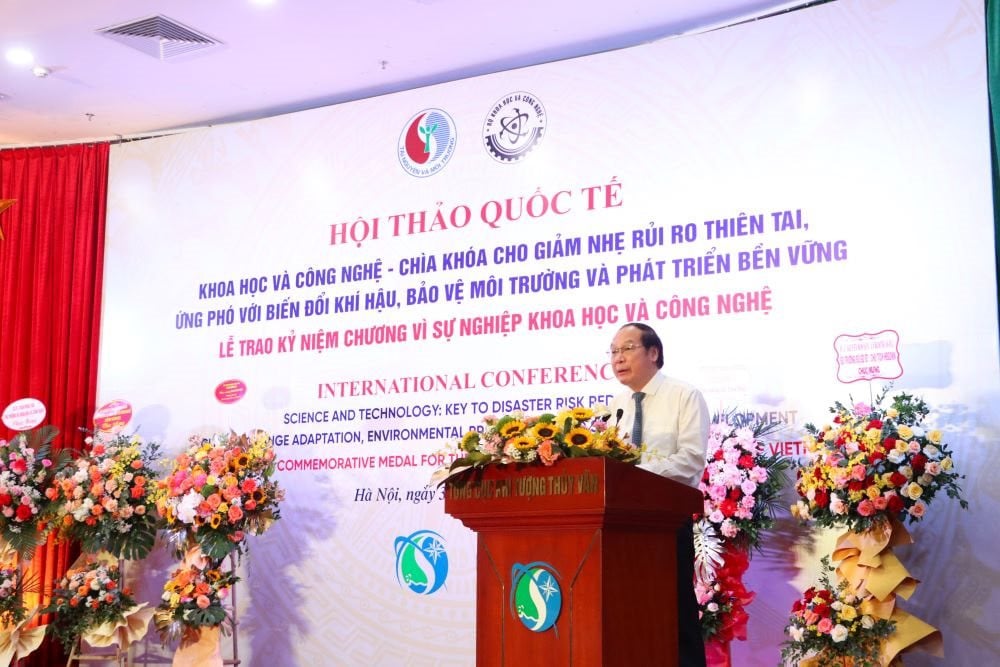
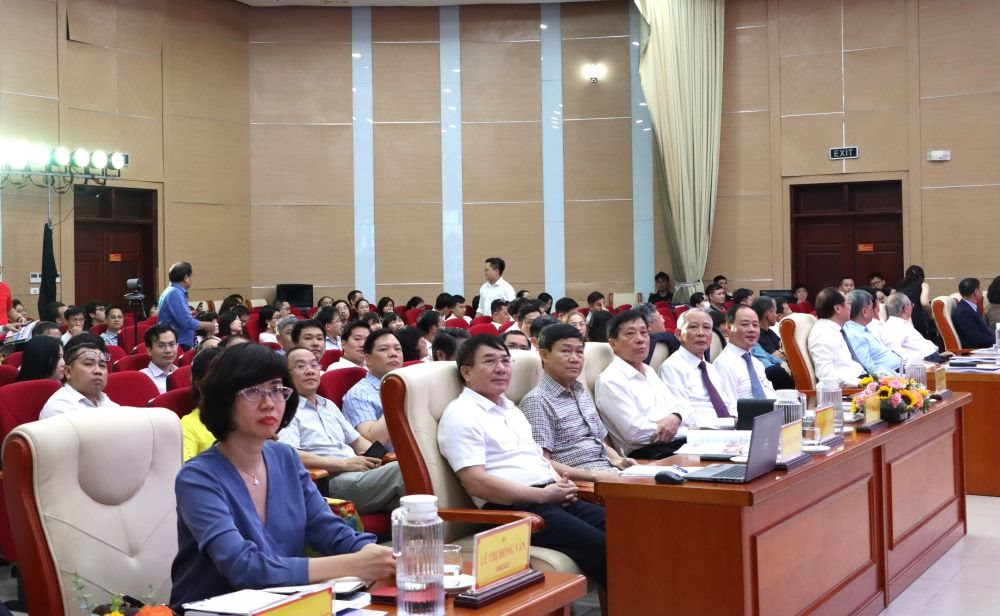
Attending the workshop were the Party Secretary and Deputy Minister of Natural Resources and Environment, Le Cong Thanh; the Deputy Minister of Science and Technology, Tran Hong Thai; former Deputy Minister of Natural Resources and Environment, Nguyen Cong Thanh; former Deputy Minister of Natural Resources and Environment, Chu Pham Ngoc Hien; Professor, Doctor of Science Nguyen Duc Ngu, former Director General of the General Department of Meteorology and Hydrology; Ms. Le Thi Hong Van, Secretary General of the Vietnam National UNESCO Committee, Director of the Department of Cultural Diplomacy and UNESCO, Ministry of Foreign Affairs; Professor, Doctor Mai Trong Nhuan, Chairman of the Interdisciplinary Professor Council of Earth Sciences and Mining; and Professor, Doctor Tran Thuc, President of the Vietnam Meteorological and Hydrological Association.
The workshop was also attended by 110 scientists and managers working and researching in the fields of Meteorology, Hydrology and Climate Change, and Water Resources from central and local ministries and agencies; experts and scientists from Vietnam and international organizations such as: UNDP, UNESCO, the United Nations Office for Disaster Reduction, the World Meteorological Organization, the Typhoon Committee…
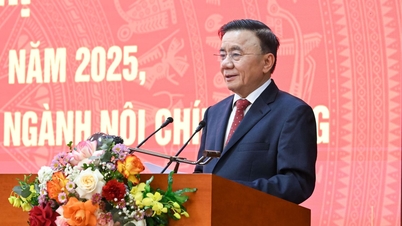
Speaking at the workshop, Deputy Minister Le Cong Thanh stated that in recent years, we have witnessed increasingly evident climate change, with natural disasters occurring with increasing frequency and destructive intensity. This poses significant challenges to the sustainable development efforts of nations. Therefore, science and technology play a crucial role in forecasting, preventing, and mitigating natural disaster risks, as well as effectively responding to climate change and protecting the environment.
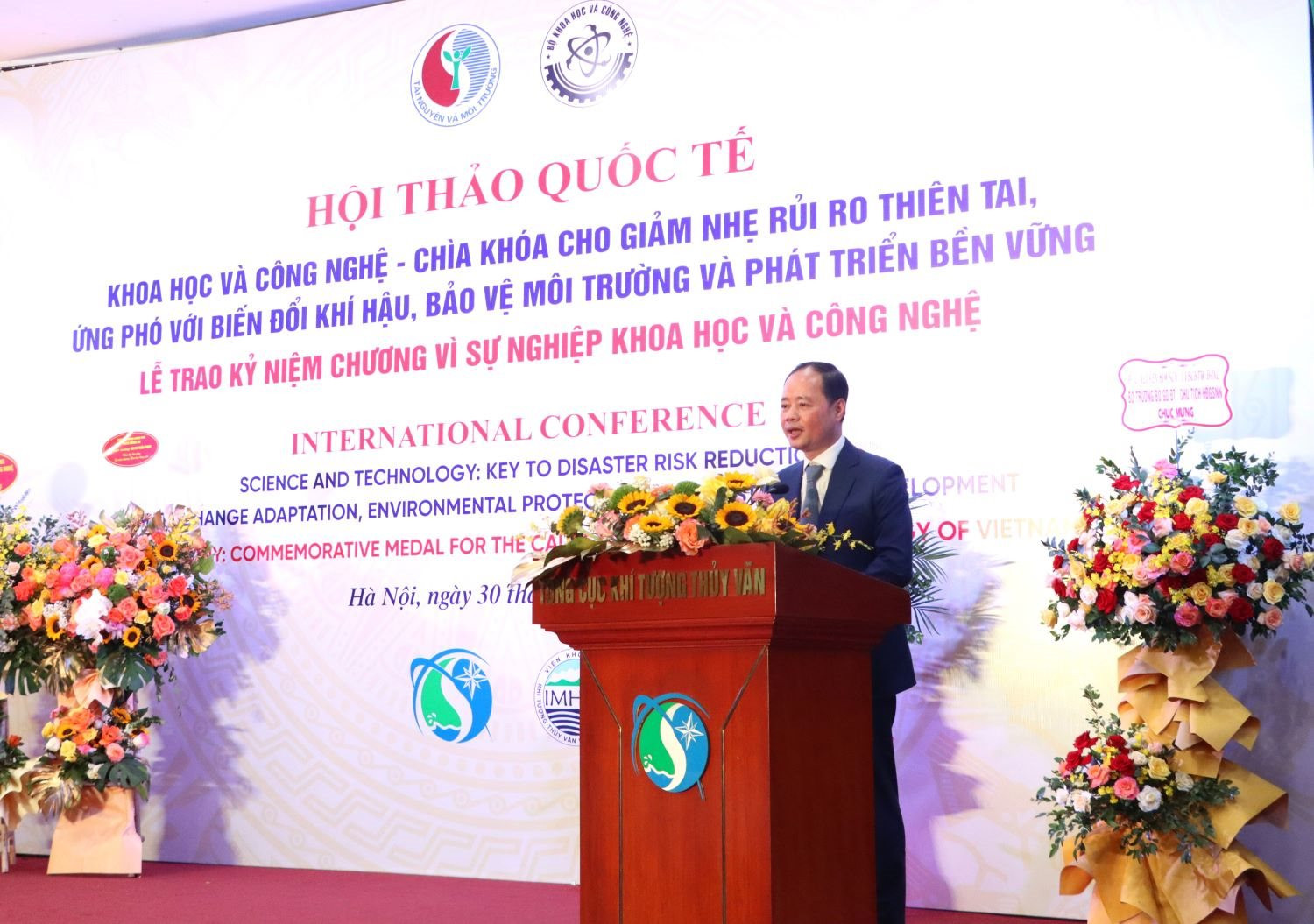
The Ministry of Natural Resources and Environment has been actively implementing numerous programs and projects in research and application of science and technology to protect the environment and promote sustainable development. The achievements demonstrate the importance of investing in science and technology, which is key to solving challenges. However, to achieve more sustainable and comprehensive results, close cooperation is needed among countries, international organizations, ministries, sectors, and domestic and international scientists. The workshop is an opportunity for scientists to share research results, experiences, and visions, and to discuss new directions and innovative solutions suitable for Vietnam – Deputy Minister Le Cong Thanh emphasized.
According to Deputy Minister of Science and Technology Tran Hong Thai, it is time for us to cherish resources, protect the environment, and develop sustainably. And science and technology are the solution to this problem. The Ministry of Science and Technology will work closely with the Ministry of Natural Resources and Environment to promote research, successful application of science and technology, and innovation to better serve the country's development. Key areas of focus include digital transformation and artificial intelligence.
Through the conference, domestic and international scientists, leaders, and managers contributed 22 reports and research papers. The content focused on comprehensively assessing emerging challenges at the global, regional, and national levels. Based on this, solutions were proposed to promote the application of science and technology and innovation for green transformation and green growth, contributing to disaster prevention, climate change adaptation, and ensuring sustainable and safe development.
According to Professor Tran Thuc, President of the Vietnam Meteorological and Hydrological Association, information shortages are a major challenge for the meteorological and hydrological sector today. There is a gap between national forecast information and users due to limitations in language, information systems, and scientific rigor. This creates a lack of trust in climate forecasts and limits the ability to act based on forecast information. Therefore, it is necessary to create conditions for forecasters to work alongside users of these products, bringing scientific knowledge to the community.
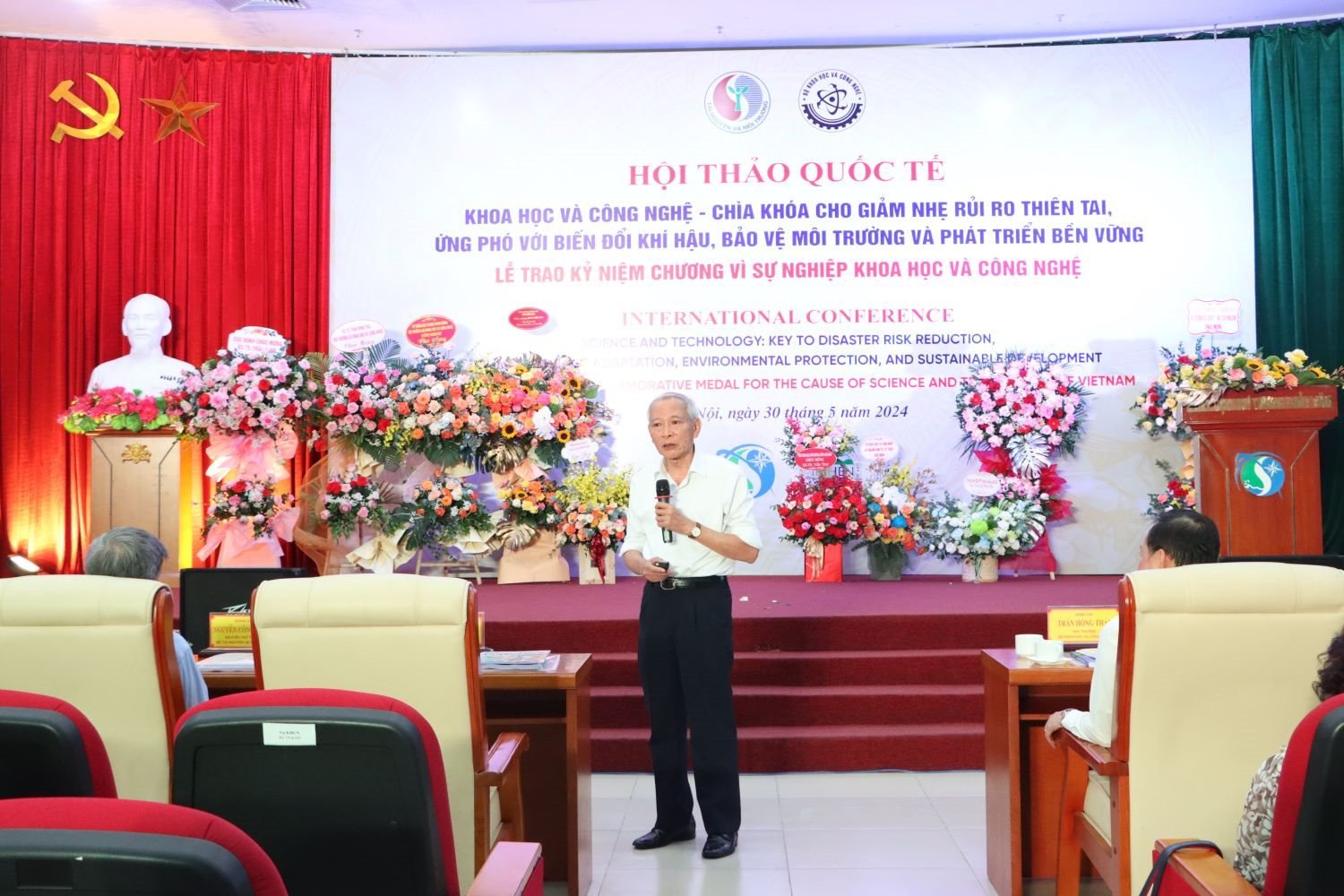
"Young scientists should start with small things, small studies, so that they can piece together a bigger picture. Meanwhile, research institutes and universities should break down large tasks into smaller ones to create opportunities for young scientists to research and innovate," Professor Tran Thuc suggested.
Emphasizing the importance of developing Earth science and technology sectors, Professor Mai Trong Nhuan stated that research and training in these fields, along with natural resource management, directly contribute to the sustainable exploitation, use, and circularity of natural resources, promoting green, circular, low-carbon, and resilient development; protecting the environment; conserving nature; and preserving biodiversity – all pressing issues linked to the country's development orientation. Simultaneously, this strengthens Vietnam's resilience to current global changes.
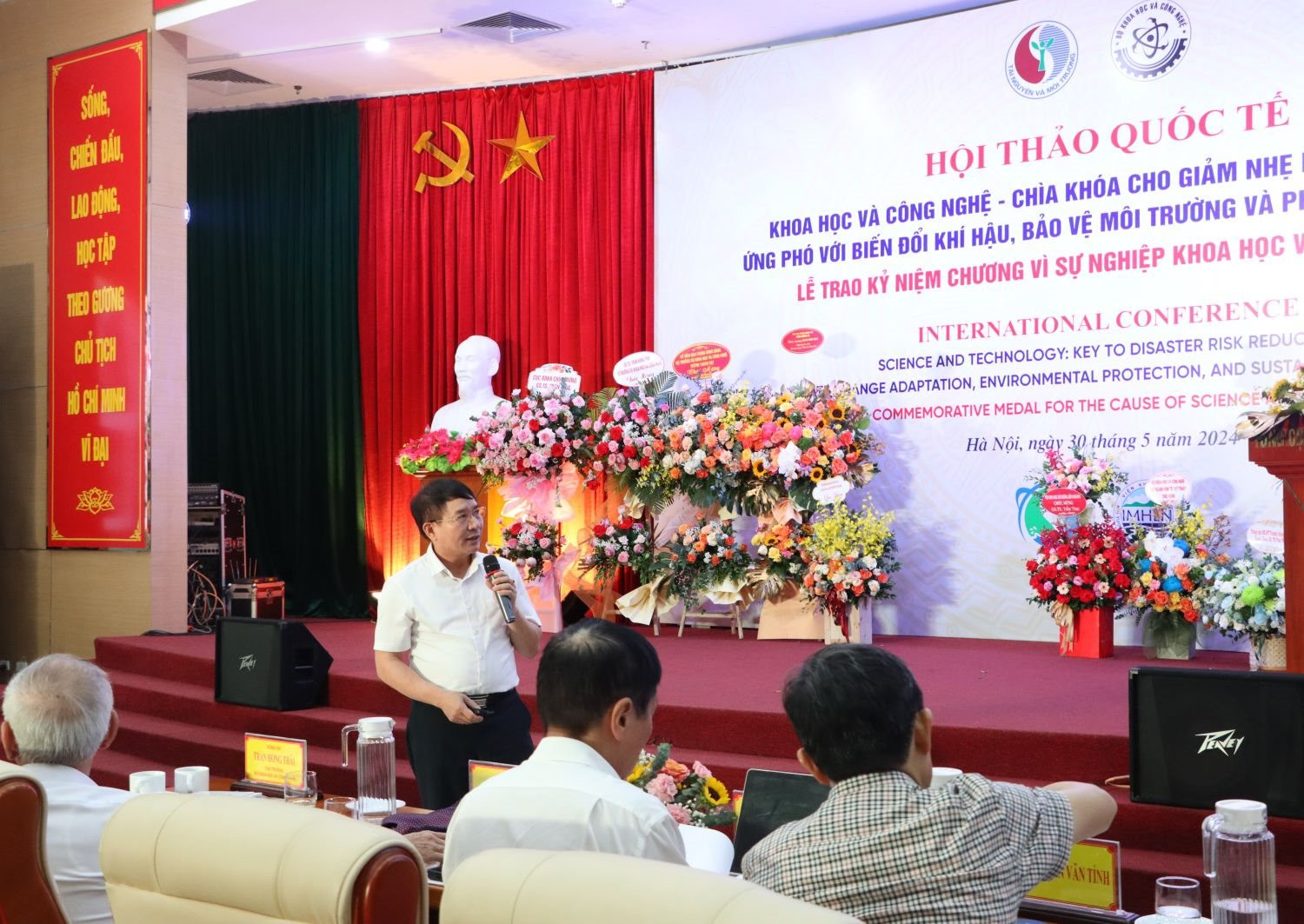
Attending the workshop, Mr. Kazuo Saito from the University of Tokyo, Japan, shared information on methods for forecasting local heavy rainfall, the Japan Meteorological Agency's surface weather observation network, short-term rainfall forecasting, and short-term rainfall forecast scenarios. Practical experience shows that real-time observation networks are crucial for disaster prevention and mitigation. The Vietnam Meteorological Administration already has a good observation network for real-time rainfall monitoring. What needs to be done is to continue developing hourly rainfall tracking technology, improving early forecasting capabilities, overall prediction, and quantifying disaster risks.
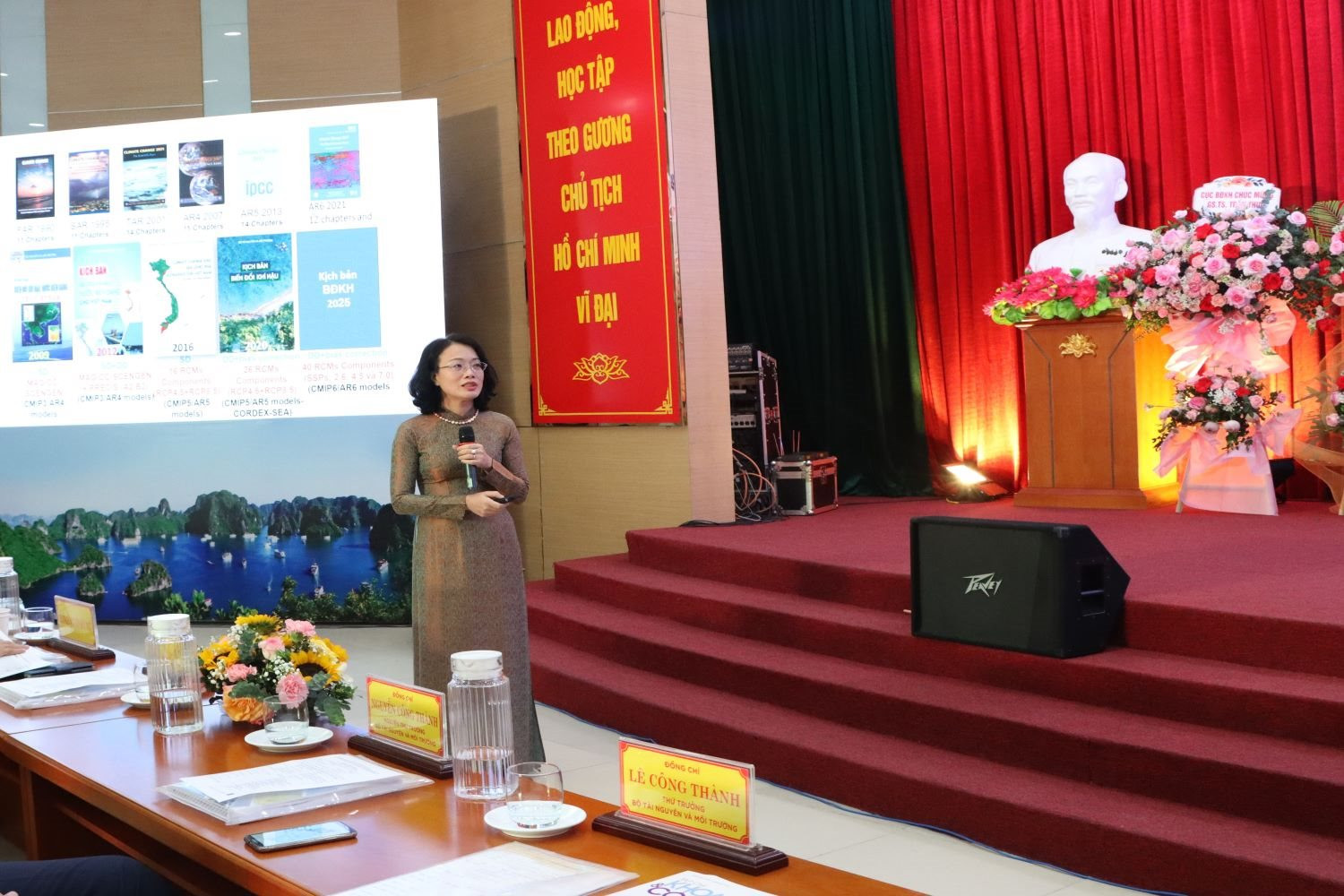
At the conference, delegates also discussed proposed solutions for innovation, artificial intelligence, and digital transformation in scientific research programs and projects. According to Deputy Minister of Science and Technology Tran Hong Thai, these are crucial tools that help to "leapfrog" ahead, shorten research time, and improve the quality of scientific research products. In particular, young scientists have many advantages in application and need to participate more, becoming the successor generation to the older generation of scientists.
In the near future, the Ministry of Science and Technology will invest in improving the quality of domestic scientific journals to meet international standards, aiming to create opportunities for domestic scientists and researchers to publish in international journals instead of having to seek opportunities as before.
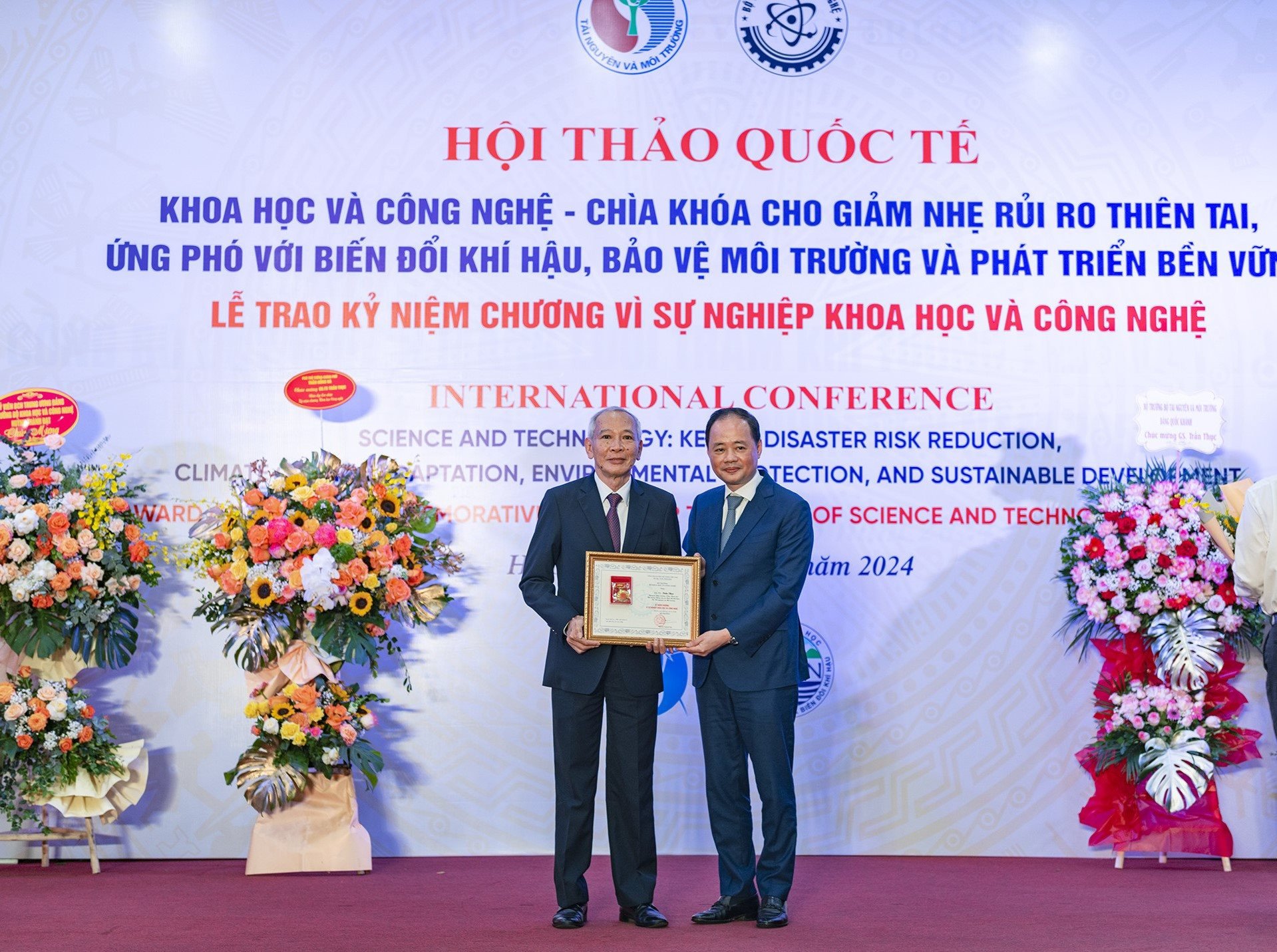
Within the framework of the Conference, Deputy Minister of Science and Technology Tran Hong Thai presented the Commemorative Medal for the Cause of Science and Technology to Professor, Doctor Tran Thuc, former Director of the Institute of Meteorology, Hydrology and Climate Change, Ministry of Natural Resources and Environment, for his contributions to science and technology throughout his scientific research career.
Source: https://baotainguyenmoitruong.vn/khoa-hoc-cong-nghe-chia-khoa-giam-nhe-rui-ro-thien-tai-374886.html



















![[Photo] Prime Minister Pham Minh Chinh holds a phone call with the CEO of Russia's Rosatom Corporation.](/_next/image?url=https%3A%2F%2Fvphoto.vietnam.vn%2Fthumb%2F1200x675%2Fvietnam%2Fresource%2FIMAGE%2F2025%2F12%2F11%2F1765464552365_dsc-5295-jpg.webp&w=3840&q=75)













































Comment (0)