

- Intermingling of folk beliefs
- Cultural exchange among three ethnic groups
- "Traditional Vietnamese Worship - Rituals and Practices": A Useful Guide for Every Family
From the custom of worshipping the Heavenly God...
In the folk beliefs and traditions of the people of Southern Vietnam, Heaven is the "father," and Earth is the "mother," so when praying, they often say, "Father Heaven, Mother Earth."
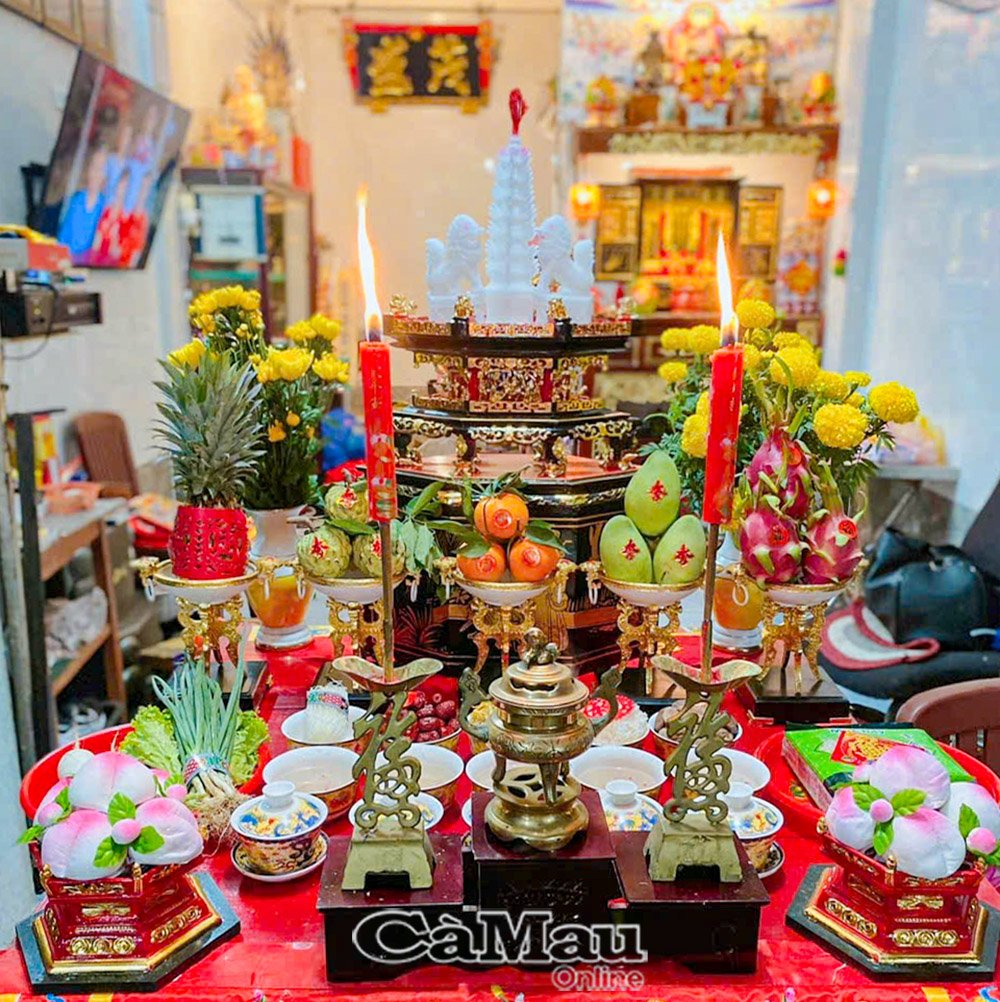
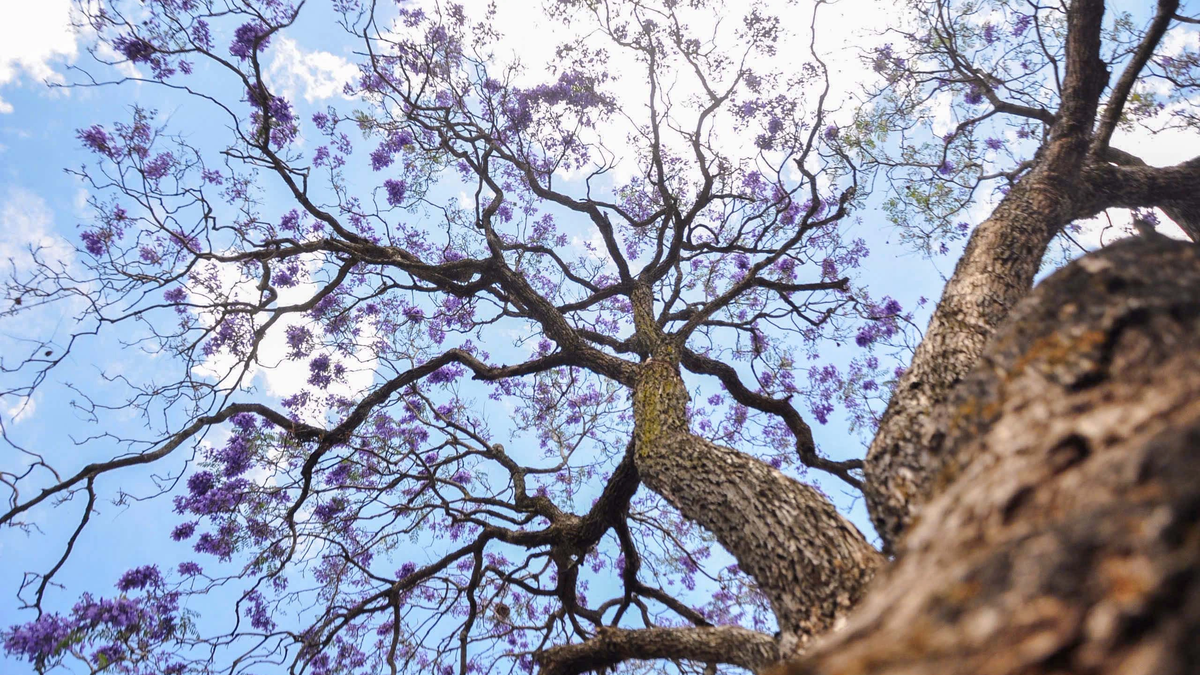
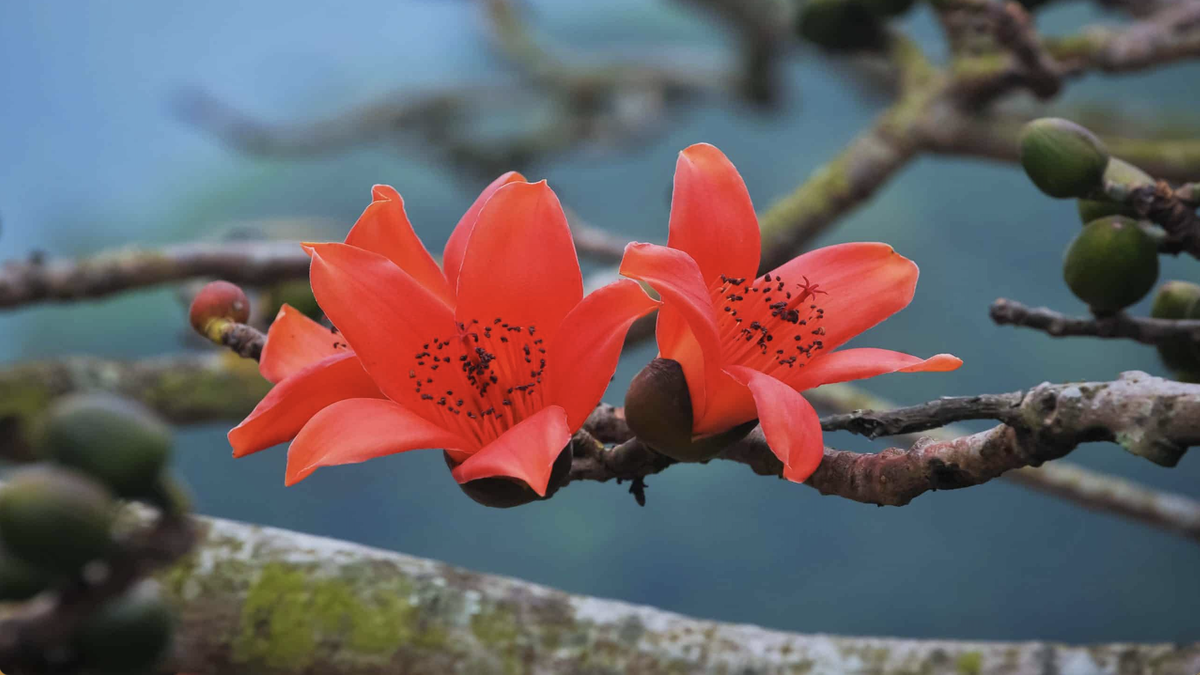
Typically, the altar for Ông Thiên (the Heavenly God) has a pedestal about 1.5 meters high, on which a square piece of brick or wood is placed to hold an incense burner, three water cups, a vase of flowers, and offerings. On either side of the altar, plum blossoms or cherry blossoms are usually planted; at the base, various colorful flowers and foliage such as portulaca, chrysanthemums, marigolds, and cosmos are grown.
According to folklore researchers, the custom of worshipping Heaven by setting up altars in front of houses dates back to the early days of settlement. For migrants who had to leave their homeland to seek a living in a remote, dangerous place: "Arriving here in this strange land / Even the birds' calls frighten them, even the fish's splashing frightens them," or "Mosquitoes buzz like flutes, leeches swarm like noodles," they needed a spiritual anchor to strengthen their faith in overcoming the harshness of nature and to cultivate their belief in settling peacefully in this new land. Similarly, when facing the many dangers of nature, they relied on Heaven, as in the saying: "Arriving here at this strange harbor, I pray to Heaven to lessen the wind so that the waves on the shore will not be turbulent." They believed that Heaven would bestow blessings: "Those who are virtuous will be rewarded / Heaven reserves blessings for those who are kind and virtuous."
Stemming from the above meaning, the custom of worshipping Heaven and setting up an altar to Heaven has become a typical cultural feature of the people of the Mekong Delta in general and the people of Ca Mau in particular. This is a land blessed by nature, or as the folk say, "gifted by Heaven," so the people must respect Heaven and express their devotion by worshipping and offering sacrifices to Heaven on the 9th day of the first lunar month every year.
...To Heavenly Blessings
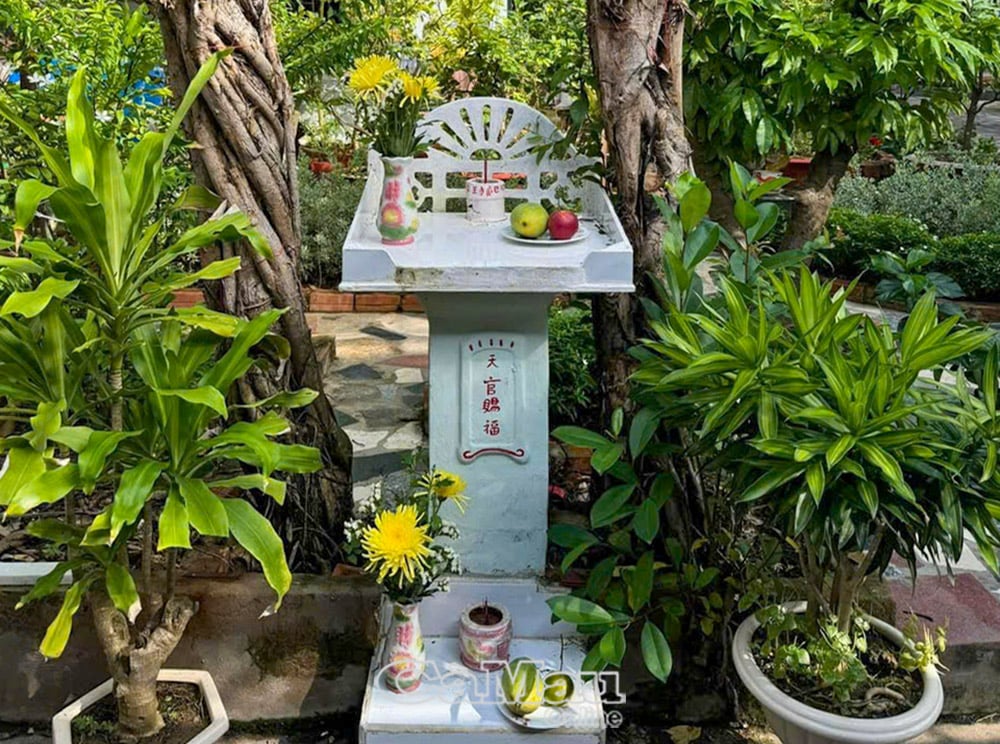
Besides setting up an altar to the God of Heaven in front of the house, this Vietnamese custom is also associated with the worship of the God of Heaven by the Southern Chinese community, usually placed at the foot of the altar with a plaque inscribed with the words "Heavenly Official bestows blessings" or "Heaven and Earth are parents".
While Vietnamese folk beliefs consider the worship of Heaven as the supreme deity, the folk beliefs of the Chinese community include the Heavenly Official (or Celestial Official), considered one of the three officials: Heavenly Official, Earthly Official, and Water Official. This Heavenly Official is tasked by Heaven with bestowing blessings (the four blessings) upon the people, and is therefore revered. Thus, alongside the altar of the Heavenly Official placed above, there is an altar and incense burner dedicated to the Heavenly Official below, with a plaque inscribed "Heavenly Official bestowing the Four Blessings."
According to Chinese folk paintings, the Celestial Official resembles the God of Wealth. He wears a dragonfly-winged hat, a red robe adorned with dragons and waves, and holds a wish-granting jade scepter symbolizing power. He is adorned with gold, silver, and jewels, and notably, he carries a banner with the blessing: "The Celestial Official bestows four blessings."
Originating from its symbolic meaning of wealth and prosperity, paintings of the Heavenly Official have become one of the most popular folk paintings that Chinese people choose to hang in their homes during the Lunar New Year. The Chinese also set up altars to worship the Heavenly Official and invite this deity into their homes at midnight on New Year's Eve to bring wealth, fortune, and even career advancement.
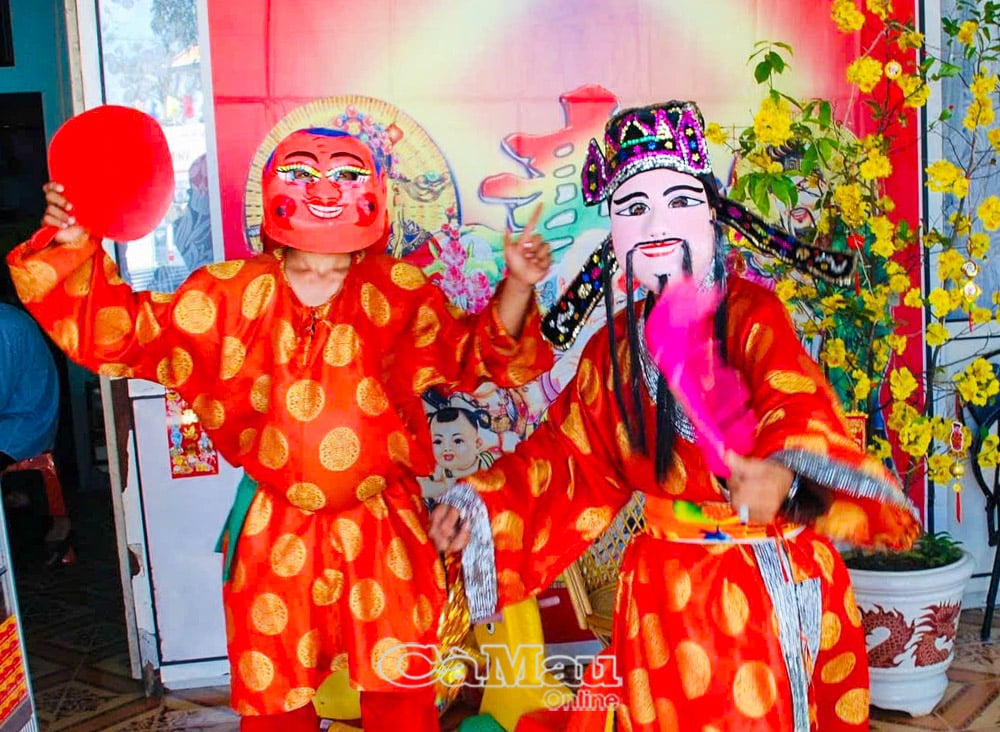
Perhaps it is from this legend that on New Year's Eve in the western provinces, many troupes performing the God of Wealth dance appear to wish people a happy new year and paste auspicious New Year couplets on the walls of houses with wishes such as: Spring brings wealth and prosperity, Great fortune and great profit, God of Wealth arrives at the house, Five blessings enter the door, Heavenly officials bestow four blessings...
The custom of worshipping Ông Thiên (or Ông Quan Trời) vividly reflects the unique folk culture of the people of Southern Vietnam. In the context of establishing a livelihood in a new land, constantly facing harsh natural conditions, people needed faith to overcome fear, conquer nature, and join hands with other ethnic groups to build a prosperous Southern region. This aspiration is clearly expressed in the custom, still maintained in many families today: on the altar of Ông Thiên and Ông Quan Trời, there are jars of salt and rice, considered "gems" bestowed by heaven since the time of land reclamation and settlement. And every New Year, people replace the salt and rice with new ones, while the old rice and salt are put back into the existing rice jar and salt jar, symbolizing a wish for good fortune and abundance.
Lu Dung
Source: https://baocamau.vn/net-dep-van-hoa-tuc-tho-troi-a122807.html
![[Photo] Conference announcing the Politburo's Decision on organizational and personnel matters](https://vphoto.vietnam.vn/thumb/1200x675/vietnam/resource/IMAGE/2026/04/01/1775017881825_bnd-2410-1472-jpg.webp)
![[Photo] Conference on the transfer and reception of Party organizations and Party members between the Party Committee of the Government and the Party Committees of the Central Party Agencies](https://vphoto.vietnam.vn/thumb/1200x675/vietnam/resource/IMAGE/2026/04/01/1775036784472_ndo_br_bnd-2620-jpg.webp)






















![[Photo] Prime Minister Pham Minh Chinh receives the Ambassador of the Russian Federation to Vietnam](https://vphoto.vietnam.vn/thumb/402x226/vietnam/resource/IMAGE/2026/04/01/1775046774818_anh-man-hinh-2026-04-01-luc-19-32-33.png)












Comment (0)