

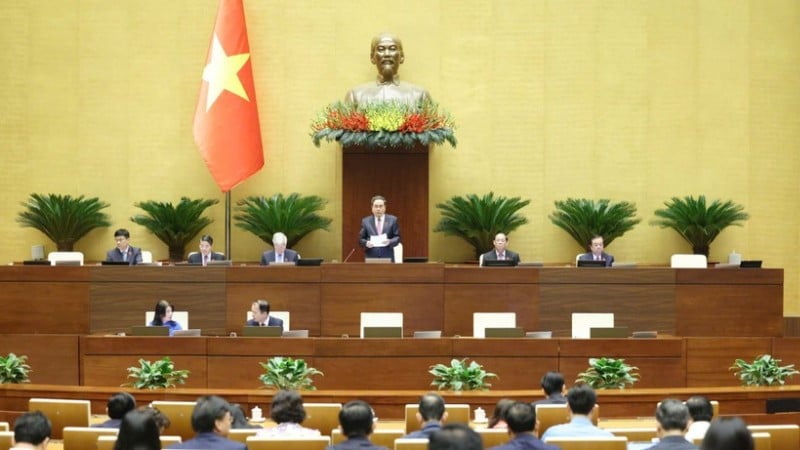
Turn "bottlenecks" into "competitive advantages"
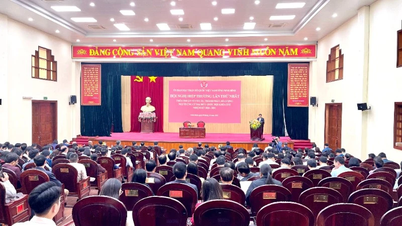
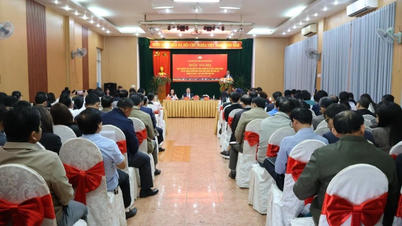
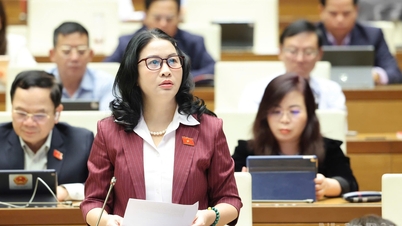
Discussing at the hall, many opinions of National Assembly deputies shared deep feelings, acknowledged and appreciated the long-term vision and reform capacity of the entire political system. The highlight of the 15th National Assembly tenure clearly demonstrated the innovative thinking in law-making. Speaking at the Dien Hong hall, delegate Nguyen Thi Thuy (Thai Nguyen delegation) and many other delegates affirmed: The consistent responsibility of the National Assembly and each National Assembly deputy is to "strongly innovate the thinking of law-making, law must become a competitive advantage". This orientation is considered a guideline for a period of law being built in an open, flexible, practical and development-oriented direction; realized and concretized by shortening the time for law-making, reducing administrative procedures, shifting from management to development creation. Delegates cited the practical example of promulgating the Law on Promulgation of Legal Documents with 72 articles, a reduction of 101 articles compared to before.
Some delegates proposed that it is necessary to soon organize a preliminary review of the implementation of the law in the direction of only stipulating the framework and principles, and giving flexible and proactive power to the Government . That represents an important step so that the law does not become a barrier, but acts as a strong driving force for innovation.
Take people's satisfaction as a measure
The 2021-2026 term also marked the "breakthrough for people, people-centered" policies. Through many terms of association with the parliament and having the opportunity to learn about the reality, grasp the aspirations and thoughts of voters, Professor, Dr. Nguyen Anh Tri (Hanoi Delegation) shared that the great achievements, spreading the noble humanity of a constructive rule-of-law State, are to put people at the center of all policies. According to the delegate, the policy of free tuition for preschool and primary school students, the national target program on education and health, or the elimination of temporary and dilapidated houses 5 years ahead of schedule... all demonstrate a strong shift in clear policy-making thinking - not only economic development but also focusing on human development. At the hall, many delegates emphasized the message: The law must go one step ahead to pave the way for innovation, taking the lives and interests of the people as the measure of policy. The legislative achievements of this term need to be maintained and raised to new heights.
Regarding the two-tier local government model, delegate Ngo Trung Thanh (Dak Lak delegation) affirmed: This is a "particularly complex revolution, because it has a profound impact on the organization, people, operating methods and interests of many subjects". According to the delegate, it is the courage in reform that opens up new development space, reduces intermediate levels, and improves the effectiveness and efficiency of governance.
Delegates also agreed that amending the 2013 Constitution and issuing resolutions on local government organization, decentralization, and strong decentralization have created a solid legal basis for this model.
Culture and parliamentary diplomacy need a breakthrough
Many delegates also pointed out policy gaps. Delegate Nguyen Thi Viet Nga (Hai Phong delegation) stated: The economy has made a breakthrough, infrastructure has changed, but cultural and social ethics have not changed accordingly. Delegates warned about the unsynchronized development between economy and culture, and pointed out the lack of a national strategy on culture and lifestyle in the digital age, or the lack of a specific set of indicators to assess social ethics, showing "gaps that need to be filled".
Concerned about the need for parliamentary diplomacy to change from “presence” to “shaping the rules of the game”, delegate Le Thu Ha (Lao Cai delegation) proposed: Parliamentary diplomacy cannot be just a signing ceremony and delegation exchange. The important issue is to build the capacity to analyze international policies within the National Assembly. Without independent assessment, it is difficult to have quality legislation and national supervision, especially on new issues such as AI, data, carbon tax, energy security, etc.
Another issue is to strengthen the presence of the National Assembly with focus and purpose in parliamentary mechanisms that are shaping new rules of the game. In other words, not only to mark the presence but also to ensure that national interests are guided by the rule of law and the voice of the people right from the first rounds of discussion. Delegates recommended: Building a "Digital Parliament" connected in real time with multilateral parliamentary organizations, from IPU to ASEP, so that each delegate can livestream their responses as soon as topics related to national interests are brought up for discussion.
With that spirit, the orientation of parliamentary diplomacy shifts from a reactive attitude to proactively shaping standards, from "presence" to "audience and participation in the game", bringing the voice of Vietnamese voters into the right legal infrastructure, regional parliamentary activities and international organizations.
Looking back at the results of the past week, it can be seen that the parliament is not just a place to summarize the term. It is a space to shape new thinking for the road ahead.
The 10th session of the 15th National Assembly is expected to close on the afternoon of December 11, ending 8 weeks of continuous work with 42 days of high concentration. The final working week is expected to have 42 laws and 18 resolutions, investment policies... reviewed and voted on by the National Assembly.
Source: https://nhandan.vn/quoc-hoi-hanh-dong-kien-tao-ngay-cang-gan-gui-post928677.html


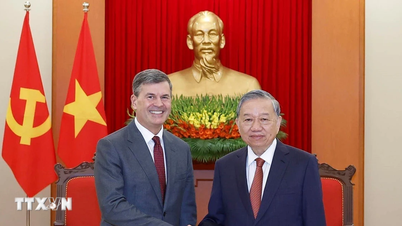
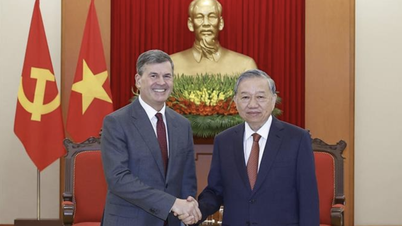
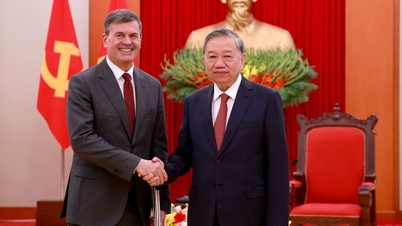
![[Photo] General Secretary To Lam receives the Director of the Academy of Public Administration and National Economy under the President of the Russian Federation](/_next/image?url=https%3A%2F%2Fvphoto.vietnam.vn%2Fthumb%2F1200x675%2Fvietnam%2Fresource%2FIMAGE%2F2025%2F12%2F08%2F1765200203892_a1-bnd-0933-4198-jpg.webp&w=3840&q=75)

































































Comment (0)