

January 1st, 2025 marks the official merger of Dong Son District into Thanh Hoa City. After 220 years of formation and development, Thanh Hoa City has never had the strength and momentum it possesses today. On its journey into a new era – an era of national progress – Thanh Hoa City is even more confident in joining the rest of the country towards a bright future!
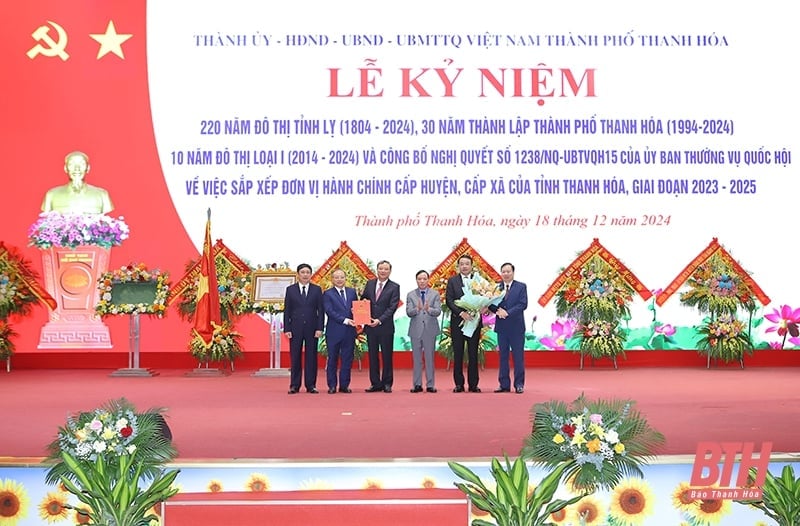
Rising from a small, impoverished town heavily damaged by war, Thanh Hoa City has made remarkable progress. Particularly since the significant milestone of 1994, when Thanh Hoa town was officially upgraded to Thanh Hoa City, the city has strived to transform from a Class III urban area to a Class I urban area. From its position as a provincial capital primarily serving as a connecting hub within the province, it has become a city with a crucial role in connecting and developing the North Central and Southern Northern Delta regions, serving as an important gateway to the North and to Laos.
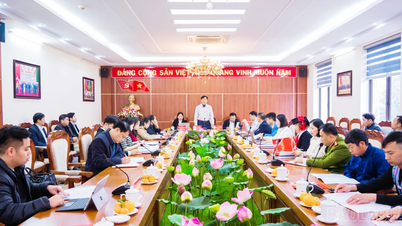
To create momentum for Thanh Hoa City to "transform" into a new era, worthy of its role and position as the urban center of a large province, after 5 adjustments and expansions of its administrative boundaries, on January 1, 2025, Dong Son district officially merged with Thanh Hoa City according to Resolution No. 1238/NQ-BTVQH15 of the Standing Committee of the National Assembly. This historic merger not only marks an extremely important milestone in the 220-year history of the city's construction and development, but also affirms the correctness and strategic vision of the Central Government and the province for Thanh Hoa city. With a population ranking 2nd out of 19 Type I cities nationwide, and a natural area ranking 9th out of 19 Type I cities nationwide, Thanh Hoa city becomes the second largest city in Vietnam's urban system (after Bien Hoa City, Dong Nai province). "This is an important foundation, creating new momentum and strength to strive to build Thanh Hoa City into a smart, civilized, modern city with rich identity, and in the future, a livable city," as stated by the Secretary of the City Party Committee and Chairman of the City People's Council of Thanh Hoa, Le Anh Xuan.
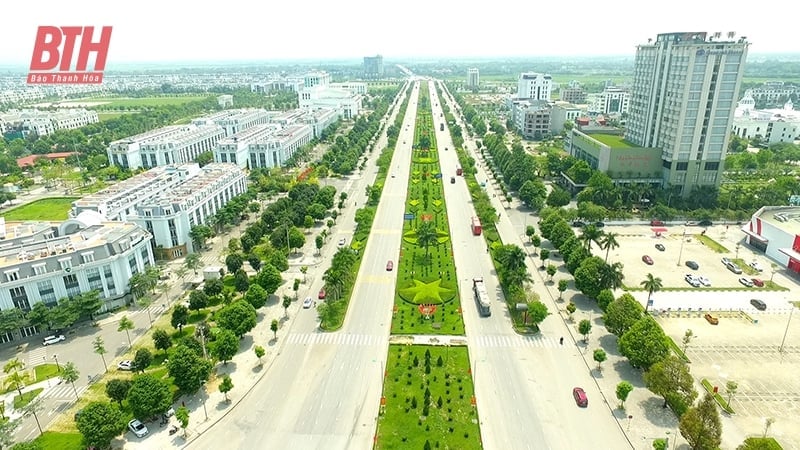
After the merger, the urban space will be expanded. Thanh Hoa City will develop westward to connect it with the North-South expressway and strengthen the development of the economic hub of Thanh Hoa City - Sam Son City - the western region of the province; at the same time, it will develop northeastward to form an urban area "on both banks of the Ma River". From there, a concentrated, spreading urban space will be formed, connecting the three regions of Thanh Hoa province: mountainous, plain, and coastal, with the main idea being "backed by mountains - beside the river - facing the sea". The "ring-centric" model and structure, only suitable for small and medium-sized cities, will be shifted to an "open ring combined with a soft network" model; using the extended Le Loi Boulevard as the central axis, the Ma River as the urban landscape axis; strengthening urban strips parallel to the Ma River landscape axis and forming a third ring connecting the urban strips. Using the existing urban center as the core, the urban structural framework is formed with "3 development axes - 6 centers - 1 natural ecological corridor," aiming towards a large, smart, and sustainable urban development.
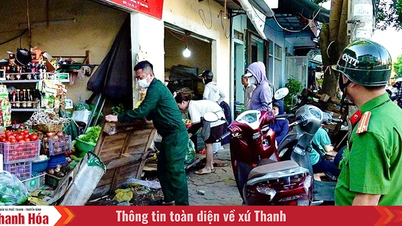
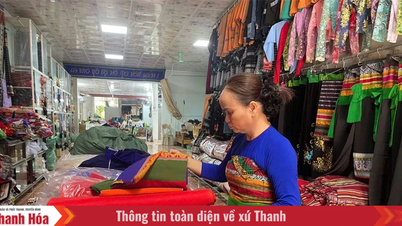
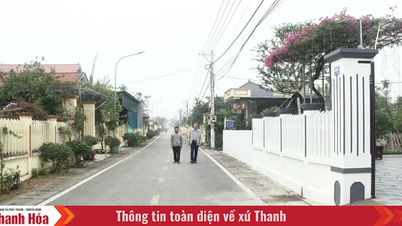
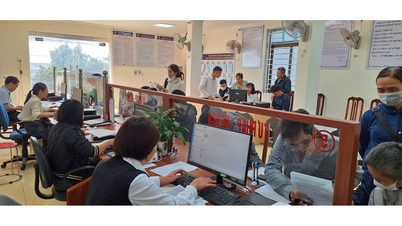
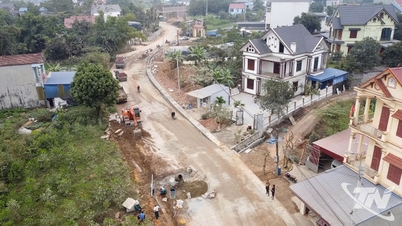
With its large land area and undivided investment resources, the new Thanh Hoa City will have many favorable conditions for developing a comprehensive and modern infrastructure, as well as high-quality industry, trade and services, tourism, healthcare, and education. Simultaneously, it will create a foundation for expanding the administrative scope of the urban government, replacing the rural government; the organizational structure will also be streamlined, enhancing the effectiveness and efficiency of the political system. With its vast area, the city's economy will experience strong growth. This includes not only strong industrial development with the three existing industrial zones of Le Mon, Hoang Long, and Dinh Huong - Tay Bac Ga, but also new industrial zones and clusters in the former Dong Son district. The city will also have more advanced and model new rural communes, traditional craft villages, OCOP products, and high-efficiency model agricultural farming practices, making a significant contribution to the city's economy.
A new era is dawning, a phase of faster and more comprehensive development has begun. This presents both opportunities and challenges, requiring the city to demonstrate greater determination and effort. We believe that a city with a rich history and culture, always finding innovative approaches and breakthroughs, will possess the necessary resolve to take long, steady strides, continuing to conquer the major and important goals set by the central government and the province.
To Phuong
Source: https://baothanhhoa.vn/thanh-pho-thanh-hoa-rong-mo-tuong-lai-238010.htm



































































Comment (0)