

Menopause is a natural physiological stage, marking the gradual decline of endocrine activity of the ovaries. Many women entering this period often experience a series of changes in their bodies - from sleep disorders, hot flashes, dry skin to mood disorders. What makes many women most uncomfortable is the recurrence of acne, even though they are "past the age of acne" for a long time.
In fact, acne during menopause is not uncommon and is mainly related to hormonal changes and skin function.
Below are the most common reasons why women are prone to acne when entering menopause.
1. Decreased estrogen - the main "culprit" that makes skin more sensitive and prone to acne
Estrogen is a hormone that helps maintain the balance of oils on the skin, keeping it moist, elastic and healthy. When entering premenopause and menopause, estrogen levels drop sharply, leading to changes:
- Sebaceous glands are not functioning properly.
- Skin becomes drier but paradoxically more prone to clogging.
- The skin's protective layer is thin and weak, easily inflamed.
- The lack of estrogen also causes androgen (male hormone) to become relatively dominant, leading to increased sebum secretion, acne formation and inflammation.
2. Imbalance between estrogen and androgen (testosterone)
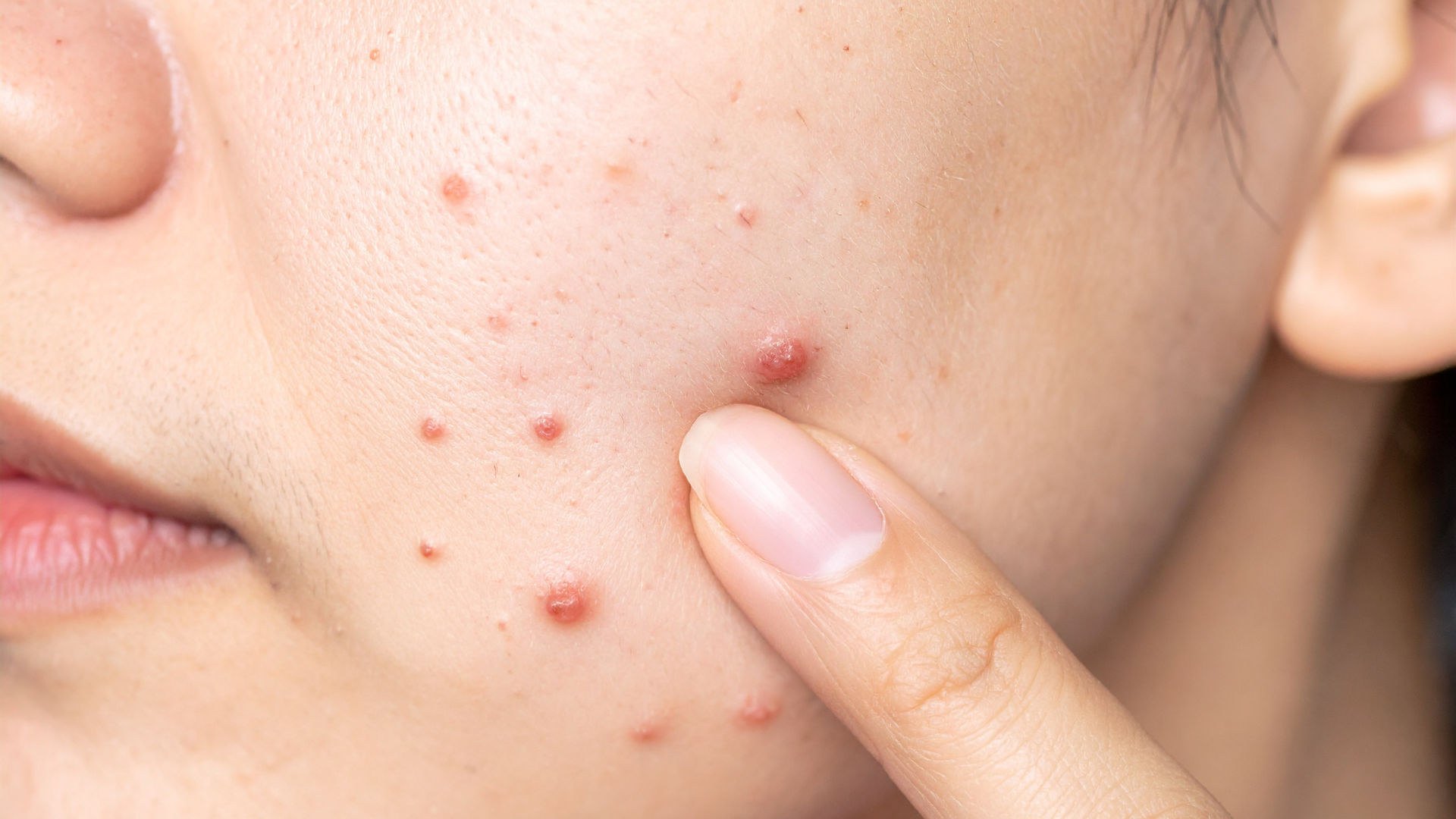
Acne during menopause is not uncommon and is mainly related to hormonal changes.
- Increased oil in the T-zone (forehead, nose, chin) is due to overactive sebum glands, which can easily cause oiliness, clogged pores, and blackheads and acne.
- Large, painful cystic acne.
- Acne often appears around the chin and jawline – a characteristic of hormonal acne. This is also the reason why many women share that acne is "concentrated" in the lower part of the face.
3. Stress and sleep disorders aggravate acne
Perimenopause and menopause are often accompanied by hot flashes, nervousness, anxiety, and difficulty sleeping. When stress persists, the body increases the production of cortisol, a hormone that can stimulate the sebaceous glands to become more active.
When the sebaceous glands are overactive, pores can easily become clogged and form inflammatory acne. This type of acne is persistent and difficult to treat if stress is not controlled.
4. Skin aging slows down the regeneration process – increasing the risk of clogged pores
After the age of 40-50, the skin cell regeneration process slows down significantly. Thick, poorly peeling stratum corneum combined with excess oil can easily cause: blackheads; whiteheads; deep inflammatory acne.
In addition, a sharp decrease in collagen makes skin damage take longer to heal and easily leaves dark spots and scars after acne.
5. Change your lifestyle and diet when entering middle age
Many women entering menopause tend to:
- Eat sweets or starchy foods to reduce stress.
- Limited mobility.
- Not getting enough sleep.
- Weight gain, abdominal fat accumulation.
These factors all contribute to metabolic disorders and make the skin prone to acne. In particular, foods high in sugar increase insulin - a factor that stimulates the sebaceous glands, causing acne to last longer and spread.
6. Cosmetics that are not suitable for your skin
When entering menopause, the skin becomes drier but the oil glands become more active. If women still use cosmetics like when they were younger, they are likely to encounter problems:
- Cream is too thick and causes blockage.
- Using high concentrations of anti-aging products causes irritation.
- Facial cleansers that are too strong dry out the skin and cause it to overcompensate by producing oil.
- Physiological changes require the choice of products that are gentle, non-comedogenic and suitable for mature skin.
7. Some endocrine diseases and treatment drugs
Certain health conditions can make acne worse during menopause, including:
- Polycystic ovary syndrome (PCOS).
- Thyroid disorders.
- Metabolic syndrome.
- Uncontrolled use of corticosteroids or hormone therapy.
In summary: Acne during menopause is a common condition and can be completely improved if you understand the cause correctly. So, if you are experiencing acne during menopause, please note:
- Keep skin gently clean, choose a cleanser with a pH of 5.5–6.
- Supplement with plant estrogen (soybean sprouts, flaxseed, tofu...).
- Limit sugar, animal milk and fast food.
- Get enough sleep, do yoga or walk 30 minutes/day.
- Use non-comedogenic cosmetics.
Acne during menopause is not dangerous, but this is a skin disease that greatly affects aesthetics and psychology. Inflammatory acne makes the skin rough, causing self-consciousness in daily communication, affecting the quality of life. However, people should not be subjective because acne during menopause can also warn of some endocrine diseases, polycystic ovary syndrome. Therefore, you should see a dermatologist if inflammatory acne lasts more than 6-8 weeks.
Source: https://suckhoedoisong.vn/thu-phamgaymunothoikymankinh-169251207100451033.htm


![[Photo] General Secretary To Lam receives the Director of the Academy of Public Administration and National Economy under the President of the Russian Federation](/_next/image?url=https%3A%2F%2Fvphoto.vietnam.vn%2Fthumb%2F1200x675%2Fvietnam%2Fresource%2FIMAGE%2F2025%2F12%2F08%2F1765200203892_a1-bnd-0933-4198-jpg.webp&w=3840&q=75)

































































































Comment (0)