

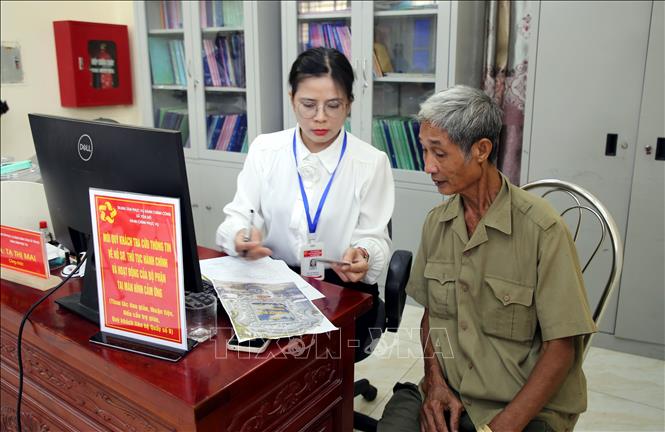
One of the outstanding results is the decisive and effective implementation of the restructuring and streamlining of the government apparatus and the organization of local governments at two levels, coupled with the promotion of decentralization and delegation of power.
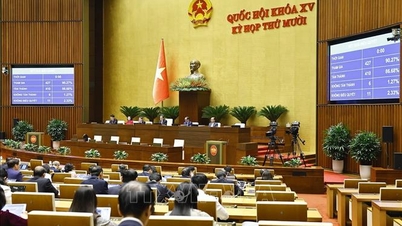
Also on the opening day of the Session, government leaders emphasized the resolute spirit in streamlining the apparatus and reforming the administration in the coming period.
Enhance connectivity and data sharing.
Notably, during the week (October 20-25), the Government and the Prime Minister issued several documents related to data connectivity and sharing.
Specifically, on October 20th, the Prime Minister signed Decision No. 2319/QD-TTg establishing the National Steering Committee on Data. The National Steering Committee on Data is an inter-sectoral coordinating organization with the function of researching, advising, recommending, and assisting the Government, the Prime Minister, and the Head of the Steering Committee in directing and coordinating the implementation of national-scale policies, strategies, mechanisms, and solutions regarding data; building and developing national and specialized databases; integrating, synchronizing, storing, sharing, analyzing, exploiting, and coordinating data in the National Integrated Database; and addressing important, inter-sectoral data-related issues.
Next, on October 22nd, the Government issued Decree No. 278/2025/ND-CP regulating the mandatory connection and sharing of data between agencies within the political system. Notably, the Decree stipulates that data used for administrative procedures, public services, and the direction and management activities of ministries, central and local agencies must be connected, shared, and synchronized with the National Comprehensive Database so that the Ministry of Public Security can coordinate data distribution to ministries, central and local agencies through the Data Sharing and Coordination Platform. The Decree also clearly states that by December 31st, 2026 at the latest, the mandatory connection and sharing of data between agencies within the political system will be implemented uniformly through the Data Sharing and Coordination Platform.
On October 22, 2025, the Prime Minister issued Directive No. 201/CĐ-TTg on focusing on reviewing, cutting, and simplifying administrative procedures based on data. The Prime Minister requested Ministers, heads of ministerial-level agencies, and chairpersons of People's Committees of provinces and cities to urgently direct the review of 734 administrative procedures as outlined in Document No. 4735/TCT dated October 20, 2025, of the Task Force implementing Project 06, administrative procedure reform, and digital transformation associated with Project 06, as well as other administrative procedures containing one of the 15 types of documents already listed in national and specialized databases that can be immediately reduced…
According to statistics from the Ministry of Public Security, 15 types of citizen documents have been digitized and are eligible to be replaced by electronic data, including: National Identity Card, Citizen Identification Card, Birth Certificate, Death Certificate, Household Registration Book, Temporary Residence Book, Residence Confirmation Certificate, Driver's License, Health Insurance Card, Vehicle Registration Certificate, Passport, Marriage Certificate, Single Status Certificate, Personal Identification Certificate, and Criminal Record Certificate. This is particularly important because when data is replaced, requiring citizens and businesses to present documents will no longer be necessary, contributing to saving time, costs, and the burden of certifying copies by commune-level People's Committees...
Locally, this week, the Chairman of the Da Nang City People's Committee, Pham Duc An, signed a directive requiring the rectification of the abuse of certified copies and the strengthening of electronic document processing, aiming to promote digital transformation and improve the efficiency of administrative procedure reform. Accordingly, agencies, units, and localities are prohibited from requiring organizations and individuals to submit certified copies in cases where the law only requires them; agencies, units, and localities should prioritize reusing existing data in the electronic environment; and they are prohibited from requesting paper documents when information has already been integrated into electronic identity cards and electronic identification accounts (except where specialized laws stipulate otherwise).
Better service for citizens and businesses.
On October 24th in Quang Ninh, the Ministry of Home Affairs held a workshop to gather feedback on the draft report summarizing the state administrative reform for the period 2021-2025 and outlining the direction and tasks for state administrative reform for the period 2026-2030. Deputy Minister of Home Affairs Nguyen Van Hoi stated that the 2026-2030 period is crucial, requiring the development of a modern, efficient administration that better serves citizens and businesses.
Representatives from ministries, sectors, and localities contributed many ideas to improve the draft report. Some delegates mentioned that the whole country is accelerating the implementation of national digital transformation tasks. If digital data repositories from ministries and sectors are shared with localities, it will facilitate administrative reform. Ministries, sectors, and localities need to coordinate to "bring to life" these digital data repositories and integrate them as soon as possible so that these data repositories can operate smoothly from the central to local levels.
Following the merger, Ninh Binh province has implemented comprehensive and effective tasks and solutions to promote administrative reform, linked with the requirements of science and technology development, building e-government and digital government, aiming for the satisfaction of citizens and businesses. This is considered a "measure" of the effectiveness of the two-tiered local government system in the province.
Specifically, Yen Mo commune has repurposed the former Yen Thinh town People's Committee office as a public administrative service center; investing in an automatic queue number system, 7 computers, 5 scanners, and 4 printers with a stable internal network. The area for receiving citizens to complete administrative procedures is scientifically designed, with publicly displayed procedural information. The commune assigns experienced and professional staff to guide the people attentively and thoughtfully.
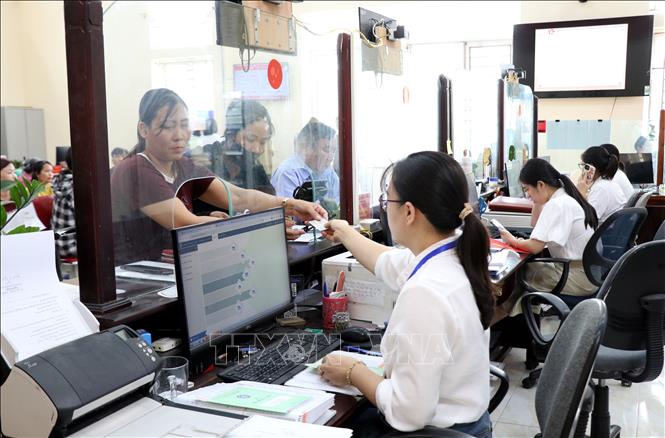
Mr. Pham Minh Cuong, Deputy Director of the Yen Mo Commune Public Administrative Service Center, said that the center arranges and assigns staff to the right positions according to their abilities and strengths. Staff working in the one-stop service area must be proficient in using modern equipment and shared software. From July 1st to the present, the Center has received nearly 8,000 applications; of which, the number of applications received online reached over 87%, and the number of applications with digitized components and resolution results reached over 97%. The results of the Q3/2025 service quality assessment on the National Public Service Portal for Yen Mo show that the unit leads the entire province in the criterion of transparency and ranks third in the province for online public services…
The workshop "Local Governance in the Context of Digital Transformation: International Experiences and Policy Implications for Vietnam" was held on October 22-23 in Hanoi. The event attracted a large number of scientists, leaders from various central and local ministries and agencies, representatives from several international organizations in Hanoi, and some organizations with scientific cooperation with the Ho Chi Minh National Academy of Politics. Delegates and scientists focused on discussing the experiences of other countries in local governance, especially the experience of operating a two-tiered local government system; and evaluating the achievements in implementing the Party's guidelines and policies, and the laws of the Vietnamese State on digital transformation, artificial intelligence (AI) development, and the application of AI in local governance.
Following the opening session, many delegates emphasized that Vietnam is entering a new phase of development, where administrative reform is closely linked to digital transformation and institutional innovation, with local authorities playing a pioneering role. When the grassroots level is strong, dynamic, and honest, the nation will have a solid foundation for rapid and sustainable development. Reforming local governance in the context of digital transformation is a strategic step towards realizing the national development vision by the middle of the 21st century.
Source: https://baotintuc.vn/thoi-su/tinh-gon-bo-may-day-manh-ket-noi-chia-se-du-lieu-cai-cach-hanh-chinh-20251026095401212.htm
![[Photo] Closing Ceremony of the 10th Session of the 15th National Assembly](/_next/image?url=https%3A%2F%2Fvphoto.vietnam.vn%2Fthumb%2F1200x675%2Fvietnam%2Fresource%2FIMAGE%2F2025%2F12%2F11%2F1765448959967_image-1437-jpg.webp&w=3840&q=75)



![[Photo] Prime Minister Pham Minh Chinh holds a phone call with the CEO of Russia's Rosatom Corporation.](/_next/image?url=https%3A%2F%2Fvphoto.vietnam.vn%2Fthumb%2F1200x675%2Fvietnam%2Fresource%2FIMAGE%2F2025%2F12%2F11%2F1765464552365_dsc-5295-jpg.webp&w=3840&q=75)








































![[OFFICIAL] MISA GROUP ANNOUNCES ITS PIONEERING BRAND POSITIONING IN BUILDING AGENTIC AI FOR BUSINESSES, HOUSEHOLDS, AND THE GOVERNMENT](https://vphoto.vietnam.vn/thumb/402x226/vietnam/resource/IMAGE/2025/12/11/1765444754256_agentic-ai_postfb-scaled.png)








































Comment (0)