

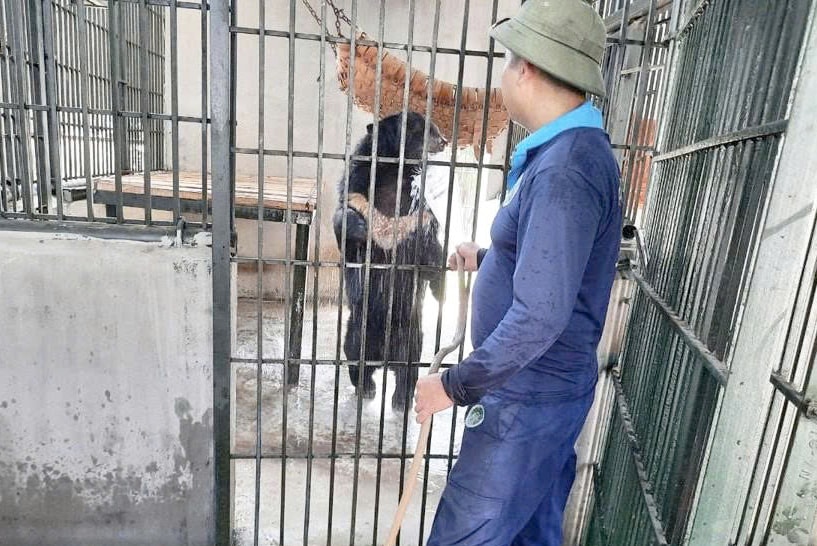
Wildlife Rebirth Center
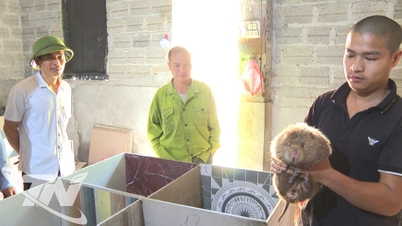
Established and under the Hanoi Department of Agriculture and Environment, the Hanoi Wildlife Rescue Center is located in Soc Son commune. It serves as the central hub for receiving, caring for, conserving, and reintroducing wildlife confiscated by authorities or voluntarily handed over by citizens. According to reports, rescue activities at the center were active and urgent during the first six months of 2025. The unit received 32 cases involving 274 individual wildlife. Many of these individuals belong to rare and endangered species listed in Appendix I, groups IB and IIB of Decree No. 84/2021/ND-CP, such as tigers, bears, white-cheeked gibbons, peacocks, and hornbills.
Alongside the reception process, the center also implements timely disease prevention and treatment. In the first six months of 2025 alone, the center conducted 11 disease prevention campaigns for 1,191 animals and 66 treatment sessions for 850 animals suffering from digestive, respiratory, and skin fungal diseases, among others. As a result, many animals were saved, recovered their health, and prepared for their return to the wild.
According to Ta Duy Long, Deputy Director of the Hanoi Wildlife Rescue Center, each wild animal brought in is a precious life. Rescuing and caring for them is not only a professional task but also a responsibility to the ecosystem and future generations. Besides the technical staff, many volunteers and international conservation organizations also work alongside the center. Regular training courses on veterinary medicine, rescue skills, and animal welfare are organized to improve staff skills and contribute to ensuring the quality of conservation work.
A highlight of the Hanoi Wildlife Rescue Center's activities is the reintroduction process, helping animals return to their original habitats. In the first half of 2025, the center reintroduced 164 individuals along with 4.3 kg of snakes to the Huong Son Special Forest (Hanoi) and the Xuan Lien Nature Reserve ( Thanh Hoa province). In addition, 12 other individuals were transferred to Xuan Lien to continue the rehabilitation of their biological behavior before reintroduction.
“Reintroducing wildlife is not only a ‘humane act’ but also has scientific and ecological significance, contributing to maintaining natural balance, replenishing rare genetic resources, and gradually restoring populations at risk of decline. Many bird and reptile species, after being reintroduced, have quickly adapted and reproduced naturally, contributing to enriching the forest ecosystem,” Mr. Ta Duy Long informed.
In addition to its professional activities, the Hanoi Wildlife Rescue Center also collaborates with organizations such as Save Vietnam's Wildlife, Four Paws Vietnam, and the Asian Turtle Conservation Program. Many international experts provide direct support, animal welfare advice, and share experiences in management and post-release monitoring. These are crucial factors in enhancing the effectiveness of rescue and conservation at the international level.
Beyond simply caring for the animals, the center actively engages in communication and collaborates with forest rangers, police, and customs to prevent the illegal trade and transportation of wildlife. Regular community awareness campaigns are organized, urging people not to keep or consume products from wild animals, and encouraging the voluntary surrender of animals they are keeping.
Let's work together to preserve biodiversity.
To date, the center is caring for and conserving 556 individual animals along with 73.9 kg of snakes. This is an impressive number, demonstrating the enormous workload undertaken by the staff. However, pressure regarding enclosure space, infrastructure, and personnel remains significant. The center is frequently overcrowded, affecting animal welfare and the effectiveness of care.
Faced with these challenges, the Center's Board of Directors has identified the following tasks for the last six months of 2025: to continue accelerating the project to expand rescue infrastructure; strengthen domestic and international cooperation on conservation; focus on scientific research and the application of technology in veterinary medicine and management; and enhance community communication on wildlife protection.
Director of the Hanoi Wildlife Rescue Center, Luong Xuan Hong, shared: “Biodiversity conservation cannot be the responsibility of a single unit. We urgently need the cooperation of the community, the support of the government, and the collaboration of domestic and international scientific organizations. Only then can the journey of restoring freedom to wild animals be truly sustainable.”
In reality, community awareness has changed significantly. Many people have voluntarily handed over illegally kept animals to the authorities. This is a positive sign, confirming that the communication and dissemination of the message "protecting nature is protecting our own lives" has begun to yield results.
In the context of climate change, biodiversity loss, and the ongoing and complex issues of illegal hunting and trafficking, the role of the Hanoi Wildlife Rescue Center becomes even more crucial. Each individual rescued, each species conserved, is a valuable link in maintaining ecological balance. This quiet yet meaningful journey has contributed to affirming that Hanoi is not only a cultural capital, but also a green city where humans and nature coexist harmoniously and sustainably…
Source: https://hanoimoi.vn/trung-tam-cuu-ho-dong-vat-hoang-da-ha-noi-noi-no-luc-bao-ton-da-dang-sinh-hoc-715267.html

































































Comment (0)