

National Assembly Deputy Duong Ngoc Hai ( Ho Chi Minh City):
Strict regulations are needed regarding autonomy in higher education .
University autonomy is a groundbreaking mechanism that empowers universities to make their own decisions and take responsibility, thereby promoting improved training quality. However, the implementation of this mechanism has revealed many obstacles. Some higher education institutions have exercised their autonomy effectively, while others have not, and in some cases, have even faced disciplinary action. This is due to inconsistent legal regulations and differing interpretations and applications of the law.
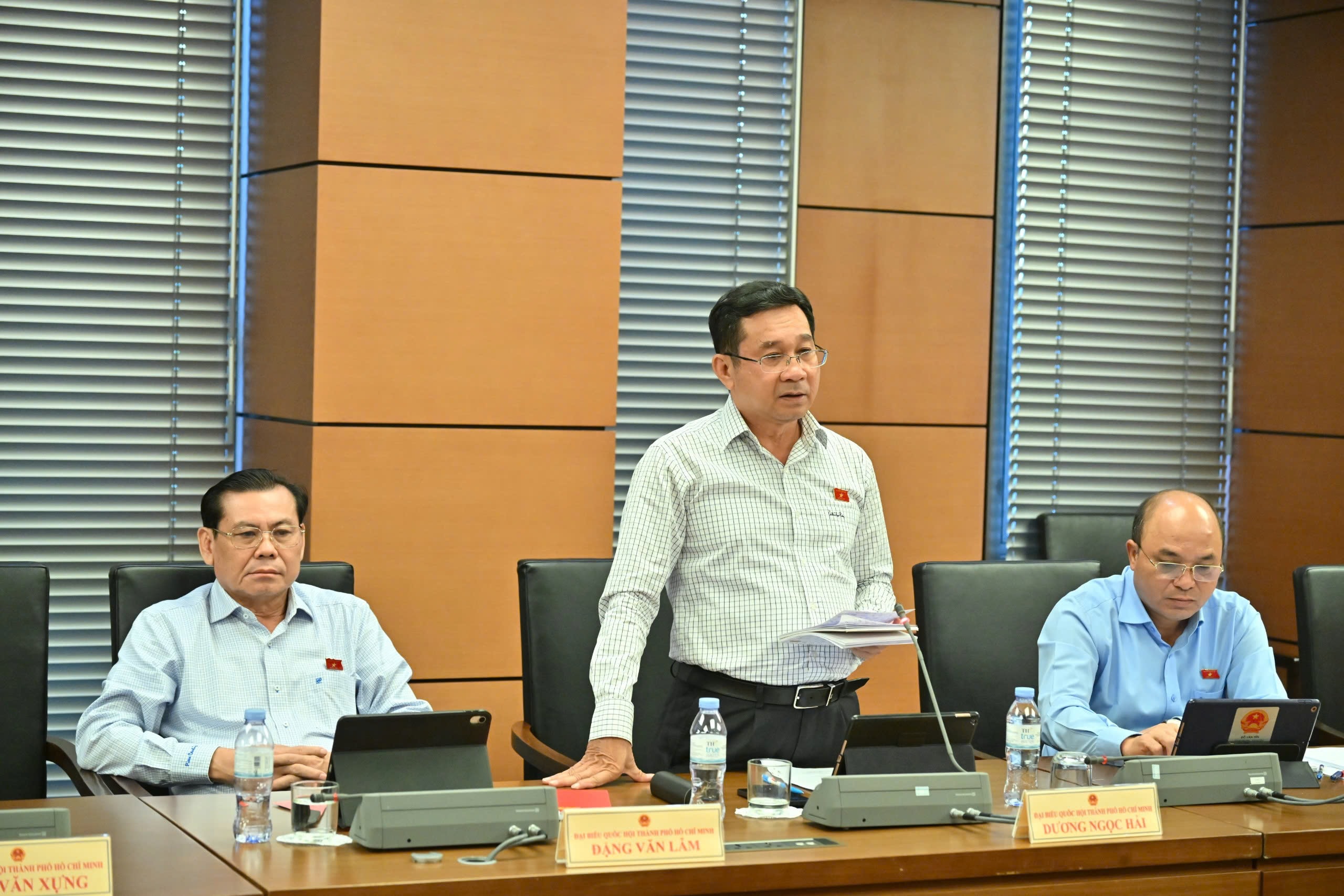
Therefore, the draft Law on Higher Education (amended) needs to learn from the difficulties and obstacles in implementing the autonomy mechanism to establish strict regulations: what kind of autonomy, within what scope, and at what level?... Since we already have quality accreditation, I propose that we can base the level of autonomy of higher education institutions on quality accreditation and financial capacity.
Clause 3 of Article 18 of the draft Law provides quite detailed regulations on the Science and Training Council of higher education institutions, comprising representatives from the leadership of higher education institutions, lecturers, scientists, businesses, employers, alumni, local authorities, and a number of experts as decided by the rector. I believe that the Science and Training Council plays an important role in advising and providing feedback, especially requiring higher education institutions to explain their work to the Council. However, this issue is not yet regulated in the draft Law. I propose that the drafting committee study and add regulations on the advisory and feedback role of the Science and Training Council, and add a requirement for higher education institutions to be accountable to the Council.
National Assembly Deputy Dang Thi Bao Trinh (Da Nang):
Shift to a responsible post-audit mechanism.
The issue of substantive autonomy for vocational education institutions relates to Clause 2 of Article 4 and Articles 8, 10, and 35 of the draft Law on Vocational Education (amended). Currently, the draft Law outlines the principle of full and comprehensive autonomy. However, in practice, the implementation of autonomy is still lacking. Vocational education institutions still have to wait for approval of programs, occupational lists, and enrollment quotas through many administrative layers. While the current labor market is changing very rapidly, training programs are slow due to bureaucratic procedures. Some new professions become trends after only one year but have to wait many years to be included in the official list. As a result, graduates are out of sync with businesses, and vocational schools miss opportunities for innovation.

Therefore, I propose shifting the approval mechanism to a responsible post-audit, empowering vocational education institutions to proactively develop, update, and issue new training programs, modules, and professions, based on the national qualifications framework. The Ministry of State management only needs to issue principles, output standards, and conduct periodic quality accreditation, without interfering with the specific list of professions. At the same time, Article 35 should be amended to clearly stipulate the right to autonomous investment and reinvestment of legitimate revenue sources so that schools have the conditions to upgrade equipment, transform technology, and develop green and digital skills. Autonomy is not about laxity, but about transparency, accountability, and efficiency. We cannot have a dynamic workforce if we remain bound by rigid frameworks.
National Assembly Deputy Tran Dinh Gia (Ha Tinh):
Promoting innovation while effectively managing the risks of AI in education.
I agree with the provisions of the draft Law amending and supplementing certain articles of the Law on Education and related documents. Regarding the financial resources for tuition fee exemption and support for private schools, I believe that the policy of waiving tuition fees for all public high school students and supporting private educational institutions is a humane policy, demonstrating the State's concern for equality in access to education.
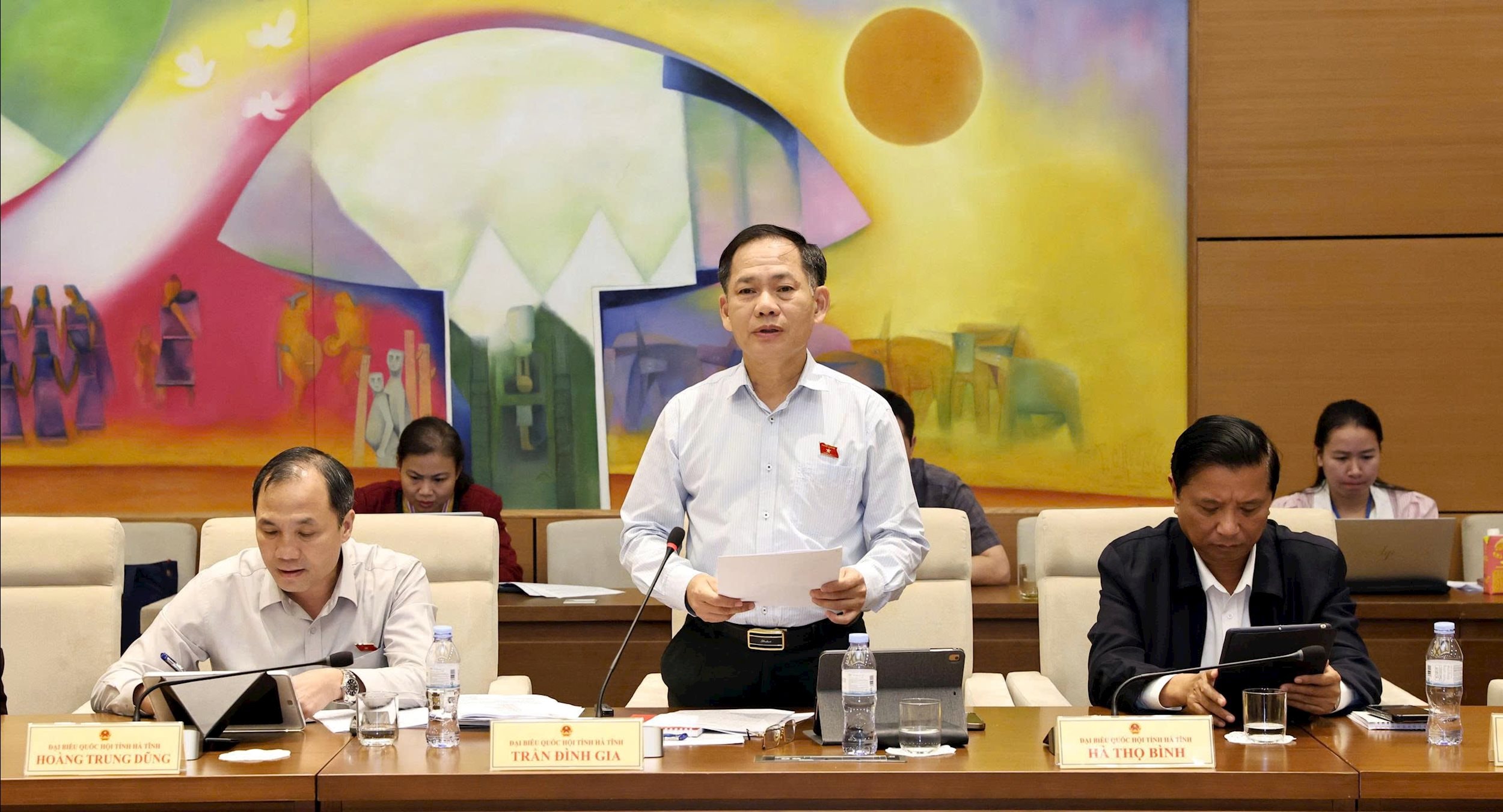
However, implementing this policy will place enormous pressure on the state budget, estimated at tens of trillions of VND per year. Meanwhile, the draft law currently does not clarify the mechanism for allocating resources between the central and local governments, nor does it specifically regulate the level and form of support for the private sector, potentially leading to inconsistencies in implementation and disparities between localities.
It is necessary to supplement the regulations with fundamental principles regarding the responsibilities of central and local governments in allocating budgets when implementing tuition fee exemption and support policies; the Government should be tasked with providing detailed regulations and developing a phased implementation roadmap, ensuring feasibility and budget balance. At the same time, the policy framework for preferential treatment of private educational institutions (regarding taxes, land, credit, and finance) should be refined to encourage the development of this sector and help share the burden with the public education system.
The draft law stipulates: "The State shall have preferential policies and create favorable conditions for investment in infrastructure and technology, and support training to promote research, development, and application of controlled artificial intelligence in education and training."
However, the phrase "controlled" is too general, lacking a clear scope and content, leading to inconsistent interpretations and applications. It is proposed to revise it to: "The State has a policy of prioritizing and facilitating investment in infrastructure and technology, and supporting training to promote research, development, and application of artificial intelligence in education, while simultaneously establishing a legal framework to control data security, ethical application practices, and algorithm transparency." Such a regulation would clearly guide the development of sub-legal documents, ensuring both the promotion of innovation and the effective management of AI risks in education.
Source: https://daibieunhandan.vn/bao-dam-co-che-tu-chu-kha-thi-va-thuc-hien-tu-chu-co-trach-nhiem-10393001.html


![[Photo] Prime Minister Pham Minh Chinh holds a phone call with the CEO of Russia's Rosatom Corporation.](/_next/image?url=https%3A%2F%2Fvphoto.vietnam.vn%2Fthumb%2F1200x675%2Fvietnam%2Fresource%2FIMAGE%2F2025%2F12%2F11%2F1765464552365_dsc-5295-jpg.webp&w=3840&q=75)
![[Photo] Closing Ceremony of the 10th Session of the 15th National Assembly](/_next/image?url=https%3A%2F%2Fvphoto.vietnam.vn%2Fthumb%2F1200x675%2Fvietnam%2Fresource%2FIMAGE%2F2025%2F12%2F11%2F1765448959967_image-1437-jpg.webp&w=3840&q=75)












































![[OFFICIAL] MISA GROUP ANNOUNCES ITS PIONEERING BRAND POSITIONING IN BUILDING AGENTIC AI FOR BUSINESSES, HOUSEHOLDS, AND THE GOVERNMENT](https://vphoto.vietnam.vn/thumb/402x226/vietnam/resource/IMAGE/2025/12/11/1765444754256_agentic-ai_postfb-scaled.png)














































Comment (0)