

According to the Hanoi Center for Disease Control (CDC), 234 cases of dengue fever were recorded in the city last week, distributed across 28 districts (a decrease of 40 cases compared to the previous week).
Among them, the districts and counties recording the most cases are: Dan Phuong with 63 cases; Thanh Oai with 22 cases; Phuc Tho and Ha Dong - 15 cases each.
In addition, the communes and wards that recorded the most cases are Phuong Dinh commune (Dan Phuong district) with 29 cases; Dong Thap commune (Dan Phuong district) with 7 cases; Hong Duong commune (Thanh Oai district) with 7 cases; and Duong Noi ward (Ha Dong district) with 6 cases.
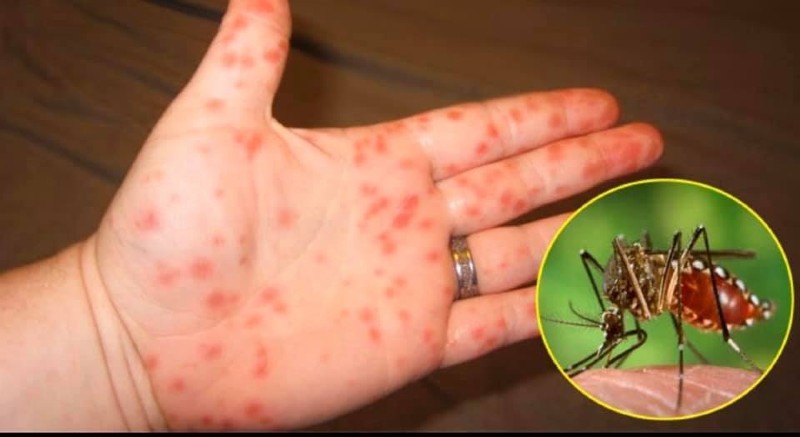 |
| Illustrative image. |
From the beginning of 2024 to the present, the total number of dengue fever cases in the entire city is 2,284, a decrease of 59% compared to the same period in 2023.
Regarding outbreaks, 17 dengue fever outbreaks were recorded last week in the districts of Dan Phuong, Phuc Tho, Hoan Kiem, Thanh Oai, Ba Vi, Chuong My, Dong Da, Dong Anh, Thach That, and Thuong Tin (an increase of 2 outbreaks compared to the previous week).
From the beginning of 2024 to the present, Hanoi has recorded 104 dengue fever outbreaks. Currently, 34 outbreaks are still active. The Hanoi CDC assesses that, with the current hot weather combined with heavy rain, mosquitoes that transmit dengue fever are likely to breed if environmental sanitation measures to eliminate mosquito larvae and spray insecticides are not thoroughly implemented.
Over the past week, the Hanoi CDC has coordinated with relevant units to monitor, investigate, and handle outbreaks in areas with active cases and clusters of infection. This has resulted in the identification of mosquito breeding grounds in various containers such as open tanks, discarded tires, flower pots, buckets, basins, jars, and other containers.
Dengue fever prevention and control efforts will continue to be intensified next week. Specifically, the Hanoi CDC will continue to monitor areas with active dengue fever outbreaks.
In addition, the health centers in districts, counties, and towns are focusing resources on thoroughly addressing outbreak areas; organizing mosquito control spraying to ensure a high rate of thorough spraying; and implementing environmental sanitation and larval control in high-risk areas with high insect indices.
According to the World Health Organization (WHO), the incidence of dengue fever has increased 30-fold in the last 50 years. It is estimated that there are approximately 50-100 million cases of dengue fever annually in 100 endemic countries.
The global economic burden caused by dengue fever is estimated at around $8.9 billion annually. Of this, 40% of the economic loss is caused by reduced labor productivity, as patients have to take time off work or are hospitalized for treatment.
Every year, Vietnam records hundreds of thousands of dengue fever infections and dozens of deaths among children and adults. However, for many years, there has been no preventive vaccine, and measures to control the source of infection, such as eliminating the mosquito vectors, still face many difficulties.
According to statistics from the Ministry of Health, in 2023, the whole country recorded more than 172,000 cases of dengue fever, with 43 deaths. Dengue fever has four serotypes that cause the disease, and there is no cross-immunity, so each person can contract the disease four times in their lifetime, and subsequent infections will be more severe due to the influence of cross-immunity complexes.
Without timely emergency care and treatment, patients, especially high-risk groups such as children, pregnant women, people with chronic diseases, and obese individuals, may experience dangerous complications such as hypotension, heart failure, kidney failure, hemorrhagic shock, multiple organ failure, cerebral hemorrhage, and coma. In pregnant women, dengue fever can cause fetal distress, premature birth, and stillbirth.
In Vietnam, vaccines against dengue fever, shingles, and pneumococcal disease (23 strains) are among the 40 types of drugs, vaccines, and biological products approved for use in Vietnam by the Drug Administration of Vietnam (Ministry of Health) on the afternoon of May 15, 2024.
However, a dengue fever vaccine has not yet been administered, so the main preventive measure remains limiting mosquito bites and reducing mosquito breeding grounds.
Currently, there is no specific treatment for dengue fever; treatment mainly focuses on managing symptoms and monitoring warning signs. Patients should be hospitalized if they experience any of the following signs: mucosal bleeding, bleeding from gums, nose, or digestive tract; abdominal pain in the liver area; excessive vomiting; rapidly decreasing platelet count and blood concentration; or decreased urine output.
With dengue fever, there are treatment mistakes that can worsen the condition and that people need to avoid. Specifically, the symptoms of dengue fever are easily confused with those of a common viral fever, leading patients to be complacent and causing the disease to worsen, resulting in many complications and even life-threatening situations.
Dengue fever is classified into three levels: mild, with warning signs, and severe. Patients often underestimate the severity of the condition and self-treat instead of seeking medical attention.
In mild cases, patients may be advised to monitor their condition at home, but they still need to see a doctor for diagnosis, treatment, and close monitoring.
In severe cases, patients may experience dangerous complications such as internal bleeding, brain damage, liver and kidney damage, and even death if not detected in time.
Most patients mistakenly believe that the fever subsides because they feel better afterwards. However, in reality, the most dangerous phase is after the high fever stage.
At this stage, the patient needs close monitoring by a doctor and complete rest, limiting strenuous activity and excessive movement because after 2-7 days, platelet count can drop significantly and plasma leakage may occur, leading to symptoms such as subcutaneous bleeding and nosebleeds.
Depending on the severity and complications of the disease, it can lead to internal bleeding, pleural effusion, gastrointestinal bleeding, dengue shock, and even death.
Patients with dengue fever often experience persistently high fevers, so in an attempt to lower their fever quickly, they may take fever-reducing medication without adhering to the prescribed dosage.
Furthermore, there are many cases of misuse of fever-reducing medications, such as using aspirin and ibuprofen instead of paracetamol, leading to more severe bleeding in patients, potentially causing severe and life-threatening gastric bleeding.
Many people believe that mosquitoes that transmit dengue fever only live in stagnant public ponds, sewers, etc.
However, Aedes mosquitoes thrive in stagnant water sources such as fish tanks, flower vases, rock gardens, and rainwater collected in broken pieces of pottery in gardens, alleys, or on rooftops and construction sites. Therefore, it is necessary to remove these stagnant water containers that provide breeding grounds for Aedes mosquitoes.
To avoid dengue fever transmitted by mosquitoes, many people believe that spraying mosquito repellent at any time is acceptable. However, the first step in mosquito control is to clean the house, turning over all mosquito breeding grounds to kill larvae, before proceeding with spraying to kill adult mosquitoes.
For effective mosquito control, spraying should be done in the morning. This is because dengue mosquitoes are active during the day, most actively in the early morning hours and before sunset. It's important to note that insecticides remain effective for up to six months after application.
Many people believe that once someone has had dengue fever, they won't get it again. This is not entirely true. Dengue fever is caused by the Dengue virus, which has four strains: DEN-1, DEN-2, DEN-3, and DEN-4. All four strains are capable of causing the disease.
Therefore, if a person has previously had dengue fever, their body may produce antibodies during the illness. However, the immunity formed is specific to each individual strain. The patient may not be reinfected with the old strain of the virus but can still be infected with a new strain, thus potentially contracting dengue fever again.
Many people believe that when suffering from dengue fever, one should only drink electrolyte replacement fluids and not coconut water because it is ineffective in rehydrating the body and makes it difficult to identify complications.
This is completely wrong. In dengue fever, a high fever lasting for several consecutive days will cause the patient to become dehydrated and lose fluids. The simplest way to replenish fluids is to give the patient Oresol.
However, many patients find it difficult to drink Oresol. This can be replaced with coconut water, orange juice, grapefruit juice, or lemon juice to replenish lost fluids. Furthermore, these fruits contain many minerals and vitamin C, which help boost immunity and strengthen blood vessel walls.
Many parents mishandle dengue fever in their children. Seeing bruised hemorrhagic spots, they believe that performing a ritual to remove the "toxic blood" will speed up recovery.
This can lead to uncontrollable bleeding. This provides an entry point for bacteria, which can cause dangerous blood clotting disorders that can be life-threatening for the child.
Source: https://baodautu.vn/ha-noi-dich-sot-xuat-huyet-co-xu-huong-giam-d223314.html



























































































Comment (0)