

After developing a boil on her knee a few days earlier, the 11-year-old patient became critically ill due to respiratory failure, cardiovascular collapse, and complete lung necrosis.
On June 23, Children's Hospital 1 in Ho Chi Minh City announced that it had saved the life of a young boy in critical condition due to a multidrug-resistant staphylococcus infection.
According to the medical history, patient NTN (11 years old, residing in Dong Thap province) developed skin boils on the knee accompanied by a high fever for 3 days, and was admitted to Sa Dec Hospital (Dong Thap). The child was diagnosed with severe pneumonia, cellulitis, and sepsis, and was treated with antibiotics and respiratory support, but did not improve.
On the evening of April 15th, the child was transferred to the Emergency Department of Children's Hospital 1 in Ho Chi Minh City in a lethargic state, cyanotic, with severe respiratory failure and cardiovascular collapse. Immediately, the emergency team intubated the child, put him on a ventilator, administered intravenous fluids to combat shock, and then transferred him to the Intensive Care Unit for poisoning. There, doctors diagnosed the child with necrotizing pneumonia, cellulitis, and septic shock due to staphylococcus infection. Numerous resuscitation measures were implemented, but without success. The team consulted and decided on continuous hemodialysis to remove toxins and cytokines and stabilize the child's organ function.
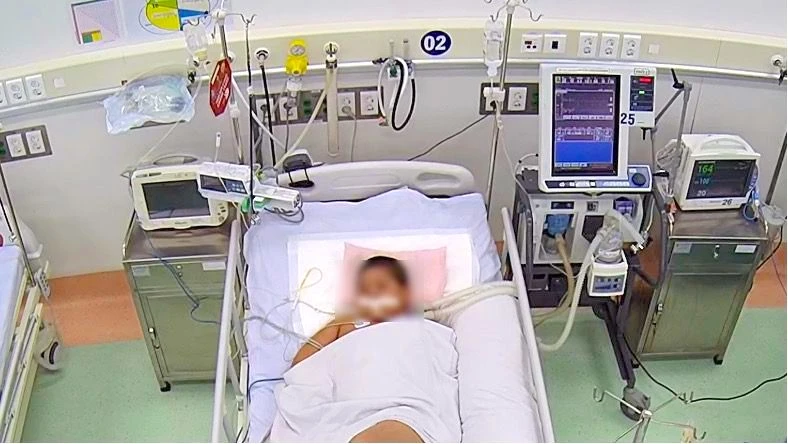
After 72 hours of intensive care, the boy overcame the critical stage of septic shock but faced severe pneumonia, complete necrosis of both lungs, accompanied by hemothorax, pleural effusion, and severe respiratory failure. Following a hospital-wide consultation, doctors decided to perform surgery to drain the blood and pus from the pleural cavity, remove necrotic tissue in the lungs, and drain pus from the knee area. After nearly two months of intensive treatment, the medical team at Children's Hospital 1 successfully saved the child's life.
According to Associate Professor, Doctor Pham Van Quang, Head of the Intensive Care and Toxicology Department at Children's Hospital 1, staphylococcal sepsis usually enters the body through the skin, initially manifesting as skin boils, skin infections, soft tissue wounds, cellulitis, and arthritis. These cases are often overlooked due to patient negligence. Once staphylococcal bacteria enter the bloodstream, they can cause high fever, sepsis, multi-organ damage, osteomyelitis, bone marrow inflammation, pleural effusion, pericardial effusion, and synovial membrane effusion, leading to necrotizing pneumonia or septic shock, with a high risk of death.
Doctors advise that when experiencing symptoms of skin infection (especially accompanied by high fever, skin redness, or shortness of breath), patients should immediately go to a medical facility for timely diagnosis and treatment.
GIAO LINH
Source: https://www.sggp.org.vn/gianh-giat-su-song-cho-be-trai-bi-hoai-tu-phoi-sau-hon-2-thang-post745928.html













































































































Comment (0)