

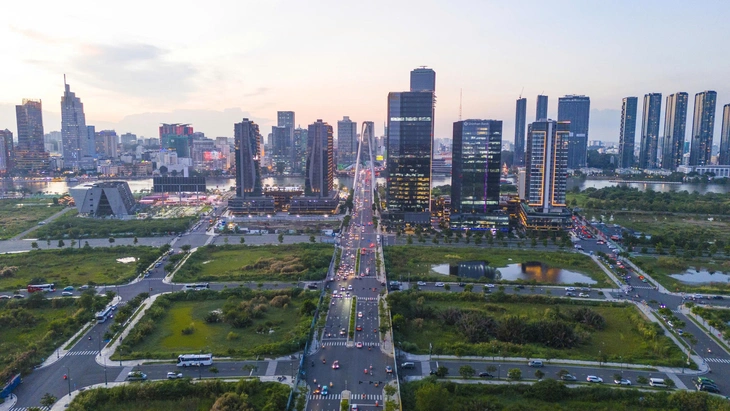
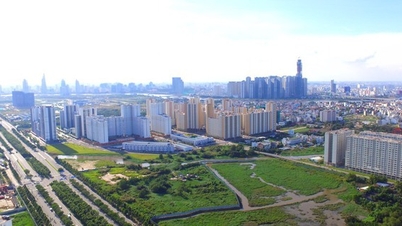
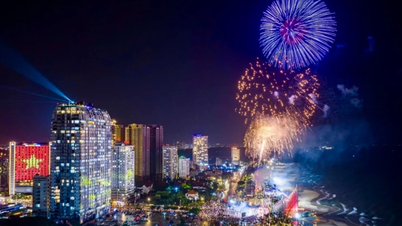
Thu Thiem New Urban Area - Photo: QUANG DINH
Sharing with Tuoi Tre Online , Mr. Anthony Moulton, founder of Brand & Co - a company specializing in brand strategy in the real estate sector, commented that Ho Chi Minh City has a great opportunity to standardize these values when aiming for an international urban model.
Lifestyle economics is not just for the rich
* With your experience and expertise, how do you define "lifestyle economy"? What do you think about this trend in Ho Chi Minh City?
- For me, a “lifestyle economy” is an ecosystem that a city proactively creates to support a high quality of life, where culture, design, services, health, public spaces and real estate connect to create a distinct identity. It goes beyond mere amenities. It is about emotional connection, identity, and how a city makes people feel about it.
I think the time has come for Vietnam. But the thing is, if the opportunity is there, Vietnam can quickly start to look at how all the elements come together, such as culture, and policy development also plays an important role.
The “lifestyle economy” is certainly not just one factor. It is a combination of many things and many people that need to come together. The government and the private sector must work together to build something that is uniquely Vietnamese.
For Ho Chi Minh City, the opportunity lies in tapping into and enhancing its dynamic “cultural DNA”: entrepreneurial spirit, traditional values, culinary culture and youthful optimism. All need to be “enhanced” through sophisticated design, investment in public spaces, high-class hotel services and carefully selected living experiences.
Cities like Singapore and Seoul are prime examples: they have successfully combined culture, innovation and a high-end lifestyle to attract global talent and investors. The key is consistency, coherence and a long-term vision that integrates lifestyle into economic development strategy.
* In your opinion, does the 'lifestyle economy' need to be associated with luxury and high-income customers? Can this economy be defined as "high" standards for the lives of all residents?
- Australia has hot summers, but very mild winters. So generally we tend to be outdoors more because of the pleasant weather. We have regulations that a certain percentage of land must be green space. There must be a certain number of parks, outdoor playgrounds for children, and many other facilities.
That in turn puts pressure on (real estate) developers to step in and make sure that if someone can't afford a luxury apartment with full amenities, where will middle-income people live and what amenities will they have?
That said, the amenities of a lifestyle economy shouldn't just be for the rich. They need to be distributed equally. And I think that's a really important part, because to build a thriving economic city, you need all demographic groups, all types of workers with different skills.
To attract foreign investment, we need to know what amenities are available to the workers and skilled workforce that will come here to work. For me, the most important thing is something very simple: basic infrastructure. Not just metro, but everyday things.
When I walked around Thao Dien, I saw that the sidewalks were not in good condition, there was trash on the street… and many other things like that. When a person decides to move to live and work in another place, you have to make things easy for them. Very simple elements in daily life, things that are taken for granted in international cities.
There will need to be a certain number of parks, outdoor playgrounds for children, and many other amenities. And if Ho Chi Minh City, which I think has a greater potential to become a world-class international city, wants to achieve that, then accessibility, amenities, everything has to be taken into account.
Vietnam is a country with "street vitality", that is its own beauty. But at the same time, if we want foreigners to live, work and invest, we have to make it easy for them to move around: traffic, trains, and more importantly, sidewalks, accessibility, convenience.
A Ho Chi Minh City that creates harmony and relaxation
* As a foreign expert living in Ho Chi Minh City, are you satisfied with your current experiences?
- Success starts with defining the city brand at a macro level, including its promise, “personality,” and core differentiators. Once a city has a clear identity, the real estate sector will reflect the physical manifestations of that identity.
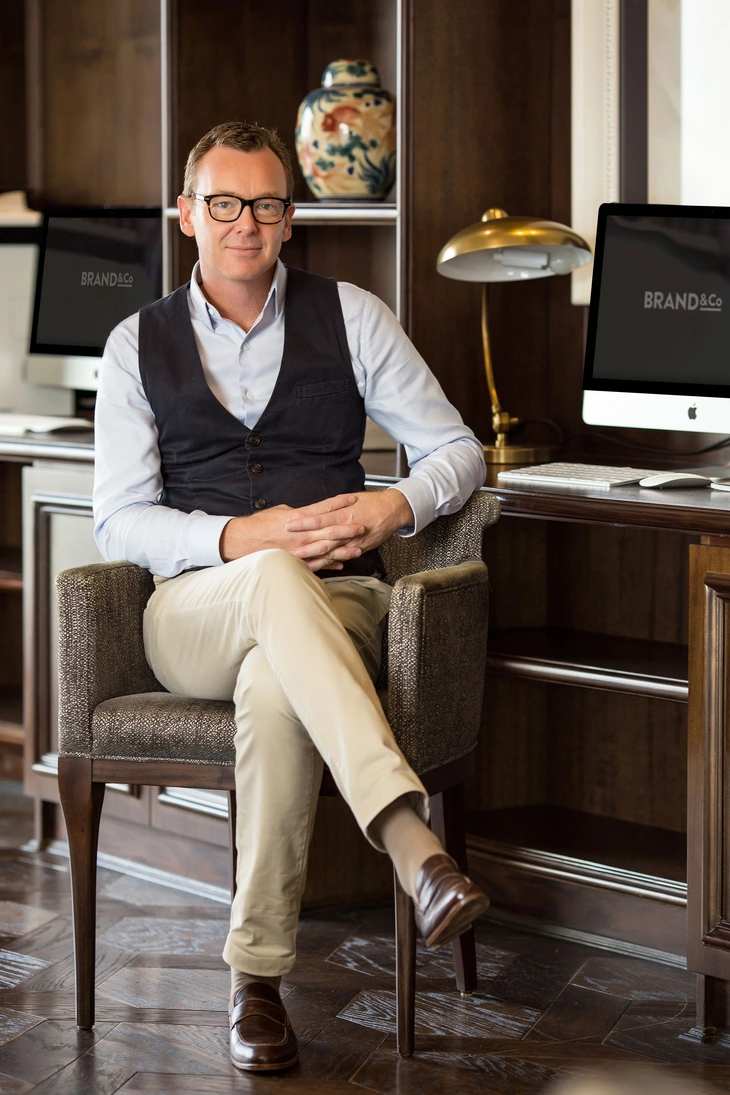
Mr. Anthony Moulton - founder of Brand & Co - Photo: NVCC
In my personal experience in the Asia-Pacific region, the most effective strategies include:
First, there will need to be a clear message for the city. The high-income demographic is looking for authenticity, not “model luxury”. Projects need to reflect the spirit of Ho Chi Minh City: the river, heritage streets, new creative areas.
Second, HCMC will need excellent design. The architecture and interior design must meet international standards while still maintaining local identity.
Third, there will be a need to integrate wellness and lifestyle. Today’s high-spending consumers define luxury through health, community, and meaningful experiences.
Next, we need to tell the cultural story. Real estate developers show how living in Ho Chi Minh City can enhance the identity and lifestyle of its residents, from cuisine to art to innovation.
Branding a city is, at the end of the day, about aspirations, about the lives people can aspire to here and about the future the city promises to bring.
Ho Chi Minh City will need to combine both the housing needs of the people and the high-end segment, not choose one and leave the other. Maybe 75% for the housing needs of the city's people, and 25% for the high-end segment. Because when you attract foreign investment, you need a workforce. And that workforce needs a place to live with reasonable travel time.
And then there is the story of healthy living. Professionals and foreign families coming to live in hot and concrete environments will ask: how can the city create harmony and relaxation to attract this group of residents?
* In your opinion, what opportunities are opening up for the Vietnamese real estate industry from global lifestyle trends?
- Vietnam is ideally positioned to benefit from global lifestyle shifts. Luxury property buyers, both domestic and international, are increasingly looking for a “life experience” rather than a mere purchase transaction.
They seek places that foster connection, community and wellness; homes that reflect sophistication, culture and authenticity; and complexes that integrate hospitality, retail, healthy living and nature.
In particular, Ho Chi Minh City has a great opportunity to shape its future through systematic urban planning, development of high-end complex projects and "branded" real estate products.
As city skylines change, developers who invest in identity, story and experience design will define the next phase of Vietnam’s urban landscape. The combination of a young population, rising incomes and a global mindset makes this a time of extraordinary potential.
Source: https://tuoitre.vn/kinh-te-lifestyle-phai-danh-cho-tat-ca-moi-nguoi-20251204092242585.htm

































































Comment (0)