

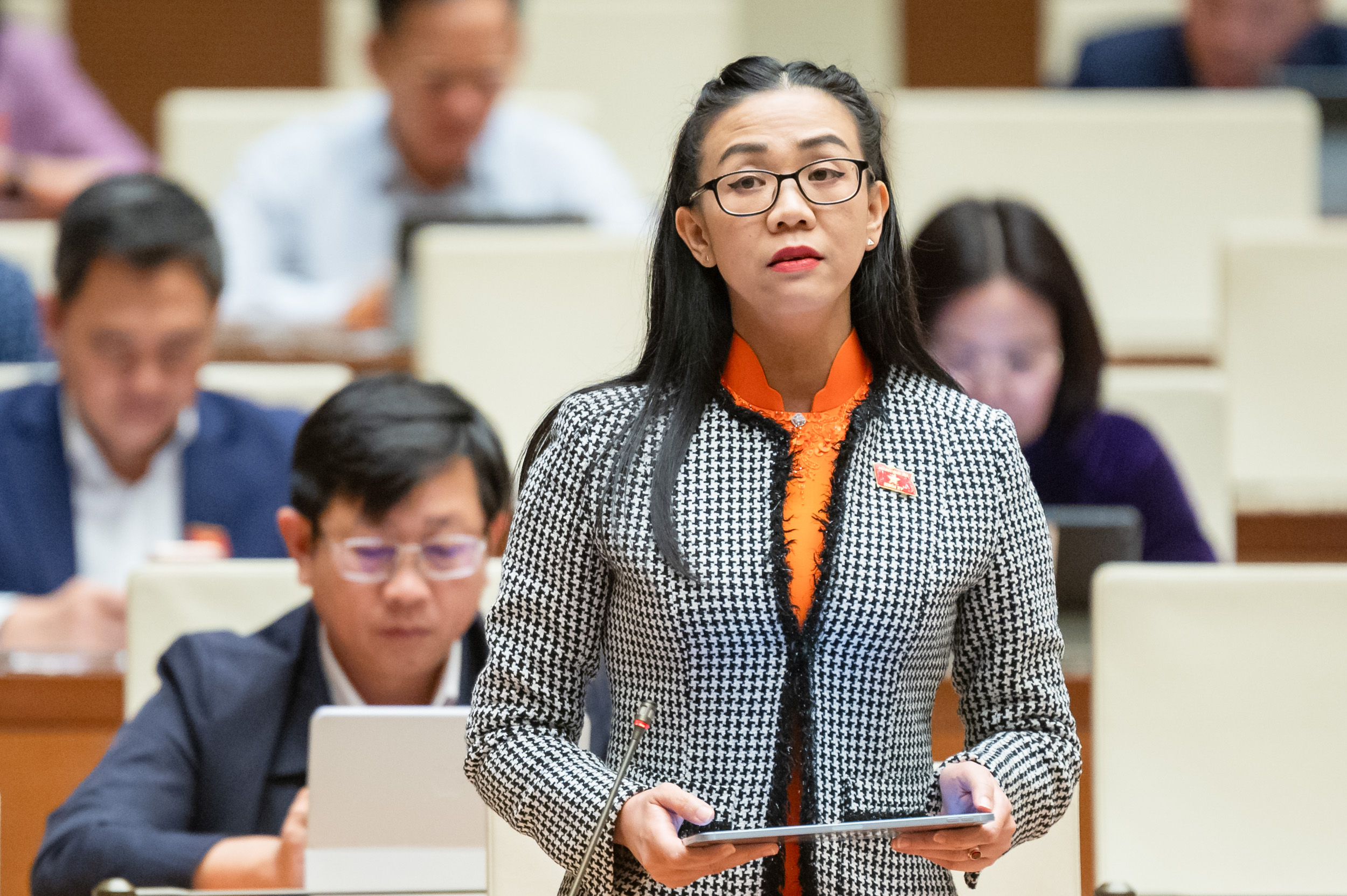
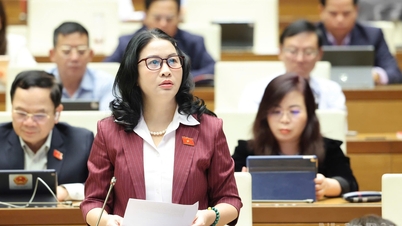
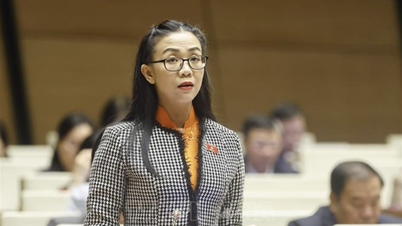
Delegate Trinh Thi Tu Anh ( Lam Dong ) - Photo: P. THANG
On the afternoon of December 8, the National Assembly discussed in the hall the draft resolution on mechanisms and policies for national energy development in 2026 - 2030, with the content that delegates were interested in in the draft was the Government's proposal to add regulations on encouraging businesses and the private sector to participate in research and investment in the development of small modular nuclear power (SMR).
It is a direction that must be accompanied by safety and responsibility.
According to Lam Dong delegation delegate Trinh Thi Tu Anh - Member of the Committee for Science , Technology and Environment, developing SMR is a direction worth considering, suitable for Vietnam's conditions in the context of the country entering a period of profound energy transition. In fact, in the world, many countries have commercialized or are moving very quickly towards SMR.
In particular, the mechanism encourages state-owned and private enterprises to participate in research and investment in the development of small modular nuclear power, opening up a mechanism for private participation.
However, Ms. Tu Anh believes that SMR development must be accompanied by conditions of safety, responsibility, and transparency. This means that encouraging businesses to participate does not mean "completely opening up", but must be based on three pillars.
The three pillars include a separate legal framework related to design licensing, technology appraisal, operational supervision and radioactive waste control; requirements for financial capacity, technology and environmental responsibility; and a careful, planned implementation of SMRs. The goal is to encourage but not to relax, with the State playing the supreme regulatory and supervisory role.
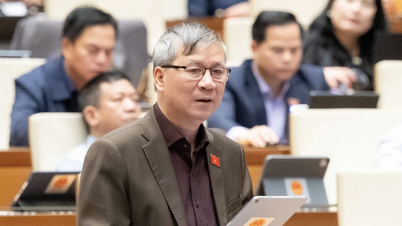
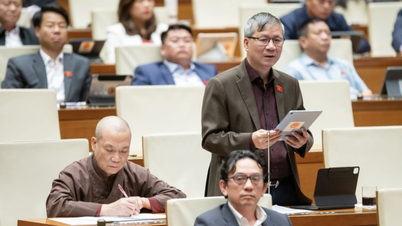
Expressing concerns about the development of the SMR project, delegate Pham Van Hoa (Dong Thap) said that the regulations are still general, while nuclear power, even on a small scale, still poses a potential danger to life and property if an incident occurs. Therefore, stricter regulations are needed and a pilot project should be implemented first and then expanded; responsibilities should be clarified if an incident occurs.
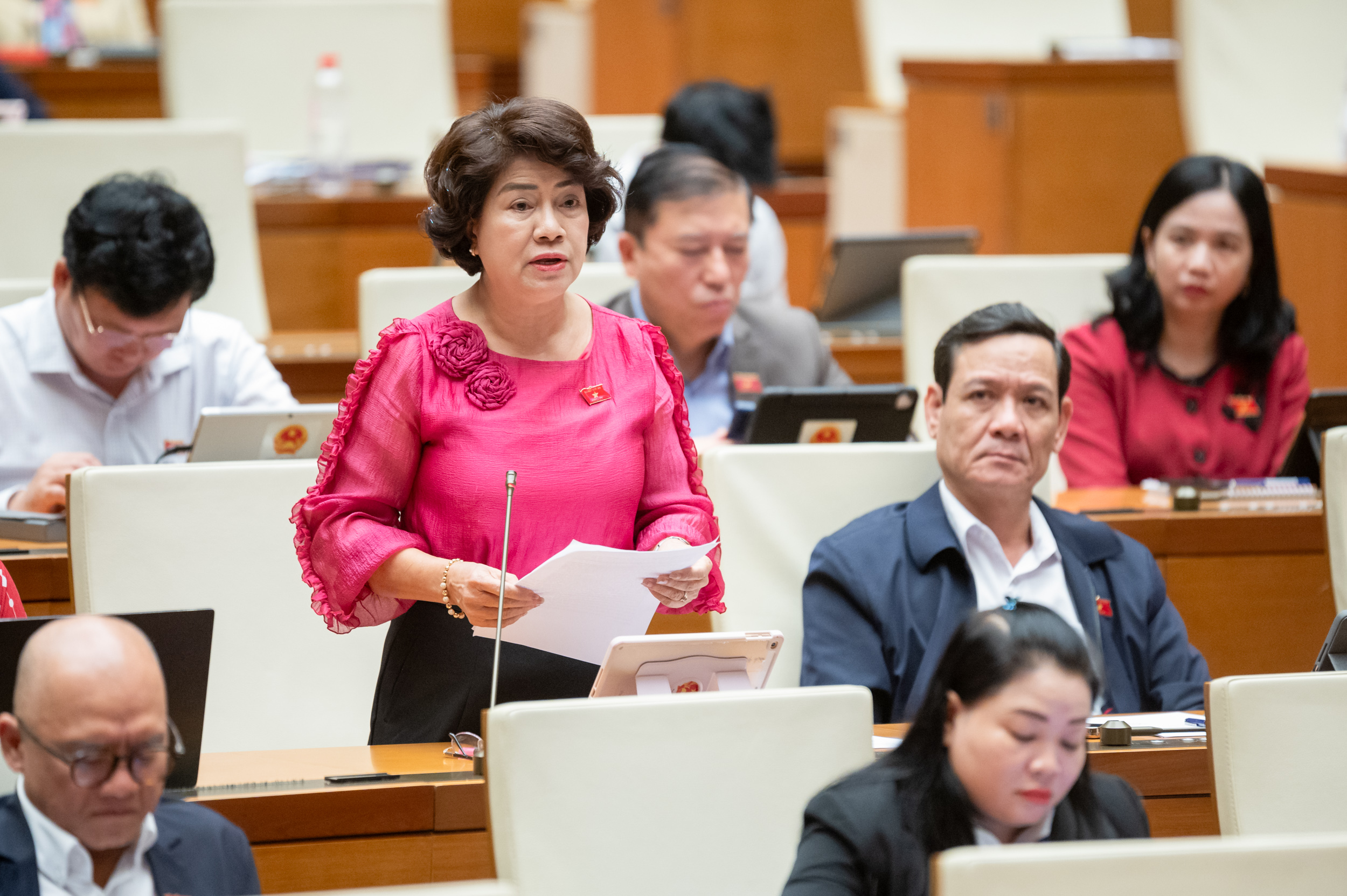
Delegate Nguyen Thi Le Thuy (Vinh Long delegation) - Photo: P. THANG
Need to pilot and gradually expand
Sharing the same view, delegate Nguyen Thi Lan (Hanoi) also said that choosing the SMR investment form is appropriate, but it is not possible to expect SMR to bring high economic efficiency in the short term because it mainly serves research, human resource training and gradually mastering nuclear technology.
"It will be difficult to attract private investment when the investment rate is large, the payback period is long and the risk is high. Therefore, delegates suggest that the initial stage of developing this type of energy needs the leading role of the State.
When Vietnam has enough experience, good safety control, completes legal procedures and masters core technology, it can completely expand the scale step by step to attract private enterprises to participate in investment," said delegate Lan.
According to delegate Nguyen Thi Le Thuy (Vinh Long delegation), the draft does not have specific policies to encourage private participation in SMR development. "The Government's explanation and acceptance report stated that this is an issue in the research phase waiting for investors to propose. The resolution has a term of only 5 years, which is difficult to implement," she said.
Source: https://tuoitre.vn/tu-nhan-lam-dien-hat-nhan-mo-dun-nho-can-vai-tro-dan-dat-cua-nha-nuoc-thi-diem-truoc-khi-mo-rong-20251208161440055.htm
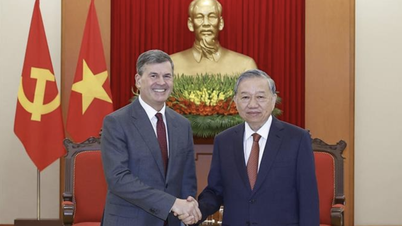
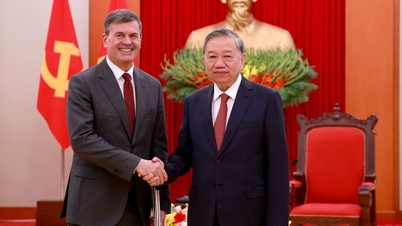
![[Photo] General Secretary To Lam receives the Director of the Academy of Public Administration and National Economy under the President of the Russian Federation](/_next/image?url=https%3A%2F%2Fvphoto.vietnam.vn%2Fthumb%2F1200x675%2Fvietnam%2Fresource%2FIMAGE%2F2025%2F12%2F08%2F1765200203892_a1-bnd-0933-4198-jpg.webp&w=3840&q=75)










































































Comment (0)