

On the afternoon of December 8, the National Assembly discussed in the hall the draft Resolution of the National Assembly on the mechanism and policy for national energy development in the 2026 - 2030 period.
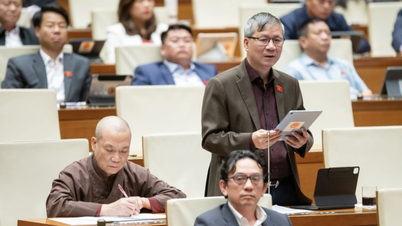
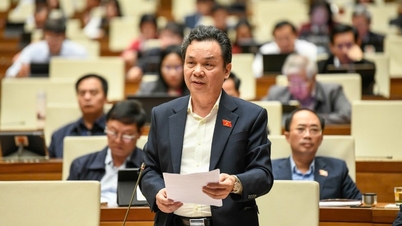
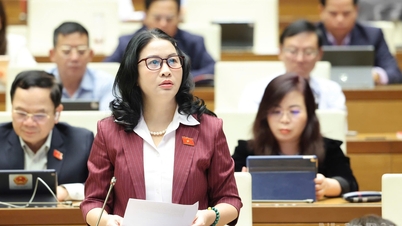
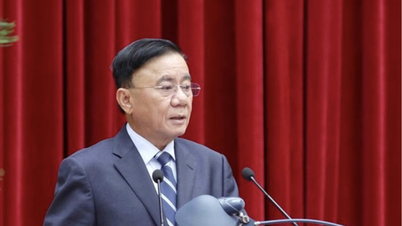
Delegate Nguyen Anh Tri ( Hanoi ) mentioned the issue of hydropower, including small and medium hydropower, social consequences and solutions.

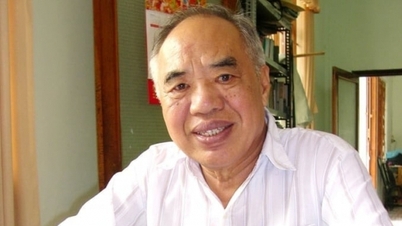
Delegate Nguyen Anh Tri, Hanoi delegation
PHOTO: GIA HAN
Flood discharge causing damage to people must be compensated properly.
At the beginning of his speech, Mr. Tri said that electricity is very necessary for the country, so developing energy and producing electricity is extremely important, "everyone knows that". However, development must go hand in hand with safety, not causing harm to the environment, national security, and people's lives and livelihoods.
In fact, many small and medium hydropower plants have released floodwaters, affecting downstream areas. Mr. Tri cited a series of hydropower projects, stretching from the North, the Central region to the Central Highlands.
According to Mr. Tri, there are three main reasons for the flood discharge causing damage. One is that small hydropower plants are located in mountainous areas with steep terrain and many streams, and when they discharge flood water, it can easily cause flash floods, landslides, and rapid flooding.
Second, small reservoirs do not have enough storage capacity to regulate floods. When it rains heavily, water flows in rapidly, the reservoirs fill up quickly and are forced to release floodwaters, which can easily cause flash floods.
Third, the operating procedures and flood discharge announcements are sometimes carried out unexpectedly or untimely, leaving people downstream without time to evacuate and take precautions.
Mr. Tri also cited Decision No. 1682 of the Prime Minister approving the addition and update of the national power development planning for the 2021-2030 period, with a vision to 2050, including hundreds of small and medium-sized hydropower projects.
However, the draft resolution being discussed "does not mention hydropower at all", especially plans and measures to limit the impact of small and medium hydropower.
"I realize that we have not really paid proper attention to small and medium hydropower, especially the safety of the people and the community," said Mr. Tri.
From the above analysis, Mr. Tri suggested reviewing all small and medium hydropower projects in Vietnam. If flood discharge causes damage to people, adequate compensation must be provided. If life is harmed, criminal prosecution must be taken.
At the same time, all small and medium hydropower projects must be reviewed to ensure their safety. If possible, the State should invest heavily in large hydropower projects and replace small and medium hydropower projects with solar power.

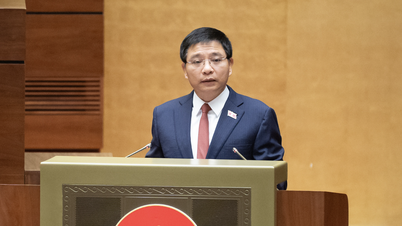
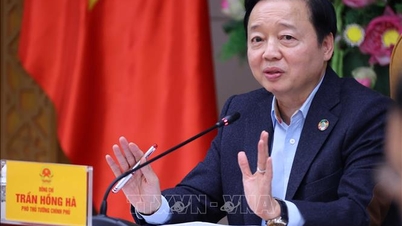
Minister of Industry and Trade Nguyen Hong Dien
PHOTO: GIA HAN
Explaining the above content, Minister of Industry and Trade Nguyen Hong Dien said that there are currently relatively reasonable regulations related to small and medium hydropower. Taking into account the opinions of delegates, the drafting agency will review and adjust accordingly.
Encouraging the development of small modular nuclear power
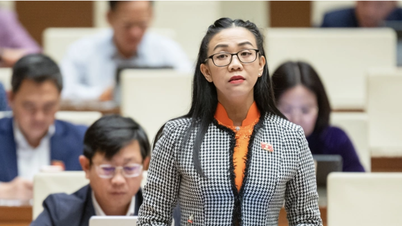
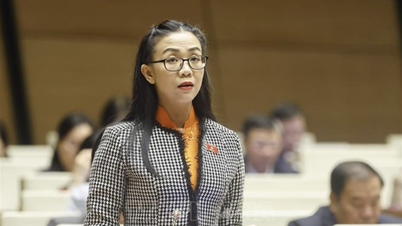
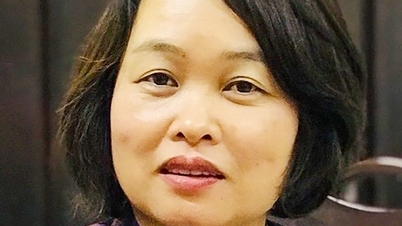
Delegate Trinh Thi Tu Anh (Lam Dong) supported the draft resolution on encouraging state and private enterprises to participate in research and investment in the development of small modular nuclear power (SMR).
This regulation opens up a much more flexible mechanism than the traditional approach. Previously, nuclear power was almost solely undertaken by the State, with large project scales, long investment periods and very high technical requirements. The new approach allows for the mobilization of technical innovation, increased localization capacity and technological initiative.
However, encouragement does not mean "complete opening", Ms. Anh recommends that SMR development must be based on three pillars.
That is to build a separate legal framework for SMRs, including design licensing, technology appraisal, operational supervision and radioactive waste control.
At the same time, it requires clear financial capacity, technological capacity, and environmental responsibility for all participating enterprises, ensuring that the State retains the ultimate control role.
At the same time, implementation needs to be cautious and have a roadmap, starting from research - testing - demonstration projects, carefully assessing social and environmental impacts, and transparently soliciting community opinions.
Thanhnien.vn
Source: https://thanhnien.vn/thuy-dien-xa-lu-gay-thiet-hai-thi-phai-den-bu-tham-chi-xu-ly-hinh-su-185251208145908198.htm


![[Photo] General Secretary To Lam receives the Director of the Academy of Public Administration and National Economy under the President of the Russian Federation](/_next/image?url=https%3A%2F%2Fvphoto.vietnam.vn%2Fthumb%2F1200x675%2Fvietnam%2Fresource%2FIMAGE%2F2025%2F12%2F08%2F1765200203892_a1-bnd-0933-4198-jpg.webp&w=3840&q=75)





































































Comment (0)