

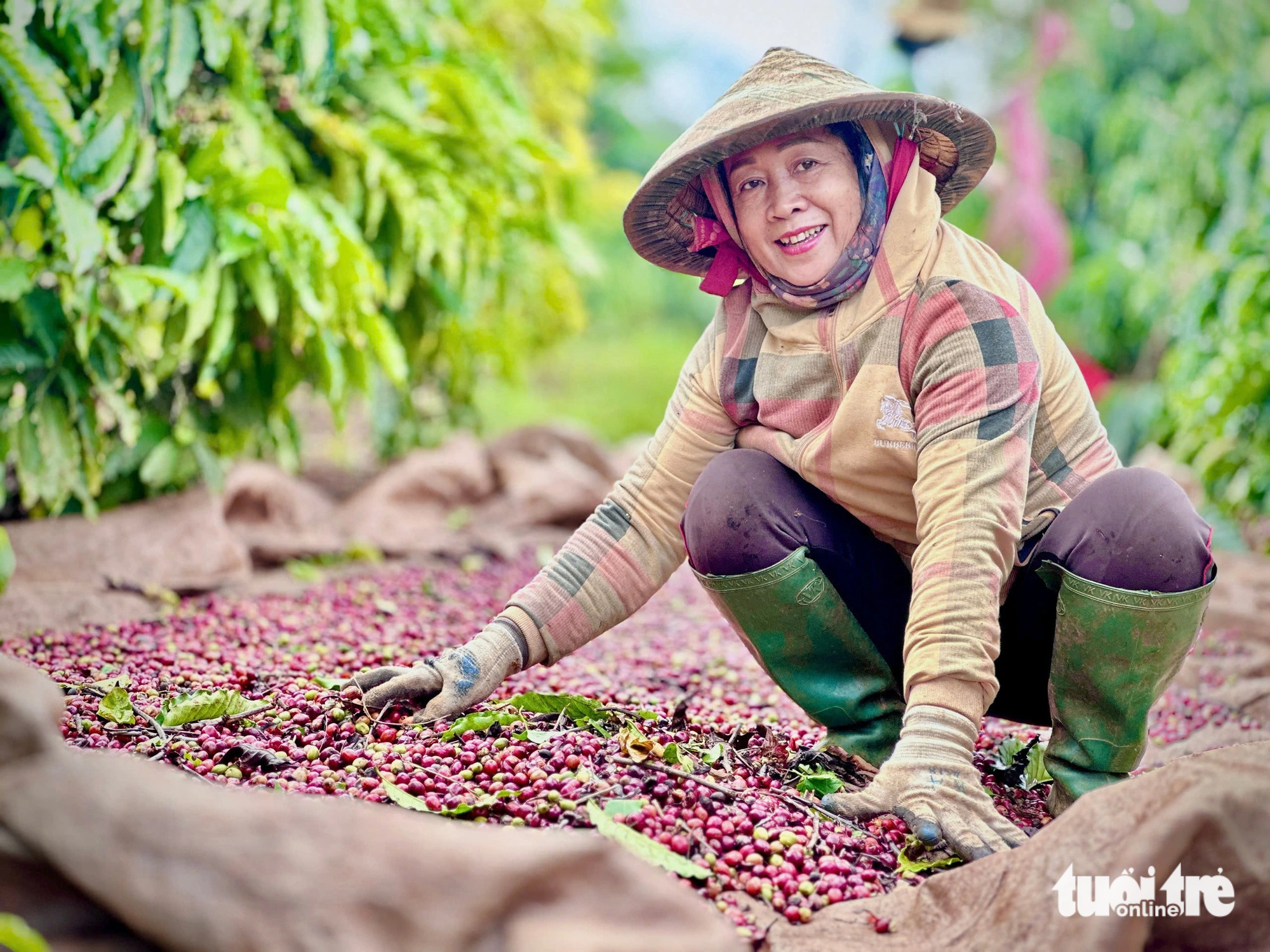
Farmers in Dak Lak harvest coffee – Photo: THE THE
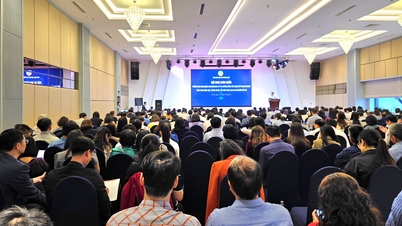
Efficient and high-value coffee farming solutions were presented and discussed at the conference summarizing the smart coffee farming program adapting to climate change for the 2023-2024 crop year.
The conference was organized by Binh Dien Fertilizer Joint Stock Company in collaboration with the National Agricultural Extension Center and the Western Highlands Agricultural and Forestry Science and Technology Institute in Buon Ma Thuot City on the afternoon of December 13th.
Finding smart coffee farming solutions for farmers.
Mr. Ngo Van Dong, General Director of Binh Dien Fertilizer Joint Stock Company, said that coffee is the second most important agricultural export after rice, and in 2024, export turnover is expected to reach 5.5 billion USD.
However, coffee development is not yet sustainable; investment in fertilizers still accounts for a high percentage of the cost and changes with market fluctuations.
When coffee prices rise, farmers increase fertilizer use; when prices fall, they reduce it. Disregarding the guidance of agricultural extension workers and scientists leads to unsustainable farming practices and increased pest and disease problems.
In particular, soil-borne diseases have increased dramatically, leading to unstable coffee yields and quality, and an increase in the area requiring replanting.
A recent and common phenomenon is the intercropping of coffee with other crops, especially fruit trees such as durian, avocado, and industrial crops like rubber and pepper, but there are still no suitable cultivation procedures for this intercropping system.
According to Mr. Dong, due to increasingly harsh climate conditions, his unit, along with many local scientists and agricultural managers, has organized research to find "smart farming" solutions to combat climate change.
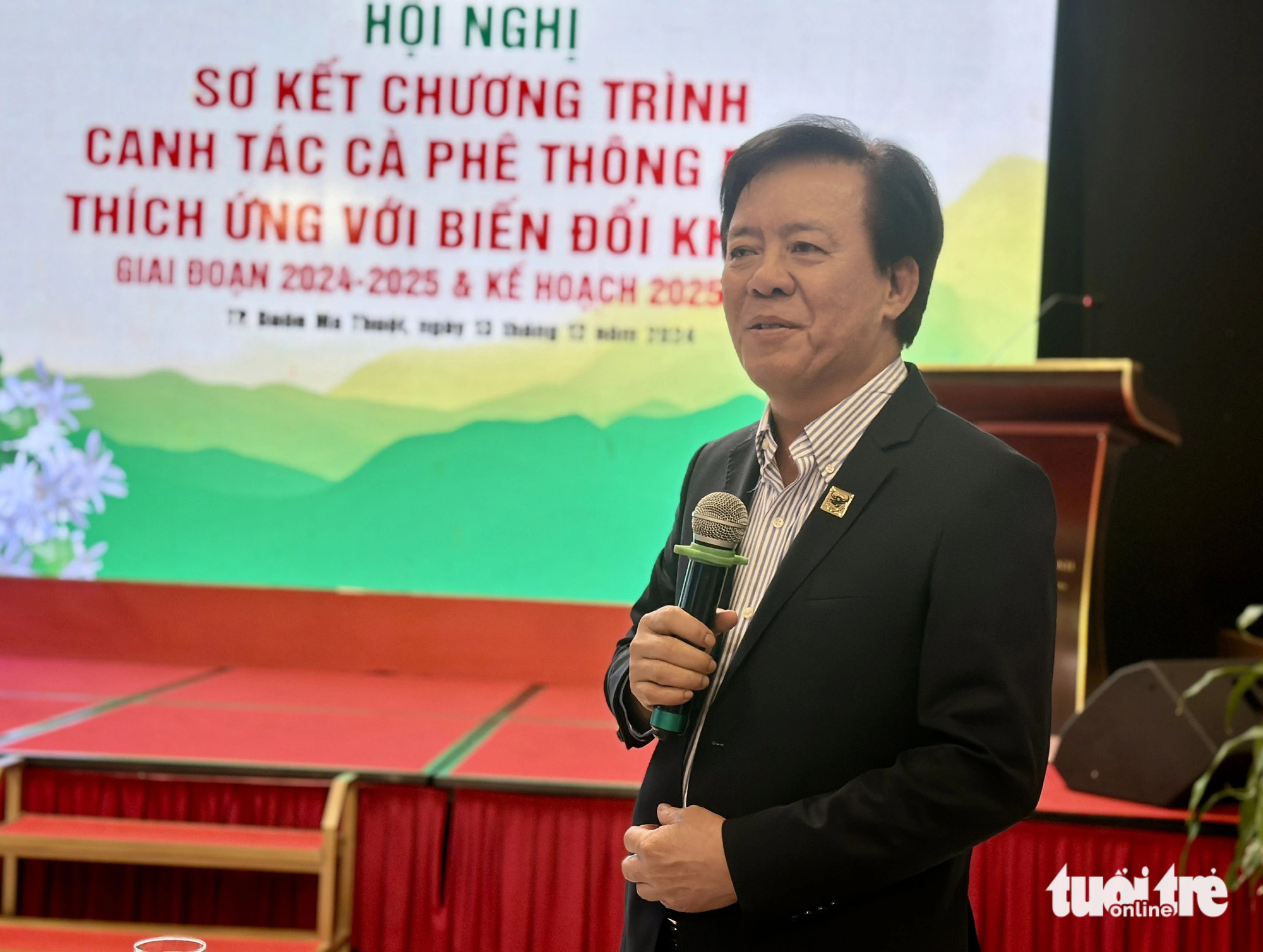
Mr. Ngo Van Dong – General Director of Binh Dien Fertilizer Joint Stock Company – spoke about the goals of implementing the smart coffee farming program to combat climate change – Photo: THE THE
The program aims to develop climate-smart coffee farming practices adapted to the Central Highlands region. This will help farmers reduce costs, increase productivity, quality, and economic efficiency in cultivation, leading to sustainable coffee development and reduced greenhouse gas emissions.
The program is supported by the National Agricultural Extension Center, the Tay Nguyen Institute of Agricultural and Forestry Science and Technology, the agricultural extension centers of 5 Central Highlands provinces, and many experts in the company's science and technology council.
Fifteen models were implemented in five provinces of the Central Highlands.
According to Mr. Dong, with the above objective in mind, the program will be implemented in five Central Highlands provinces in the 2024-2025 crop year: Dak Lak, Dak Nong, Lam Dong, Gia Lai, and Kon Tum.
With a scientific and practical approach, the program collected 200 soil samples for analysis of over 2,300 agrochemical parameters and conducted surveys of over 500 coffee-producing households to assess the current state of soil health…
Based on research, agricultural scientists implemented 15 models in 5 provinces of the Central Highlands using new fertilizer products from Binh Dien such as: soil conditioner fertilizers, fertilizers supplemented with microorganisms, etc.
According to preliminary assessments, the models have achieved quite good results, with increased productivity and economic efficiency in durian production. For coffee and pepper, although not yet harvested, the quality of the plantations has improved, and productivity and efficiency are also expected to increase significantly…
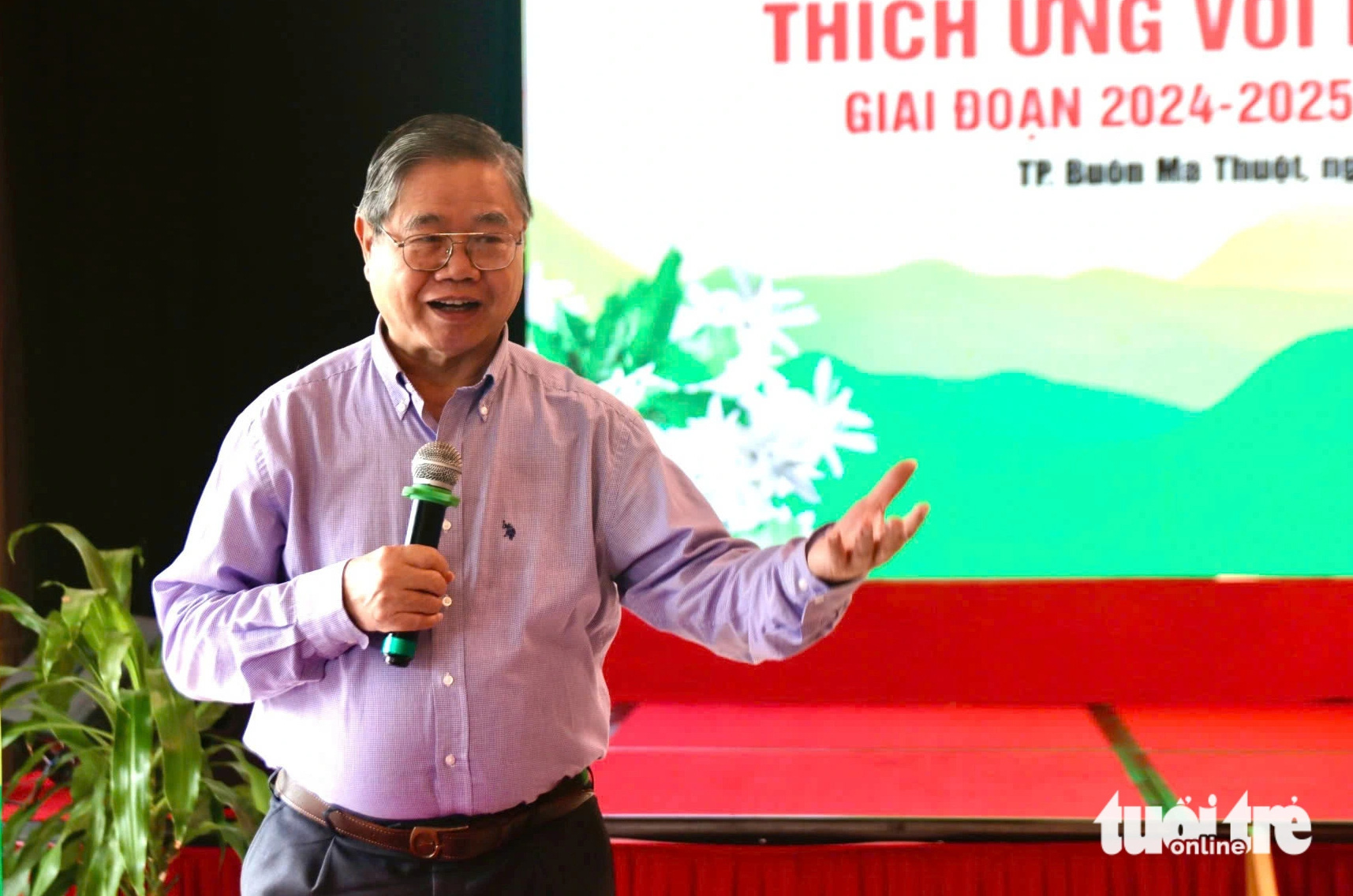
Mr. Nguyen Van Bo – former director of the Vietnam Academy of Agricultural Sciences – speaks about the benefits of smart farming models – Photo: THE THE
Elaborating on this, Mr. Nguyen Van Bo – former director of the Vietnam Academy of Agricultural Sciences – stated that the 2024 research process is a stepping stone for in-depth research in 2025 on smart coffee farming methods adapted to climate change. This will help farmers develop standardized procedures for caring for coffee plants to achieve the highest efficiency.
“Farmers' coffee cultivation is still based on personal experience (without established procedures) and local farming practices, resulting in low efficiency. Furthermore, many intercropping models lack proper design from the outset, negatively impacting plant growth and development. Farmers must understand and master the proper application of balanced fertilizers at the right time, dosage, and ratio to achieve high efficiency,” Mr. Bo informed.
Dak Lak accounts for 30% of the country's coffee production.
According to the Department of Industry and Trade of Dak Lak province, the province currently has an area of 210,000 hectares of coffee plantations, yielding over 520,000 tons of coffee annually, accounting for more than 30% of the national coffee production.
Dak Lak's coffee has been exported to more than 100 countries worldwide. In 2023, Dak Lak's total export turnover reached US$1.586 billion, of which coffee alone accounted for over US$819 million, representing more than 50% of the province's total export turnover.



















































































Comment (0)