

Air transport is entering a "reshaping" phase.
At the "Enhancing Supply Chain Adaptability and Resilience" discussion session within the framework of the FIATA World Congress in early October, Mr. Ahmet Kürşat Baltacı, Director of Cargo Business for Northeast Asia at Turkish Cargo, stated that air transport is entering a comprehensive reshaping phase after the Covid-19 pandemic. According to him, an airline is only truly flexible when it can re-establish new flight routes within 3 days. To achieve this, businesses need not only a sufficiently large fleet but also a well-planned Cargo Hub system that facilitates rapid and optimized traffic flow coordination.
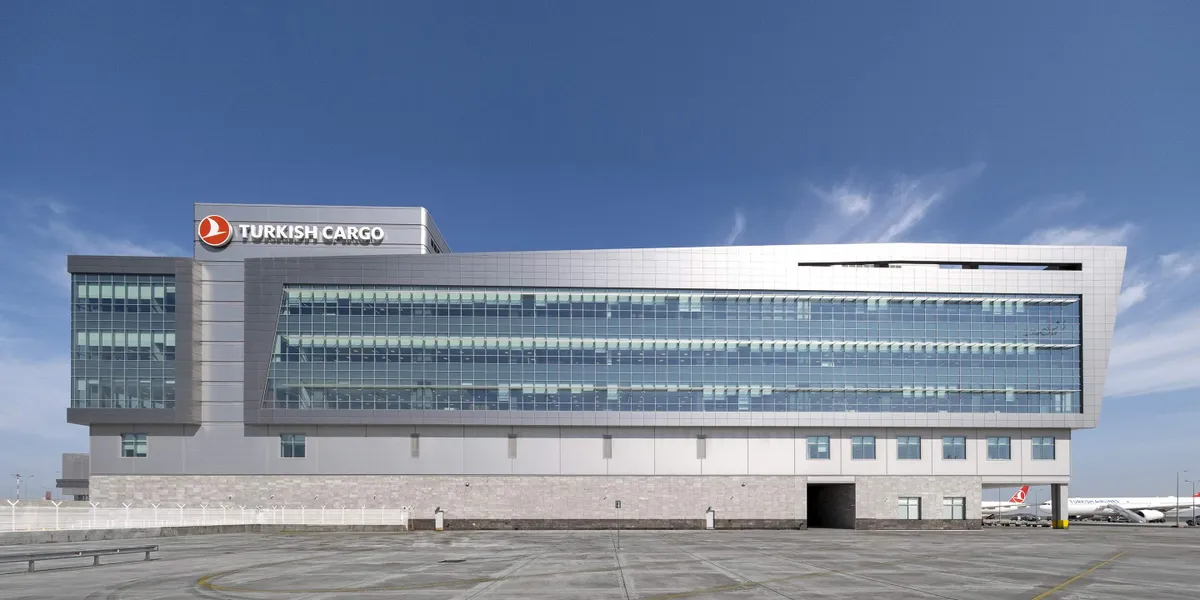
Istanbul Cargo Center, the headquarters of Turkish Cargo
Mr. Baltacı cited the Istanbul Cargo Centre, the headquarters of Turkish Cargo, as an example. Located at the crossroads of Europe, Asia, and the Middle East, this center can access 60% of global cargo traffic in just 7 hours of flight time — not only thanks to its geographical advantage but also to investments in infrastructure, technology, automated processing lines, and real-time flight dispatch systems.
"AI helps us forecast demand, allocate loads efficiently, and make decisions based on real-time data. This turns speed into a sustainable competitive advantage," Baltacı shared.
From a regional perspective, Peter Lim, Vice President of the Singapore Logistics Association (SLA), argues that Singapore's integrated and resilient logistics ecosystem model is proving to be exceptionally effective.
According to Mr. Lim, Singapore has developed a 20-30 year long-term plan to synchronize its seaports and airports, ensuring interoperability and adaptability to global changes. Once the expansion project is complete, Changi Airport will increase its capacity from 90 to 140 million passengers per year, while also enhancing its cargo capacity to serve as a regional transit hub.
Simultaneously, Tuas Port – a next-generation deep-water port – will reach a capacity of 50–65 million TEU of cargo per year. These two hubs are connected by an integrated logistics network, making Singapore one of the most dynamic global logistics centers in the world.
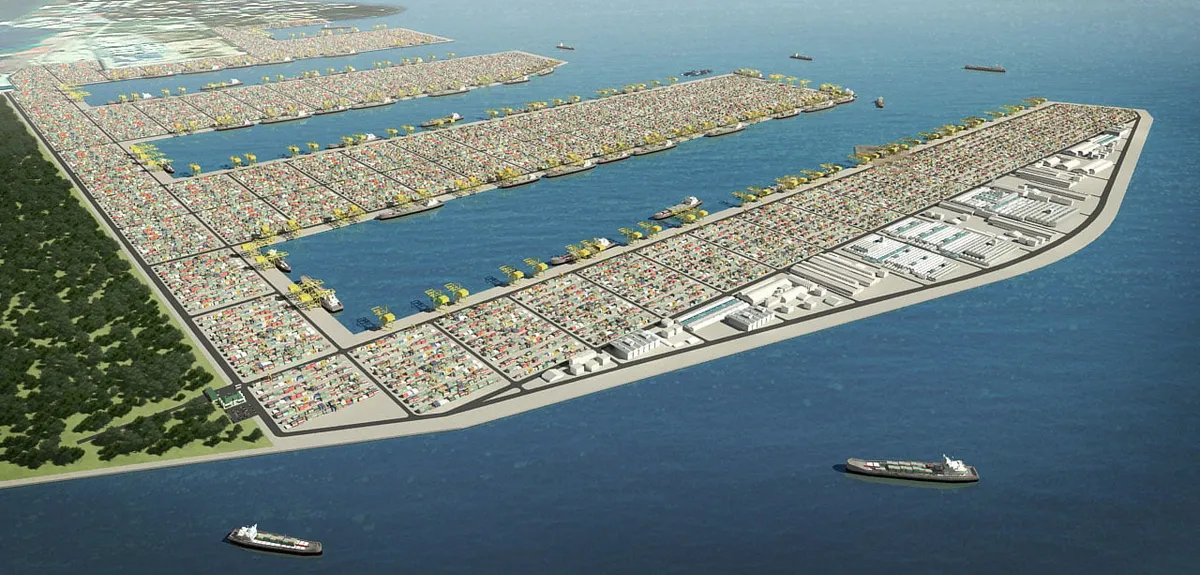
The Tuas mega-port has the capacity to receive and process approximately 50-65 million TEU per year. Graphic: MPA
Vietnam aims to become a next-generation commodity hub.
In the context of strong import and export growth, especially in high-tech goods and cross-border e-commerce, investing in modern, multimodal commodity centers is considered a strategic move for Vietnam.
According to Mr. Dao Trong Khoa, Chairman of the Vietnam Logistics Services Business Association (VLA), the volume of goods transported by air in Vietnam reached 1.3 million tons in 2023 and over 1.5 million tons in 2024, placing Vietnam 20th in the world in terms of air transport market size.
"This figure reflects the enormous potential of the Vietnamese market in connecting global production and consumption centers. The operations of Vietnamese airlines have gradually recovered, ensuring safety and stable growth," Mr. Dao Trong Khoa commented.
Long Thanh – a bright spot for Air Cargo in the region.
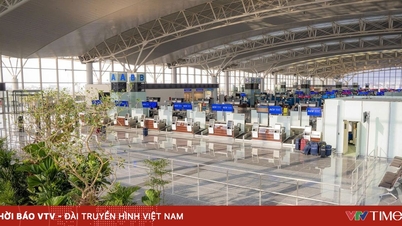
Long Thanh International Airport is expected to become Vietnam's "next-generation cargo hub." The Ministry of Construction has just approved project information and selected investors for three warehousing projects in the airport area, including cargo handling warehouses No. 5-8, which can directly connect to cargo terminal No. 2 and the express delivery area, serving the first phase of airport operations.
When completed, this system will help the national airline possess a synchronized cargo service ecosystem, creating a foundation for expansion into the Air Cargo sector – large-scale air cargo transportation.
In mid-September, the Airports Corporation of Vietnam (ACV) also proposed the establishment of an integrated aviation logistics center within a duty-free zone in Long Thanh, covering an area of 136 hectares, located southwest of the airport.
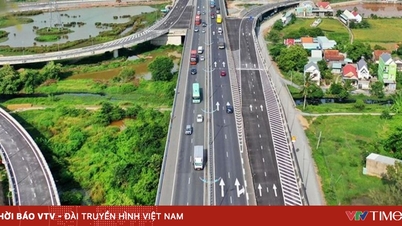
According to ACV, this center consists of two components: hardware (terminal infrastructure, warehouses) and software (intelligent logistics management). When completed, the Long Thanh Air Cargo Center will integrate a cargo terminal, a duty-free zone, an intelligent logistics center, and directly connect to the Ben Luc – Long Thanh expressway and the Cai Mep – Thi Vai port, creating a comprehensive transportation network.
As a result, Long Thanh Airport can become a "national cargo gateway," relieving congestion at Tan Son Nhat Airport and expanding the international transit capacity of the Southeast Asian region.
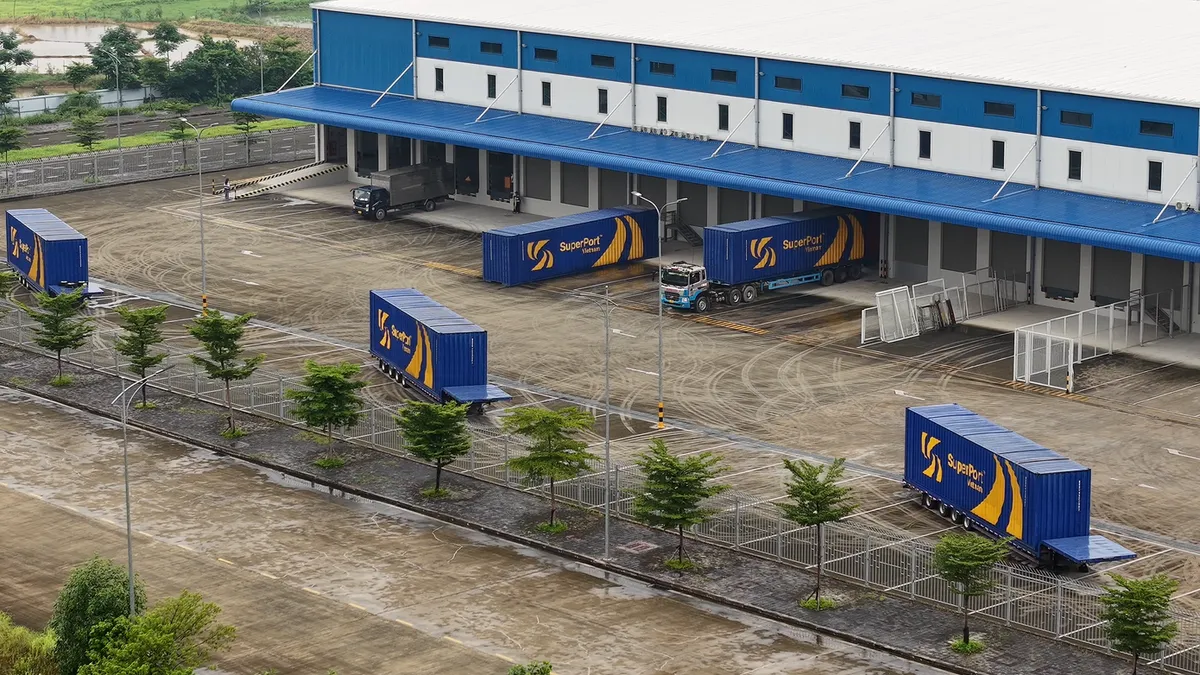
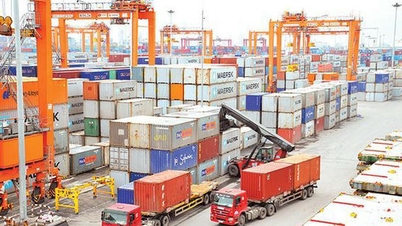
The warehouse is located at the Vinh Phuc ICD "mega-port".
Besides Long Thanh, Vietnam also has another bright spot: Vietnam SuperPort™ – a joint venture between YCH Group (Singapore) and T&T Group (Vietnam), introduced at the FIATA World Congress 2025.
This project includes the region's largest off-airport cargo terminal, covering an area of 11,000 m² and with a capacity of 50,000 tons of cargo per year. This "off-airport cargo terminal" model allows for on-site customs clearance, security checks, and ULD (Unloaded Landline) handling before transportation to the airport, helping to reduce congestion and increase turnaround speed.
In particular, the system is designed to be multimodal – directly connecting rail, road, seaports, and air, forming a "closed transport loop" that saves time and delivery costs.
According to the investor's representative, once operational, Vietnam SuperPort will utilize AI, robots, automated guided vehicles (AGVs), and automated cargo identification systems, helping to increase productivity by 35% and reduce operational errors by 50%.
"This is an important step forward in the direction of smart and low-carbon logistics, in line with the region's green transformation trend," he said.
With large-scale projects, Vietnam is gradually building a chain of modern cargo hubs, creating a foundation for Air Cargo to become a new growth pillar for the aviation industry.
These centers not only help enhance national logistics capabilities but also represent a strategic shift, transforming Vietnam into a crucial transshipment hub in Southeast Asia, anticipating the global trend of smart supply chains and sustainable development.
Source: https://vtv.vn/trung-tam-hang-hoa-phuc-vu-phat-trien-air-cargo-xu-huong-ma-nhieu-quoc-gia-tren-the-gioi-huong-den-100251017110040611.htm



































































Comment (0)