

As part of its July work program, the Leading Business Club (LBC) of the Association of High-Quality Vietnamese Goods Businesses organized a seminar on the topic "Digital Transformation Roadmap Towards the Market".
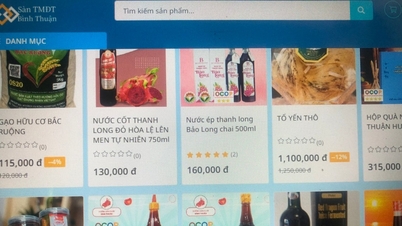
According to retailers, market research data shows that for some businesses, e-commerce contributes 30% of their total revenue. This indicates that many large businesses have invested resources in developing this promising sales channel.
In 2025, the size of the economy
Vietnam's digital economy is projected to reach $32 billion. E-commerce accounts for 65% of this, and the e-commerce sector is currently growing at 37% per year.
With such a high growth rate, e-commerce contributed 7.5% to the overall growth across all sales channels in Vietnam.

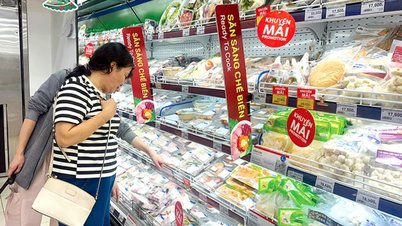
High discounts result in supermarket sales costs being double those of traditional channels.
According to Mr. Pham Hong Son, an expert in e-commerce and digital transformation of distribution systems, there are three distribution channels for fast-moving consumer goods in Vietnam: grocery stores/markets, supermarkets/convenience stores, and online channels.
Of these, the traditional channel, with 700,000 grocery stores, has only experienced a growth rate of about 5% over the past 20 years. The supermarket channel, on the other hand, accounts for 20% of the market share and has grown by 10%.
Notably, the online channel in Vietnam, despite accounting for only 5% of the market share, is growing at 30% - 45% per year.
According to Mr. Son, although growth is low, grocery store owners are becoming increasingly proactive and embracing the trends of Industry 4.0. Consequently, they are gradually transforming into models similar to supermarkets and convenience stores.
Meanwhile, supermarkets and convenience stores sell wholesale to traditional stores.
"The excessive dynamism of the sales channel also causes problems in the market. However, it shows that the traditional channel continues to maintain its position," Mr. Son said.
According to Mr. Son, in the context of accelerated digital transformation, effectively digitizing distribution channels to reach end consumers requires businesses to clearly identify their sales channels, which stages of distribution need to be digitized, and what discount rate is most appropriate.
For example, in the past, to get goods into supermarkets, businesses accepted discounts of 20% - 30% depending on the product category, and each year retailers continuously demanded further increases.
However, with the growing trend of online channels, supermarkets realize they are not the only ones. Therefore, during negotiations, businesses need to proactively request that retailers make reasonable offers.
"We can easily see that if the discount rate is too high, the selling cost in the supermarket channel will be double that of the traditional channel," Mr. Son said.
Mr. Son added that, regarding promotions, businesses are currently investing heavily, but market demand is not increasing. Goods compete fiercely, and products without promotions are pushed into hidden spaces and remain unsold. This creates market distortions, leading to the consequence of goods being pushed outside the distribution channels, resulting in a situation where "the left hand attacks the right hand, and the right hand attacks the left hand."
At that time, grocery store owners who couldn't sell their goods would terminate their partnership, and sales staff would also suffer losses. Therefore, businesses need to manage their distribution channels well and have a comprehensive vision.
"At the same time, among the three investment factors for grocery store owners—investment in modern channels, investment in e-commerce platforms, and investment in promotions—I believe that manufacturing businesses should increase investment in traditional channels, specifically grocery store owners, to help them compete and develop, because currently, the cost for grocery store owners is only 6% - 10%," Mr. Son shared.
Source











































































Comment (0)