

Flexible and adaptable to reality
According to the Department of Legislation ( Ministry of Industry and Trade ), in the period of 2026-2030, the work of building and perfecting the legal system in the Industry and Trade sector will enter a strategic transition period, in the context of the country's strong transformation with many intertwined opportunities and challenges. This requires the law not only to take on the role of simple state management, but also to become the foundation for promoting rapid and sustainable economic development.
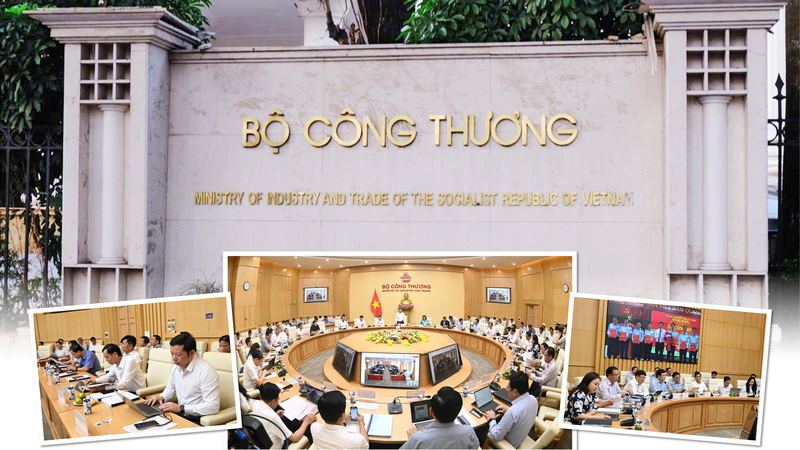
The work of building and perfecting the law on the Industry and Trade sector must also be synchronized with the process of perfecting the Vietnamese legal system.
Sectoral law needs to be positioned as a proactive tool to pave the way for innovation, with a clear and stable legal framework, but at the same time must be flexible and adaptable to changing realities as well as global development trends.
With the function of being a state management agency in the fields of trade and industry, the Ministry of Industry and Trade determines to focus on building and perfecting the legal system in this new period, improving the quality of law enforcement in the field of Industry and Trade, closely following the guiding viewpoints, goals and requirements.
Specifically, regarding the direction and tasks in building and perfecting the law on the industry and trade sector in the 2026-2030 period, the Ministry of Industry and Trade will strictly adhere to the principles in building and perfecting the legal system, in which the principle of ensuring the comprehensive leadership of the Party continues to be the guiding principle in the process of building and perfecting the law on the industry and trade sector.
The work of building and perfecting laws and resolutions of the National Assembly , ordinances and resolutions of the National Assembly Standing Committee and sub-law documents must closely follow and promptly and fully institutionalize the Party's policies and guidelines, and the directions of competent authorities. In particular, priority must be given to institutionalizing important policies and decisions set out in the documents of the 13th National Party Congress, while closely following the documents of the 14th Party Congress.
At the same time, fully, correctly and promptly institutionalize the Party's policies and guidelines in resolutions, conclusions and directives of the Central Executive Committee, the Politburo , the Secretariat and the directions of the Government, the Prime Minister and proposals of relevant agencies and organizations.
The work of building and perfecting the law of the Industry and Trade sector must also be synchronized with the process of perfecting the Vietnamese legal system, must closely follow the policies and orientations on building and perfecting the Vietnamese legal system, and the law-making strategy approved by competent authorities to ensure: Firstly , it must adapt to the knowledge-based economy and digital transformation, requiring the legal framework to be flexible, agile, and able to adapt quickly to changes in the market economy.
Second , it requires creating a new development space for people, businesses and society, in which the law not only prohibits or constrains but also facilitates, encourages and protects innovation and creativity.
Third, it is required to ensure modernity, comprehensiveness, inclusiveness, unity, synchronization, publicity, transparency, stability, and feasibility, and not to let "group interests" or "local interests" dominate the process of policy and law making.
These are also the requirements for perfecting the legal system set forth in Resolution No. 27-NQ/TW dated November 9, 2022 of the Central Executive Committee and Resolution No. 66-NQ/TW dated April 30, 2025 of the Politburo, ensuring: "By 2030, Vietnam will have a democratic, fair, synchronous, unified, public, transparent, and feasible legal system with a strict and consistent implementation mechanism, ensuring a legal basis for normal, continuous, and smooth operations of agencies after reorganizing the apparatus, removing obstacles arising from practice, paving the way for development creation, mobilizing all people and businesses to participate in socio-economic development so that by 2030, Vietnam will be a developing country with modern industry and high average income".
Responding to the requirements of creation and leadership
In the period of 2026-2030, the work of building and perfecting the law of the Industry and Trade sector will meet the requirements of national development in the new era, ensuring full coverage of all areas that need to be regulated by law, ensuring development creation, moving towards a streamlined, unified, synchronous, feasible, public, transparent, stable and accessible legal system with international competitiveness; focusing on the legitimate rights and interests of people and businesses.
At the same time, strongly promote innovation, meet the requirements of comprehensively and synchronously promoting innovation, industrialization, modernization, ensuring national defense and security, meeting the requirements of rapid and sustainable development of the country in the new era, in the immediate period of 2026-2030 with a vision to 2045.
The thinking of law-making needs to strongly shift towards creating, proactively forecasting, and anticipating new technology trends and modern business models, ensuring that the law is consistent, feasible, and has a long-term vision, especially in the fields of e-commerce, logistics, and cross-border transactions.
In addition, the law-making work needs to prioritize the development of emerging fields in Industry and Trade such as digital economy, e-commerce, renewable energy, circular economy and innovation in production and business, which are both new growth drivers and meet international commitments on net zero emissions by 2050.
On the other hand, review and perfect legal regulations on trade defense to create an environment of equal competition, protect industrial enterprises and domestic production in the context of increasing competition from outside.
Promote the formation of new legal fields in addition to existing legal fields to meet the requirements of legal creation and guidance in the face of new developments in science, technology and other new issues of socio-economic life, through increased promulgation of legal documents.
Timely review and eliminate legal regulations that are no longer suitable to reality, thereby encouraging, promoting and supporting more strongly the sectors, fields, localities and subjects prioritized for development as identified in the Resolutions of the Central Executive Committee, the Politburo and in the upcoming 14th National Congress Documents to contribute to the realization of the "double-digit" growth target and other socio-economic development goals of the country in the coming period.
Timely handle issues arising in law enforcement practice, recommend competent authorities to amend and supplement shortcomings that cause difficulties and obstacles in law enforcement work.
Fully and thoroughly comply with the principles, order and procedures prescribed by the Law on Promulgation of Legal Documents in conjunction with preparing necessary resources; identify key tasks that need to be performed to develop the legislative project for the 16th National Assembly term with a reasonable roadmap.
Ensure close coordination between relevant agencies and organizations in the process of building and perfecting laws. Forecast the conditions of financial, human and time resources for implementing the tasks of building and perfecting laws to ensure quality and efficiency.
In addition, there is a mechanism to attract the broad participation of the people, experts, and scientists in the process of building laws, resolutions of the National Assembly, ordinances, resolutions of the National Assembly Standing Committee, and sub-law documents to ensure quality, feasibility, and close connection with enhancing the effectiveness of law enforcement, meeting practical requirements.
In the context of digital transformation becoming an inevitable trend, the application of information technology in the entire process of building, promulgating and enforcing laws is being promoted to increase transparency, accessibility and management efficiency.
In the 2026-2030 period, the Ministry of Industry and Trade will continue to focus on and promote training, fostering, and attracting human resources to participate in law-making to meet the requirements of building and perfecting institutions in the new context.
Source: https://congthuong.vn/bo-cong-thuong-xay-dung-phap-luat-chuyen-manh-sang-huong-kien-tao-433761.html


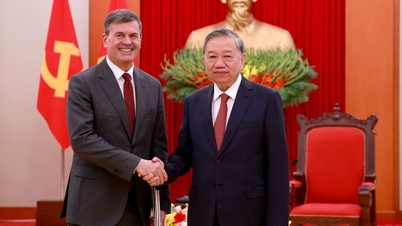
![[Photo] General Secretary To Lam receives the Director of the Academy of Public Administration and National Economy under the President of the Russian Federation](/_next/image?url=https%3A%2F%2Fvphoto.vietnam.vn%2Fthumb%2F1200x675%2Fvietnam%2Fresource%2FIMAGE%2F2025%2F12%2F08%2F1765200203892_a1-bnd-0933-4198-jpg.webp&w=3840&q=75)
























































































Comment (0)