

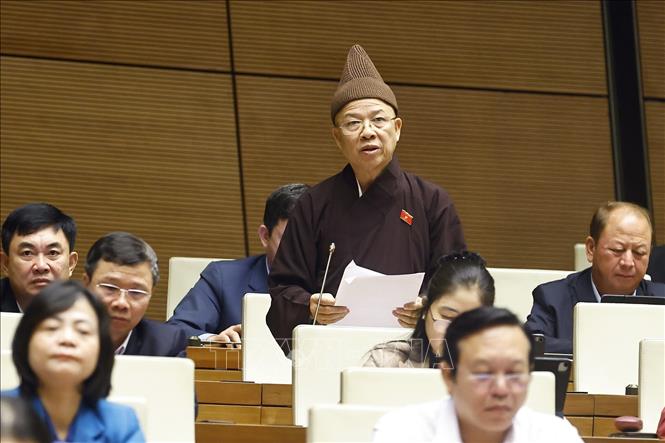
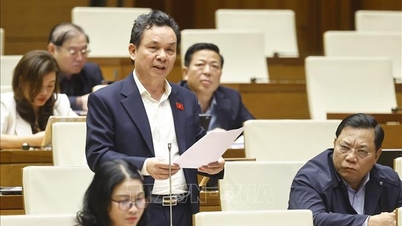
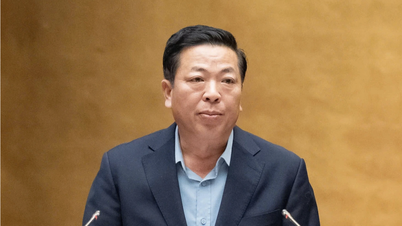
Delegate Thich Thanh Quyet (Quang Ninh) highly agreed with the National Assembly's consideration and decision on resolutions on specific mechanisms and policies for Ho Chi Minh City, Hanoi and Da Nang. These are three localities that play the role of development drivers, growth cores, regional connection centers and trade gateways of the country. The establishment of specific mechanisms is not only to remove existing difficulties and obstacles but also has strategic significance to model a new, more effective and sustainable approach to urban development, suitable for the requirements of the next development stage.
According to the delegate, the capital Hanoi is the cultural, political and social center of the whole country, and is "the uniqueness of the uniqueness". Agreeing with the Resolution that will give the city greater autonomy in planning, the delegate said that choosing priority projects, capital mobilization methods and cooperation models with localities such as Bac Ninh, Hung Yen, Hai Phong and the entire Red River - Northern coastal region will help create a strong spreading momentum.
Regarding infrastructure, especially urban railways, this is the backbone for restructuring urban space. The resolution allows Hanoi to proactively decide on investment models, appraise, select investors and allocate resources for urban railway lines. When this system is completed, the city can build modern and civilized apartment complexes, thereby spreading the population away from the urban core, reducing traffic congestion and effectively connecting with satellite cities.
Hanoi must develop modern apartment buildings located outside the city center, connected to a public transport system, while renovating and rebuilding old apartment buildings and building new areas in a green - civilized - smart direction.
In order for Hanoi to fulfill its role as a locomotive for the capital region and the whole country, according to delegates, the Resolution needs to focus on the urban public transport model, taking urban railways as the development axis; promoting the trend of apartment buildings to gradually replace ground-level houses; developing urban areas associated with modern infrastructure; and at the same time, rebuilding the historic inner-city area in a civilized and sustainable direction. This is a strategic, comprehensive solution, creating conditions for Hanoi to reduce the inner-city load, improve the quality of life and truly become the development nucleus of the capital region.
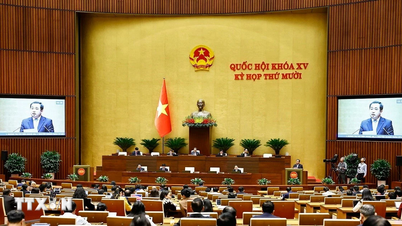
On the sidelines of the Session, a number of delegates highly appreciated the proactive, responsible and meticulous spirit of the drafting agency in developing the Draft Resolution on piloting a number of specific mechanisms and policies to implement large and important projects in the Capital. The draft was seriously prepared, closely following reality and clearly demonstrating the determination to innovate institutional thinking for common development.
Many opinions agreed and highly supported the issuance of this Resolution, because this is an objective and timely requirement, aiming to remove difficulties that have existed for many years in the process of implementing major projects in the Capital.
For the Resolution to be effectively implemented, delegates proposed that it is necessary to strengthen close coordination between the Central Government and the city, especially with projects that have inter-regional and inter-sectoral impacts. During the implementation process, it is necessary to pay attention to the legitimate rights of people and organizations; publicize information, communicate early and fully to people, create consensus and sharing from the beginning; at the same time, regularly monitor and evaluate the pilot process, promptly adjust any arising shortcomings, in line with the spirit of controlled piloting.
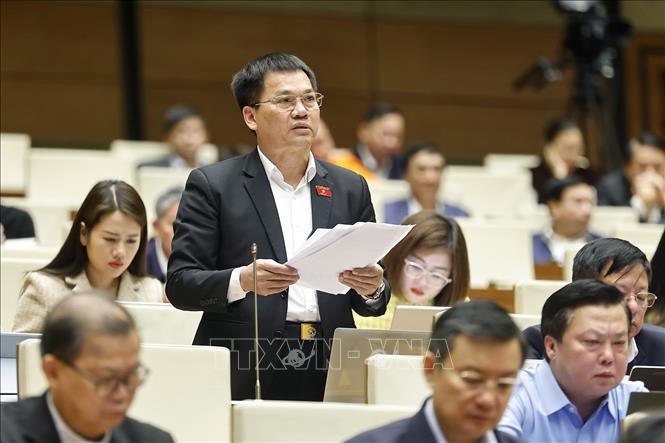
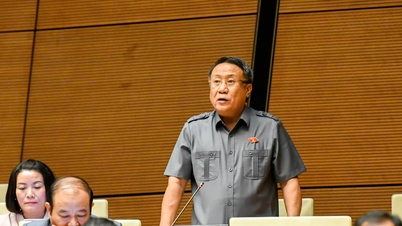
According to delegate Duong Khac Mai (Lam Dong), Ho Chi Minh City (new) including the old Ba Ria - Vung Tau and the old Binh Duong, has become a super city, with a population, economic scale and contribution to the state budget very different from before the merger. Therefore, amending and supplementing the Resolution is an urgent and objective requirement to suit the reality.
The delegate pointed out that the draft resolution provides many openings for Ho Chi Minh City to be proactive and self-decide on the implementation of many tasks, but at the end, many contents are returned to implementation according to regulations of specialized laws such as investment laws or according to regulations of the law, which will be "binding" and lose all specificity.
Delegate Duong Khac Mai said that when it is truly untied and "unleashed", Ho Chi Minh City has the right to do and must do as promised when proposing to issue policies. If it cannot be implemented, it is the locality's fault. Only then will we have a basis to evaluate the locality. Of course, according to the delegate, "open" but still have supervision so that all issues are controlled and adjusted promptly.
"The city will become a testing ground, thereby helping us perfect the institution and replicate it in a way that is suitable to the conditions of each locality in the country, to develop together," the delegate said.
Source: https://baotintuc.vn/thoi-su/co-che-dac-thu-cho-cac-thanh-pho-lon-can-kip-thoi-va-chien-luoc-20251208202202313.htm


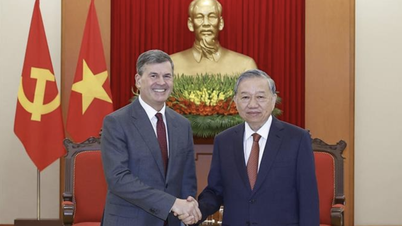
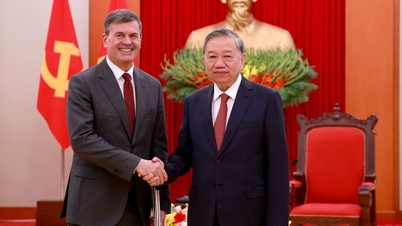
![[Photo] General Secretary To Lam receives the Director of the Academy of Public Administration and National Economy under the President of the Russian Federation](/_next/image?url=https%3A%2F%2Fvphoto.vietnam.vn%2Fthumb%2F1200x675%2Fvietnam%2Fresource%2FIMAGE%2F2025%2F12%2F08%2F1765200203892_a1-bnd-0933-4198-jpg.webp&w=3840&q=75)







































































Comment (0)