

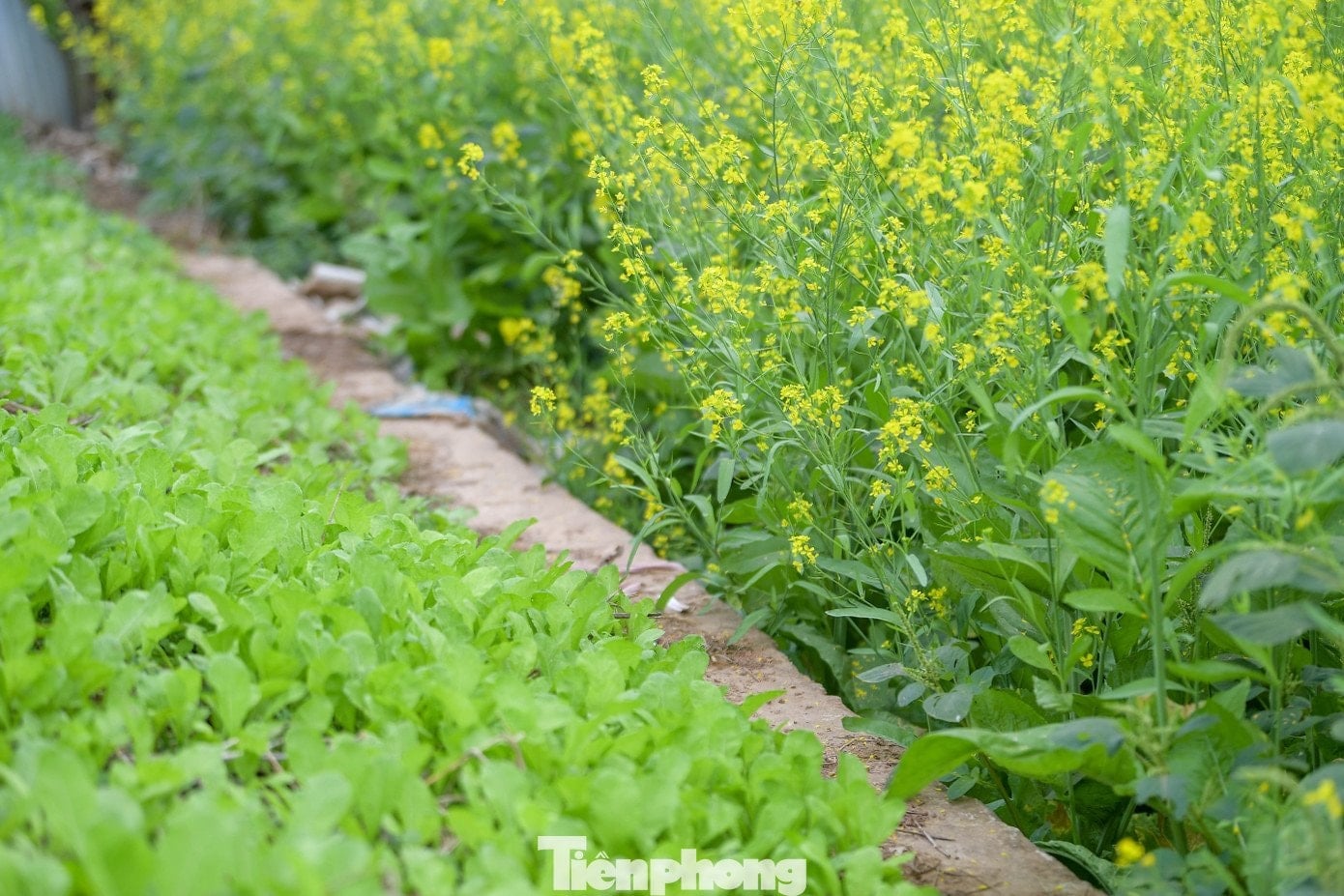
In the early days of winter, Le Chi commune in Hanoi welcomes the blooming of yellow mustard flowers on the alluvial plains along the Duong River. The planted area this year is not large due to unfavorable weather, but the remaining patches of flowers still cover the landscape with a soft yellow hue, creating a peaceful scene perfect for rustic, minimalist photography.
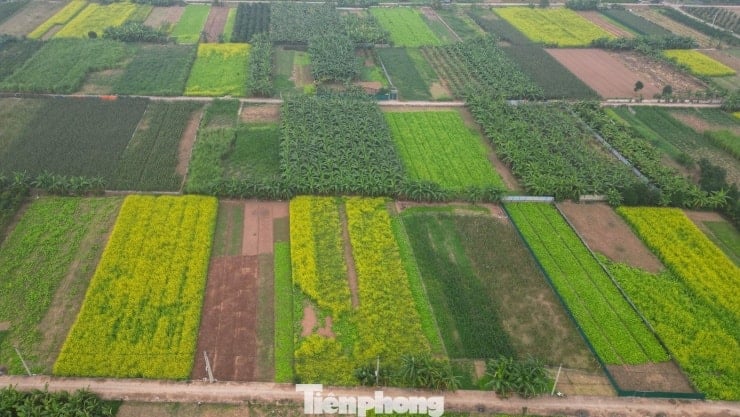
Discover the gold-covered alluvial plain.
The rapeseed flowers in Le Chi are usually sown in late September and bloom profusely after more than a month. The plants are about 40-70 cm tall, with small, bright yellow flowers growing in dense clusters. When a gentle breeze blows, the entire carpet of flowers moves like a silk ribbon, standing out against the open space of the riverside area along the Duong River.
The beauty of the rapeseed flowers in Le Chi lies in the softness and harmony of the yellow color against the cool sky. The yellow is not harsh but spreads evenly, creating a relaxing feeling reminiscent of the Northern Vietnamese countryside as the cold season arrives.
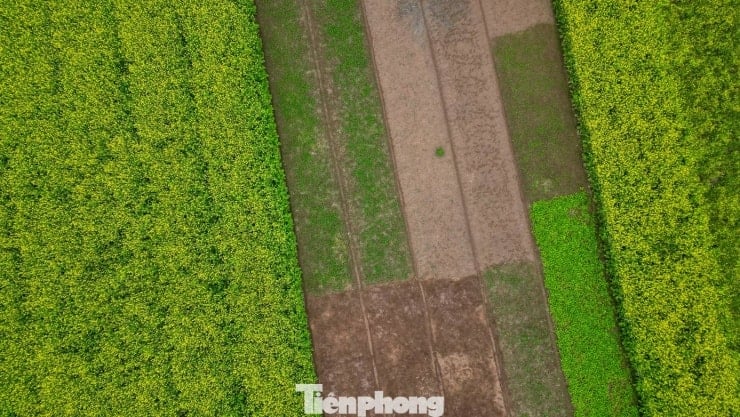
The perfect time to admire and photograph.
Thanks to its riverside location, the landscape of the Le Chi floodplain is not easily obscured. In the early morning or late afternoon, the slanted sunlight helps each cluster of flowers display its vibrant colors, clearly revealing the delicate petals and the contours of the flowerbeds. The tranquility of the early morning or the slow pace of the sunset are both perfect for capturing the rhythm of winter in Northern Vietnam.
Some photographers have commented that the current quiet atmosphere gives the frames a unique quality: rustic, minimalist, focusing on light and color rather than a crowded background.
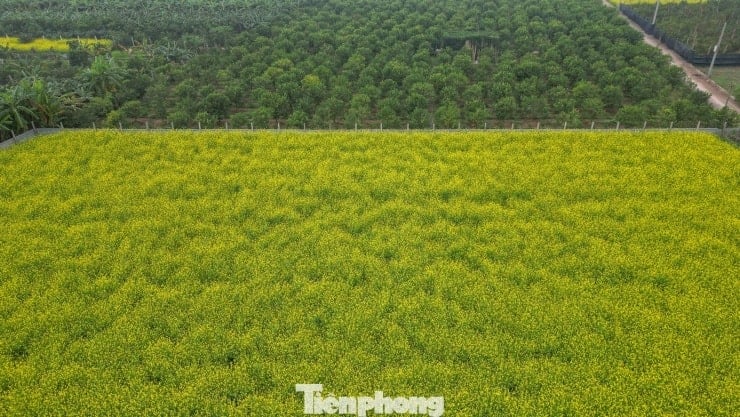
Season and weather impact
Yellow rapeseed flowers in the alluvial plains of northern Vietnam typically serve two main purposes: harvesting seeds for planting and covering the soil during winter. In recent years, images of blooming rapeseed fields have appeared frequently on social media, helping some localities utilize the flower fields to attract tourists for photography, thereby generating additional income.
However, this crop is highly dependent on weather conditions. Prolonged heavy rains can cause flooding, hindering plant growth; humid weather easily leads to the development of stem borers and fungal diseases. Therefore, the planted area does not remain stable every year.
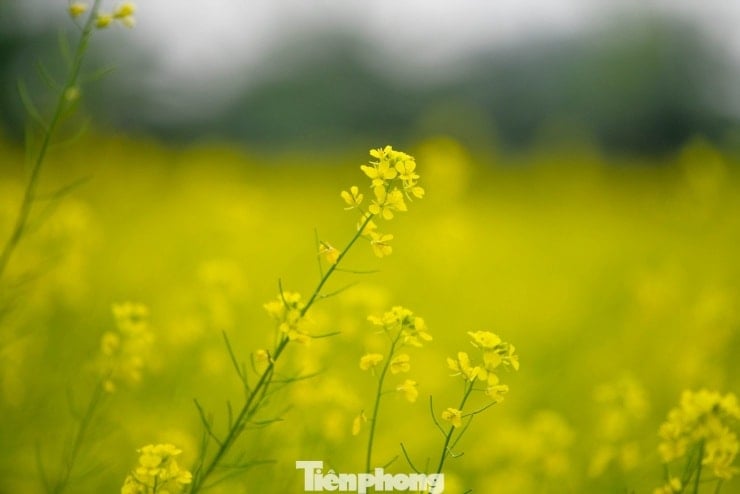
Words from the growers and a picture of winter tourism .
Mr. Thang, a long-time flower grower in Le Chi, said that the weather this season has been bad: "If we plant cabbage and it rains heavily or floods, the damage is significant. This year, people have switched to growing short-term vegetables for greater safety." According to him, only a few households are still growing on a small scale or to maintain traditional farming practices, so there are no longer long lines of tourists coming to take pictures like before.
The decrease in area has also meant that the Le Chi flower beds appear less frequently on the map of Hanoi's winter check-in spots. Nevertheless, the remaining rows still retain their distinctive characteristics: a soft yellow hue stretching across the misty sky, sketching a peaceful picture of the Northern Vietnamese countryside.
Suggested experiences
If you're looking for a tranquil space to experience the cool northern season, Le Chi offers a slow pace: low rows of mustard greens, small flowers, a gentle breeze across the riverbank, and slanted sunlight creating a clear yellow hue. This is the perfect time to take minimalist and intimate photos.
In terms of timing, the flowering season begins with the last planting in late September and blooms for more than a month. Early morning or late afternoon is when the light is favorable for observation and photography, helping the flower colors stand out against the cool sky.
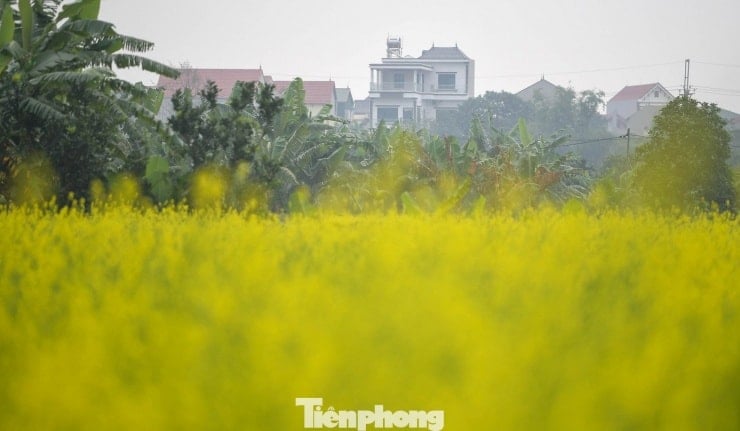
The spread of information on social media in the last 5-7 years has turned the mustard fields on the outskirts of Hanoi into a familiar destination at the end of the year. In Le Chi, although the scale is no longer as large, the yellow color is just enough to mark an impressive flowering season, contributing to beautifying the rural landscape in the days leading up to Tet.
Source: https://baonghean.vn/ha-noi-le-chi-mua-hoa-cai-vang-tren-bai-song-duong-10314671.html

























































































Comment (0)