

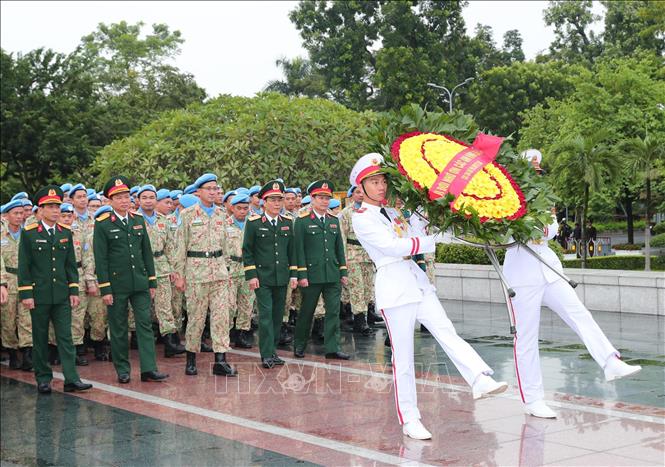
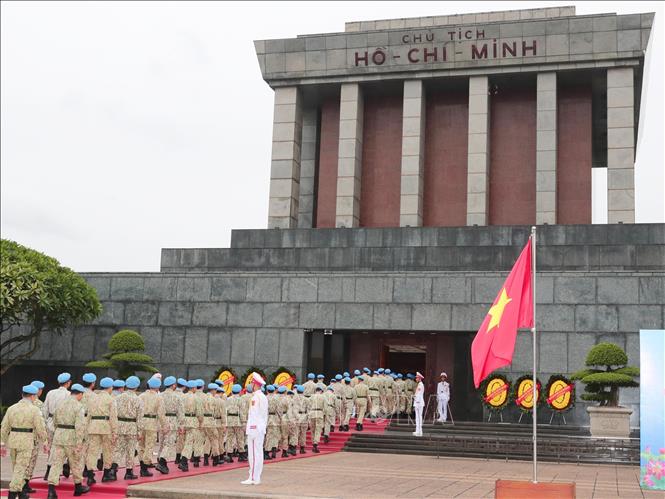
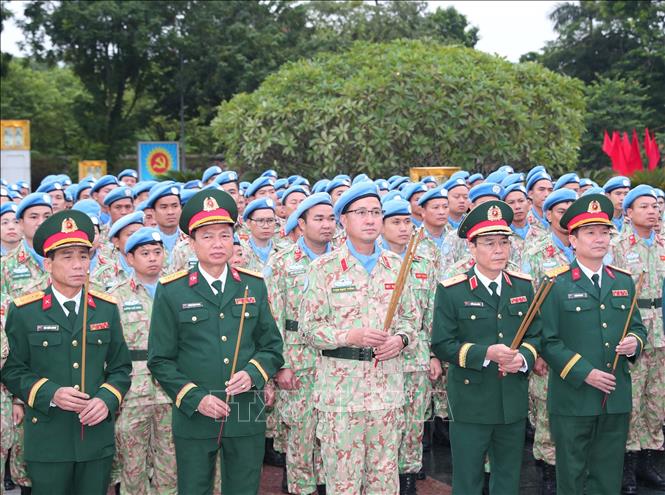
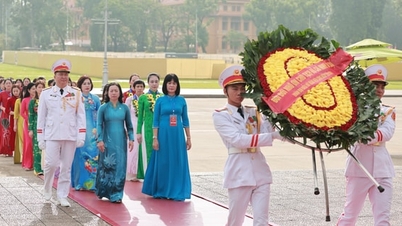
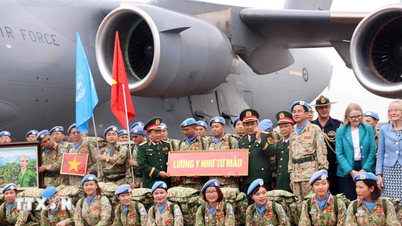
Delegates and peacekeepers from the two units laid wreaths and offered incense at President Ho Chi Minh's Mausoleum; laid wreaths and paid tribute to heroic martyrs at the Heroic Martyrs Monument on Bac Son Street, Hanoi.
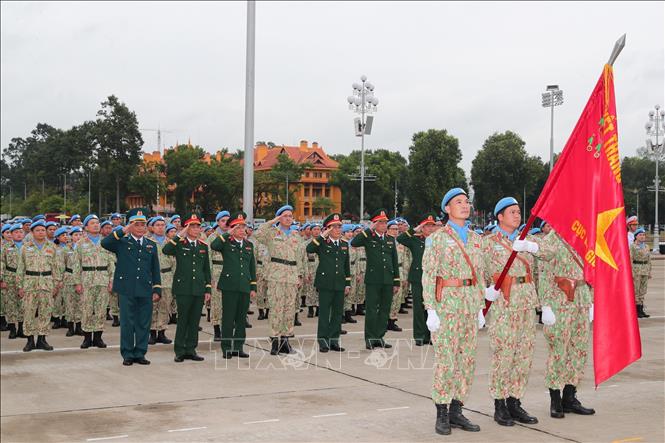
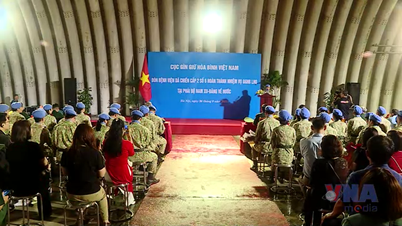
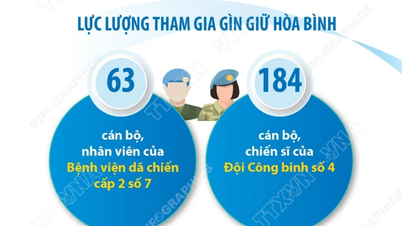
Presiding over the Ceremony to report achievements to Uncle Ho, on behalf of the members of Level 2 Field Hospital No. 6 and Engineering Team No. 3, Major General Pham Manh Thang, Director of the Vietnam Peacekeeping Department, affirmed that both units had successfully and excellently completed their professional tasks during their term of office. The entire unit was united, unanimously helped each other, not afraid of hardships and difficulties, promoted the qualities of revolutionary engineering soldiers, military medics, and the qualities of "Uncle Ho's soldiers" in performing tasks in the United Nations mission environment; continuing to affirm the prestige and role of the Engineering Team and Level 2 Field Hospital of Vietnam to the commanders and agencies of the United Nations in the area.
Accordingly, Engineering Team No. 3 has maintained, repaired and upgraded over 300 km of main supply roads, with an average width of 20-24 m, ensuring 4-6 lanes for heavy trucks to move during the dry season, ensuring vehicles can move at a maximum speed of 70 km/h, thereby contributing to improving and developing traffic infrastructure and mobility, patrolling to ensure security, especially in emergency situations.
The 3rd Engineering Team also researched and applied the K-31 chemical technology (soil hardener) to treat the airport surface of 27,215 m2, contributing to dustproofing, waterproofing and preventing water stagnation on the runway surface, helping to minimize operational disruption and save resources, which was praised and commended by the UNISFA mission leaders; helping the airport maintain stable operations, becoming an effective transportation, supply and manpower rotation center.
Along with that, the 3rd Engineering Team organized the construction of two large-scale factories in just 3 months (compared to the original plan of 6 months) in the harsh weather conditions of the rainy season; deployed the construction of smart barracks for peacekeeping units at the mission, all ahead of schedule, ensuring good quality. In addition, the unit also performed many other tasks, all of which were completed with good quality, such as rescuing more than 200 heavy trucks and tankers of units under the mission and of the people, contributing to clearing the main roads that were congested for a long time; performed loading and unloading, moving equipment and goods of the mission.
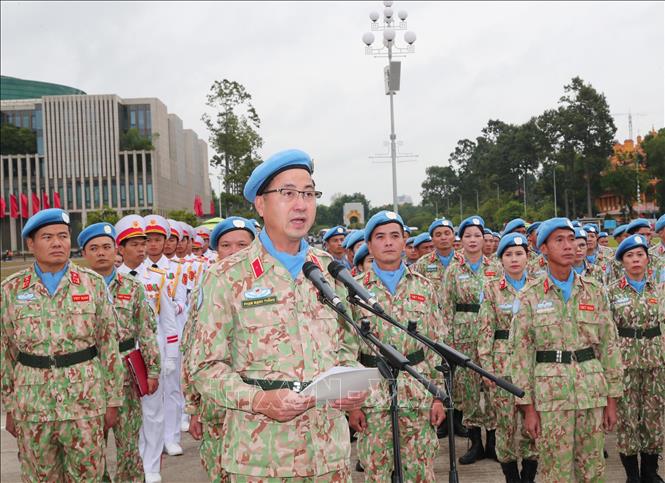
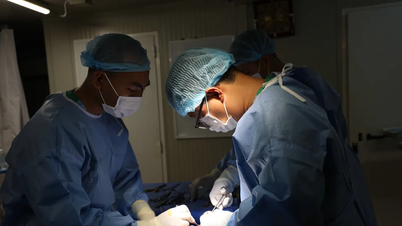
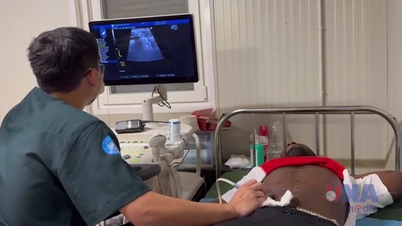
Regarding Level 2 Field Hospital No. 6, the unit has successfully and excellently completed the medical professional work at the UNMISS mission. During its one-year term, Level 2 Field Hospital No. 6 has admitted and treated 2,650 patients, including UN staff and local people; ensuring absolute medical safety.
In particular, the Hospital has successfully handled many serious and complicated cases requiring high medical expertise, typically the surgery to reattach a nearly completely severed finger for a soldier of the Pakistani Engineer Unit, with a complete recovery result. The Mission Commander and the Division Commander sent letters of praise and assessed the Hospital's expertise as exceeding the prescribed capacity for a level 2 field hospital of the United Nations at the Mission and was reported and promoted at the United Nations Headquarters.
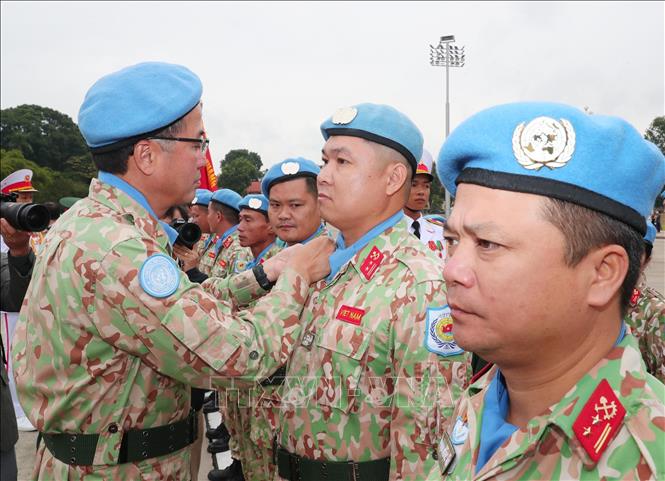
With a sense of responsibility and high medical expertise, Level 2 Field Hospital No. 6 has created absolute trust and is a reliable medical examination and treatment address for leaders, United Nations staff, local authorities and people; the Head of the Medical Agency and the Chief of Military Medicine of the Mission has requested to keep patients for treatment with many difficult cases that need to be transferred to higher levels.
In addition, Level 2 Field Hospital No. 6 has conducted more than 6,500 physical therapy sessions, creating a high reputation for Vietnamese traditional medicine expertise; proactively developed disease prevention and control plans and effectively implemented measures to prevent and control malaria, monkeypox, and cholera.
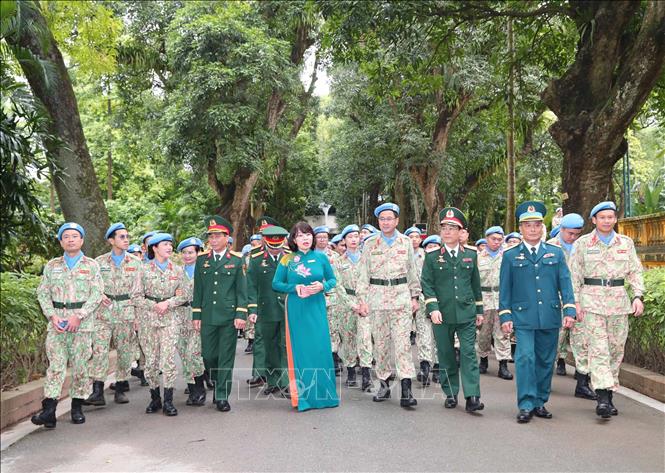
For the tasks assigned by the Ministry of National Defense, the No. 3 Engineering Team and the No. 6 Level 2 Field Hospital regularly updated the situation, promptly developed and adjusted combat readiness plans, ensuring they were close to the local reality. The two units proactively grasped the local situation and the mission's intentions, promptly reported and advised leaders at all levels on measures to respond to unstable security situations in the locality; proactively studied and learned experiences in deploying units to the locality; the mission's troop transfer procedures and plans to advise the home country on preparations and troop replacement plans for the next formations...
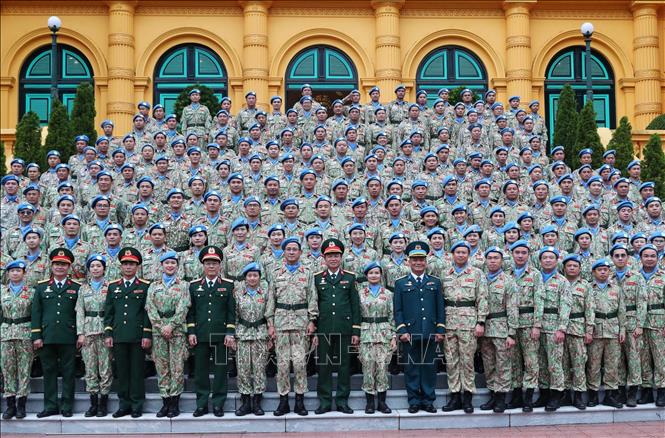
Before the spirit of President Ho Chi Minh, the soldiers of the two units promised to always be absolutely loyal to the Party, the Fatherland and the people; to unite, be creative, overcome difficulties to excellently complete their tasks, and contribute to constantly enhancing the country's position and prestige.
On this occasion, members of Level 2 Field Hospital No. 6 and Engineering Team No. 3 were awarded the Uncle Ho Badge.
Source: https://baotintuc.vn/thoi-su/luc-luong-gin-giu-hoa-binh-viet-nam-bao-cong-dang-bac-20251023114717686.htm

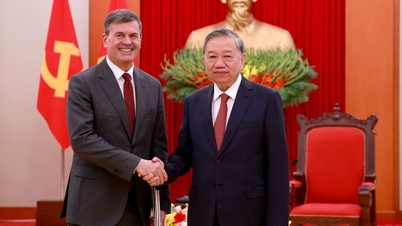
![[Photo] General Secretary To Lam receives the Director of the Academy of Public Administration and National Economy under the President of the Russian Federation](/_next/image?url=https%3A%2F%2Fvphoto.vietnam.vn%2Fthumb%2F1200x675%2Fvietnam%2Fresource%2FIMAGE%2F2025%2F12%2F08%2F1765200203892_a1-bnd-0933-4198-jpg.webp&w=3840&q=75)



























































Comment (0)