


In recent years, the European Union (EU) has been undergoing a significant shift in its global trade strategy, moving away from the rules-based multilateral order it once championed, according to a recent assessment by Zhou Xiaoming, former Deputy Permanent Representative of the Chinese Mission to the United Nations Office in Geneva. Instead of sticking to traditional free trade, Brussels has increasingly adopted unilateral and protectionist measures, a move that has been widely criticized as going against the core principles of the World Trade Organization (WTO).
Shift from multilateralism to autonomy
For decades, the EU has championed a rules-based global trading system as the foundation for stability and shared prosperity. But in pursuing what it calls “open strategic autonomy,” the bloc has strayed from that stance.
Brussels is moving away from the very multilateral order it once championed, Xiaoming noted, stressing that true strategic autonomy will not be achieved through protectionism disguised as regulation.
This change is clearly demonstrated by the EU's creation of new international trade instruments, unprecedented globally, including: Foreign Subsidies Regulation; Carbon Border Adjustment Mechanism (CBAM); Anti-Coercion Instrument.
These unilateral instruments have been widely criticized. For example, CBAM has been strongly opposed by the United States, China, India, Brazil, South Africa and others, who see it as “green protectionism” – a trade instrument designed to protect EU producers under the guise of climate policy.
Reversal of position and unilateral measures
This profound change is also reflected in regulations aimed at Chinese partners. The EU plans to impose new preconditions on Chinese investment. Under the Industrial Acceleration Act (expected to come into effect this December), Chinese companies investing in strategic sectors such as the electric vehicle supply chain will be required to share technology and know-how with European companies.
The move comes after the EU launched a WTO case against China in 2019, accusing Beijing of pressuring European companies to transfer technology. The fact that Brussels is now considering similar measures signals a shift in the bloc’s approach to global trade governance.
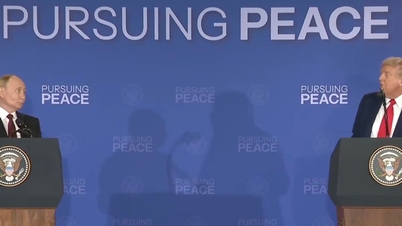
There are even moves that undermine core WTO principles. Under the Turnberry trade agreement signed between the EU and the US in July, the EU applies zero tariffs to most imports from the US without granting similar preferential treatment to other WTO members, violating the most-favored-nation rule of the multilateral trading system. "The new economic order, cemented at Turnberry, is taking shape," US Trade Representative Jamieson Greer said.
Root cause: Loss of economic competitiveness
The underlying cause of this strategic shift is concern about the bloc's economic situation. The EU is falling behind other major economies.
From 2020 to 2024, the bloc's GDP will grow by just 11%, much lower than China's 23% and the US's 15%.
The IMF forecasts real EU growth of just 1.2% in 2025, continuing to lag behind the US and China.
The EU’s sluggish growth is attributed to a loss of global competitiveness. Traditional strengths are being eroded, and worryingly, the EU has missed out on the Fourth Industrial Revolution, driven by the internet and digital technologies . In fact, not a single European company is among the world’s top 20 internet companies, and the EU is no longer on par with the US or China in frontier areas such as AI, quantum computing and semiconductors.
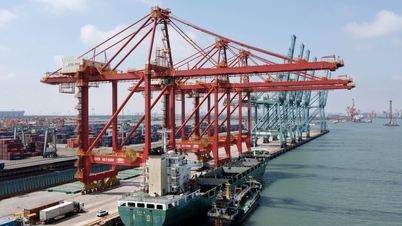
The EU's share of global exports also declines, from 13% in 2017 to 10.8% in 2024. While total Chinese imports increase by 40.8% between 2017 and 2024, EU exports to China increase by only about 10%.
Warning on the path of protectionism
Xiaoming said that Europe's turn to unilateralism and protectionism is a "wrong medicine." Few economies are as dependent on global markets as Europe, with exports of goods and services accounting for about half of the bloc's GDP (compared to China's 35% and the US's 11%). Former EU Ambassador to China Nicolas Chapuis once noted that more than 80% of Europe's future growth is expected to come from outside the EU.
Protecting the bloc’s producers from external competition will not make them stronger, but on the contrary, risks cementing Europe’s backward position. A retreat from trade multilateralism threatens Europe’s own prosperity.
The real challenge for Brussels, Mr Xiaoming concluded, is not to protect European companies from global competition, but to help them thrive in a competitive environment. At the same time, true strategic autonomy is built through competitiveness, innovation and cohesion, not through protectionism.
Source: https://baotintuc.vn/phan-tichnhan-dinh/dang-sau-viec-eu-tao-ra-cac-cong-cu-thuong-mai-quoc-te-moi-20251208152444799.htm

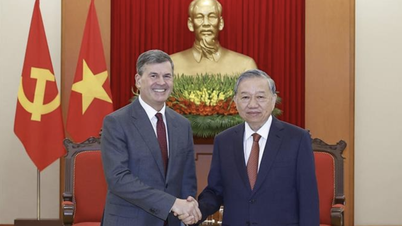
![[Photo] General Secretary To Lam receives the Director of the Academy of Public Administration and National Economy under the President of the Russian Federation](/_next/image?url=https%3A%2F%2Fvphoto.vietnam.vn%2Fthumb%2F1200x675%2Fvietnam%2Fresource%2FIMAGE%2F2025%2F12%2F08%2F1765200203892_a1-bnd-0933-4198-jpg.webp&w=3840&q=75)












































































Comment (0)