

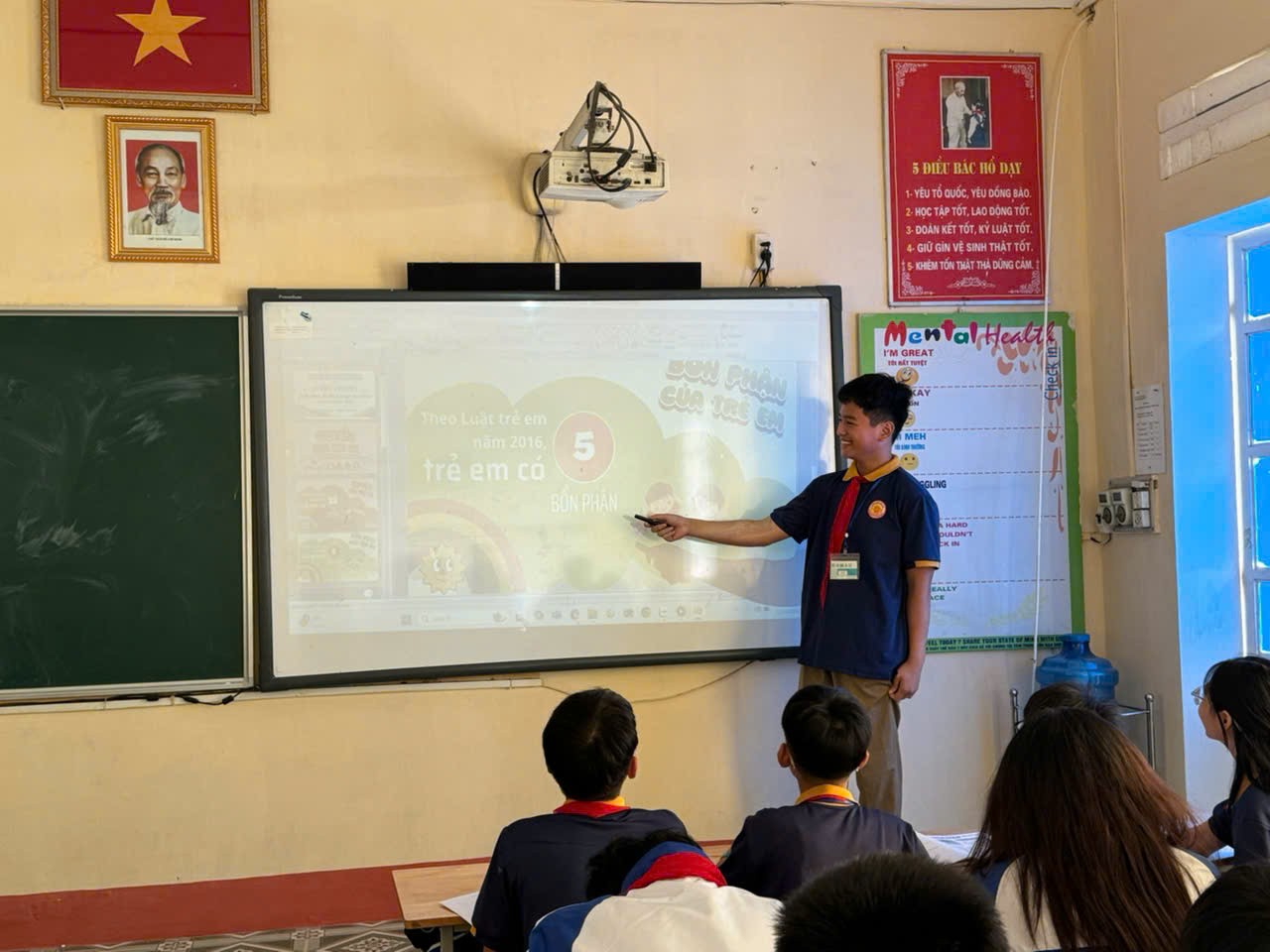
During the 7A Computer Science lesson on "Social Networks and Some Information Exchange Channels," teacher Nguyen Thi Phuong Thao emphasized the potential dangers of befriending strangers or posting personal information on social media. Through an open question-and-answer format, she helped students identify risks and learn how to respond to them on social media, while also guiding them on how to effectively utilize official information sources.
Nguyen Truong Nhat Dang, a student in class 7A, shared: "I will not make friends or talk to strangers; I will not post my schedule on social media."
In recent years, instead of just teaching technical skills, Nguyen Du Secondary School has developed an integrated program that includes content such as digital ethics education , information security, online time management skills, methods for processing online information, and building a responsible personal image. Theoretical lessons are interspersed with discussions, playground activities, group projects, and direct consultations from experts.
The program is divided into three main pillars: fundamental knowledge of the digital environment, risk prevention skills, and digital application skills in learning and creativity.
Specifically, sixth-grade students are introduced to the online environment and principles of information sharing; seventh-grade students focus on identifying fake news, managing personal images, and dealing with online bullying; and eighth and ninth-grade students learn more in-depth about account security, online learning skills, and creating responsible digital content.
In lessons on identifying misinformation, teachers guide students in verifying sources, cross-referencing multiple sources, using research tools, and discussing the motivations behind creating fake news as well as the consequences of spreading unverified information. Exercises require students to present the results of verifying a "breaking news" story of the day and explain their verification methods.
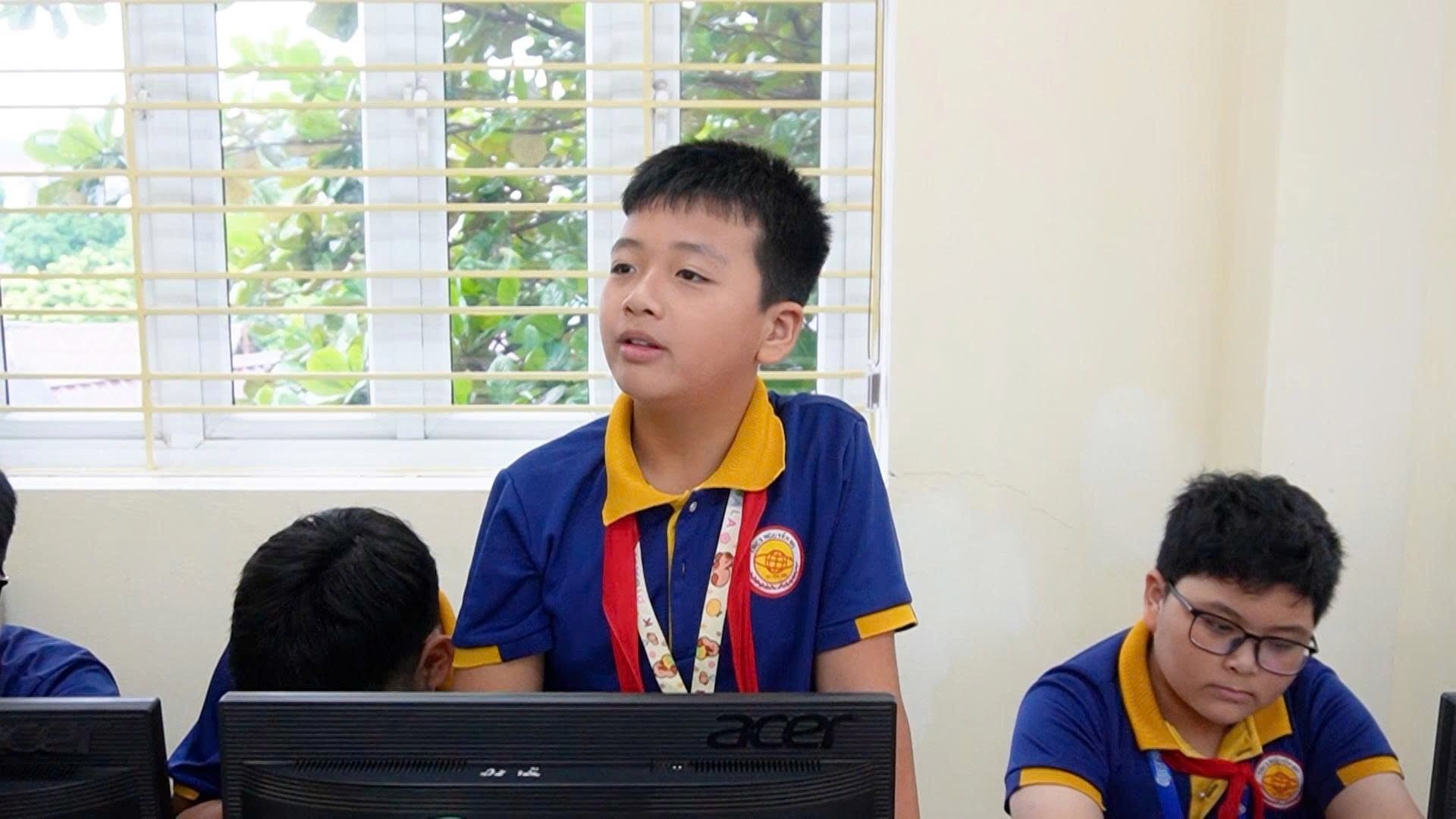
At Nguyen Du Secondary School, experiential learning methods are frequently applied: situation simulations, group projects, and critical discussions. In addition to regular classes, the school also organizes technology clubs, competitions for creating safe digital content, and extracurricular activities with parental participation to enhance collaboration between the school and families.
Small projects such as creating vlogs about online safety, designing promotional posters, or staging skits about the consequences of cyberbullying all attract enthusiastic participation from students.
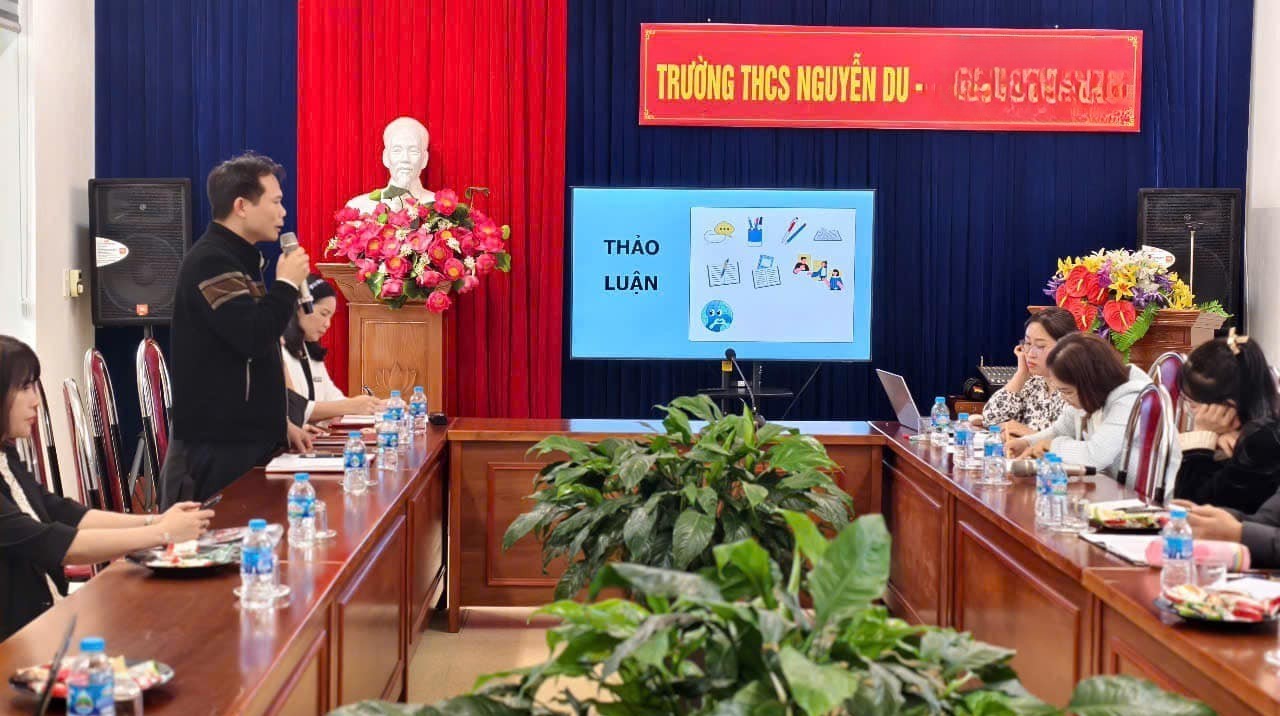
To ensure the quality of teaching, the school focuses on training teachers in technology skills, pedagogical methods, and adolescent psychology to handle sensitive situations. Many teachers said that learning from experts and from students themselves, especially those with good technological skills, helped them better understand new approaches to teaching digital skills.
Thanks to digital skills education, students at Nguyen Du Secondary School have learned how to set privacy settings on social media, understand the consequences of sharing sensitive images, and are more conscious of verifying information before sharing it. Some classes have seen a significant reduction in conflicts and misunderstandings caused by the spread of inaccurate information.
Parents also appreciate the program for providing guidance on how to monitor their children's online activities while respecting their privacy.
Ms. Le Thi Hau, a parent of a 7th-grade student, shared: "When my child knows how to set a secure password and how to handle inappropriate comments, the family feels more at ease."
Students participating in the digital skills classes also found the program practical and useful. Ta Phuong Thao, a student in class 7A, shared: "I have learned how to distinguish between different sources of information, limit time spent browsing the internet unnecessarily, and utilize the internet for learning."
Given the rapid development of digital technology, the school recognizes that new risks will continuously emerge, requiring teachers to update their knowledge regularly. Furthermore, the coordination between the school and families in managing and guiding students' internet use remains inconsistent, as many parents lack the time or skills to support their children's internet use.
To address this, the school administration plans to collaborate with organizations specializing in technology to implement programs on cybersecurity, AI ethics, and digital identity management, while also intensifying awareness campaigns for parents through class Zalo groups and thematic meetings.
The fact that Nguyen Du Secondary School is implementing digital life skills training for its students is a testament to educational innovation, contributing to building a foundation for the younger generation to use the Internet safely, effectively, and responsibly.
Source: https://baolaocai.vn/truong-thcs-nguyen-du-phuong-yen-bai-day-ky-nang-song-so-cho-hoc-sinh-post885211.html

![[Photo] Prime Minister Pham Minh Chinh holds a phone call with the CEO of Russia's Rosatom Corporation.](/_next/image?url=https%3A%2F%2Fvphoto.vietnam.vn%2Fthumb%2F1200x675%2Fvietnam%2Fresource%2FIMAGE%2F2025%2F12%2F11%2F1765464552365_dsc-5295-jpg.webp&w=3840&q=75)


![[Photo] Closing Ceremony of the 10th Session of the 15th National Assembly](/_next/image?url=https%3A%2F%2Fvphoto.vietnam.vn%2Fthumb%2F1200x675%2Fvietnam%2Fresource%2FIMAGE%2F2025%2F12%2F11%2F1765448959967_image-1437-jpg.webp&w=3840&q=75)








































![[OFFICIAL] MISA GROUP ANNOUNCES ITS PIONEERING BRAND POSITIONING IN BUILDING AGENTIC AI FOR BUSINESSES, HOUSEHOLDS, AND THE GOVERNMENT](https://vphoto.vietnam.vn/thumb/402x226/vietnam/resource/IMAGE/2025/12/11/1765444754256_agentic-ai_postfb-scaled.png)











































Comment (0)