

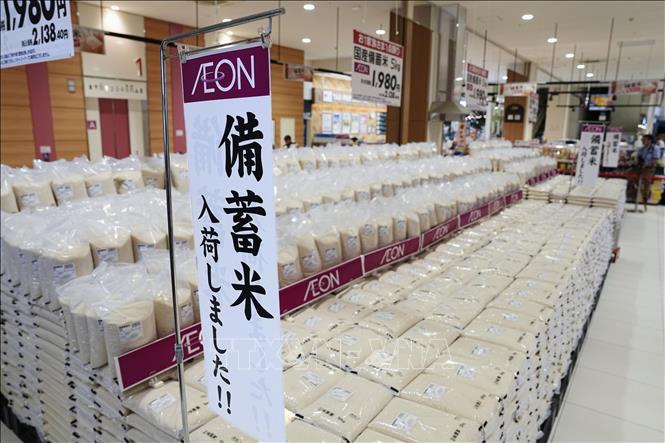
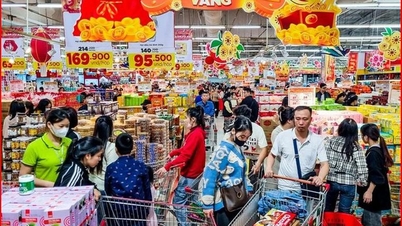
Prices for “brand rice,” which is mainly newly harvested rice, rose 5 yen to 4,551 yen per 5kg. This type of rice accounted for 68% of total rice sales this week. Prices for “blended rice,” which is usually cheaper, also rose 92 yen to 3,870 yen per 5kg. The Ministry of Agriculture explained that prices for this type of rice are likely to increase after rice produced in 2025 begins to be used to create blended rice more than in previous seasons.
A separate survey of about 1,200 Japanese supermarkets found that the average price of rice was 3,835 yen per 5 kg, up 180 yen. Meanwhile, another survey of about 6,000 retail stores, including drugstore chains, found that rice prices rose 92 yen to 4,315 yen per 5 kg, reflecting a widespread price increase across many retail channels.
Rising rice prices in Japan are not new. In 2024, rice prices continued to rise sharply due to poor harvests, adding to the burden on households already affected by rising energy and other commodity prices.
The high price of rice has raised concerns about food security. Japanese businesses and consumers are turning to cheaper imported rice. Data shows that despite being subject to a 341 yen per kilogram tax, rice imported by Japanese private companies in September 2025 increased nearly 160 times compared to the same period last year.
Faced with this situation, the new Prime Minister Sanae Takaichi is preparing to announce a new economic package to support people's essential living expenses. One of the ideas mentioned by the new Agriculture Minister Norikazu Suzuki is to issue rice coupons to certain households.
Source: https://baotintuc.vn/thi-truong-tien-te/thi-truong-nong-san-gia-gao-trung-binh-tai-nhat-ban-lap-ky-luc-moi-20251207180920815.htm


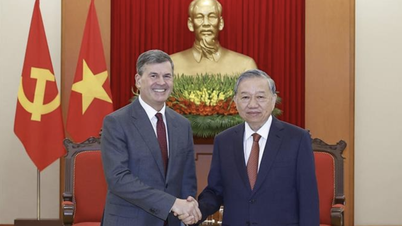
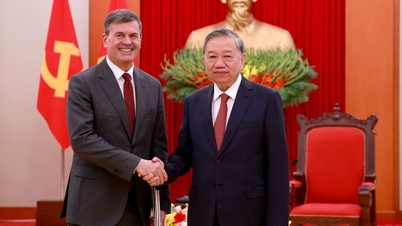
![[Photo] General Secretary To Lam receives the Director of the Academy of Public Administration and National Economy under the President of the Russian Federation](/_next/image?url=https%3A%2F%2Fvphoto.vietnam.vn%2Fthumb%2F1200x675%2Fvietnam%2Fresource%2FIMAGE%2F2025%2F12%2F08%2F1765200203892_a1-bnd-0933-4198-jpg.webp&w=3840&q=75)




























































































Comment (0)